Resource Topic: Enterprise Architecture

Rewiring the Business of IT at an International Airline

The challenge: fragmentation slowing decisions and obscuring value

The airline managed mature processes across architecture, finance, planning, workforce management, and technology governance. But each operated in isolation. Teams used inconsistent definitions, siloed systems, and conflicting records. Core questions about cost, risk, and investment lacked clear, reliable answers.

Manual reconciliation slowed execution. As the airline’s Head of Technology Business Management reflected, “Deriving cross-cutting insights from disconnected systems was absolutely agonizing.” This underscored the urgency for a unified architecture. Leaders navigated different versions of the truth. Strategic clarity gave way to operational friction.

“Deriving cross-cutting insights from disconnected systems was absolutely agonizing.” — Head of TBM

The solution: an integrated, intelligence-ready Business of IT ecosystem

The airline partnered with Cprime to rewire its architecture, financial, and delivery systems into a single correlated data asset. LeanIX became the backbone of enterprise architecture management, integrated with Apptio Targetprocess for delivery visibility and Apptio One for financial intelligence.

Industry benchmark context

What misalignment costs organizations:
• 64% of projects fail to meet goals
• 50% of work cannot be accurately allocated
• 80% of resource-management processes are ineffective
• Organizations overspend 15–30% on projects


The solution: an integrated, intelligence-ready Business of IT ecosystem

The airline partnered with Cprime to rewire its architecture, financial, and delivery systems into a single correlated data asset. LeanIX became the backbone of enterprise architecture management, integrated with Apptio Targetprocess for delivery visibility and Apptio One for financial intelligence.

“Early work in EAM streamlined and, in many ways, catapulted the progress needed to reach application TCO.” — Mohammad Attieh, Senior Digital Transformation Consultant, Cprime

The team established shared master data standards, defined systems of record, and automated data flows across applications, cloud assets, labor spend, and work hierarchies. Time writing was replaced with a backlog-driven labor cost model. Cloud tagging was standardized so infrastructure costs aligned cleanly to applications.

Targetprocess became the connective layer, linking business capabilities, applications, IT components, work, workforce, and financials into a seamless lifecycle, from strategy and architecture through deployment and operations.

The impact: real-time visibility, stronger governance, and measurable value flow

The airline now operates with unified, real-time transparency across architecture, finance, work, and cloud operations. Leaders access a single system of truth that sharpens decision-making, strengthens governance, and accelerates enterprise clarity.

Industry benchmark context

Why alignment matters:
• Highly aligned organizations grow revenue 58% faster
• They are 72% more profitable
• Deliver 96% customer satisfaction vs. 30% in low-alignment orgs
• Experience significantly higher workforce engagement

See how it we did it, as presented at the 2025 TBM Conference

Key outcomes
  • Automated TCO by application with real-time labor and cloud attribution
  • Complete, correlated enterprise work hierarchy tied to financials
  • 100+ solutions per quarter governed through integrated architecture processes
  • Single authoritative master data asset serving architecture, audit, continuity, privacy, and AI governance functions
  • Unified view of investment, risk, application health, and lifecycle performance
  • Ability to trace delivery directly to invoices bringing transparency to deliverables and accurate capital reporting

This connected architecture creates the foundation for showback, chargeback, and next-generation allocation models, including Kafka topic-level costing.

A foundation poised for continuous evolution

Our client’s transformation demonstrates how a connected architecture activates intelligence, clarity, and operational momentum. By aligning master data, integrating platforms, and automating cost insights, the airline positioned itself to scale smarter decisions and orchestrate value with greater precision.

If you’d like to explore how your organization can achieve similar results, get in touch with our team to start the conversation.

INRY and Aon: Driving Market Leadership with ServiceNow Enterprise Architecture for Informed Investment

Market Leadership Through Informed Investment

The Mission

As a $12B insurance and risk management juggernaut, countless opportunities exist for investing – whether in real estate, information technology, acquisitions, or virtually any other area in which efficiencies, capacity or top-line revenue can be impacted.

For Aon’s leadership, the problem has never been a lack of investment opportunities but instead a consistent methodology for capturing, evaluating, and (if approved) monitoring them. Investment processes were often siloed in the parts of the organization from which they emerged – Legal, Finance, Facilities, IT, Human Resources, or Product teams.

Understanding which investments can have the biggest impact is a complex challenge in such an environment. A siloed approach also complicates the possibility of a cross-functional investment strategy in which multiple functions can invest in a coordinated fashion. In a worst-case scenario, some parts of the organization may even invest in ways that undermine the investments made elsewhere.

As the firm sought options to bring a more informed, agile approach to its investment and portfolio management strategy, it turned to INRY to leverage the Power of the Platform to enable the data capture critical as part of the first step of the overall process.

The Approach

The firm has long leveraged INRY as an engine for innovation, employing it for a wide range of global business services as well as IT and colleague experiences. As the organization sought an enterprise-scale solution to build an investment evaluation and oversight engine, the Application Portfolio Management (APM) built by INRY on a leading platform was an obvious choice. APM had been used to track the firm’s application investments’ performance, so its potential was well understood.

APM also provided core capabilities essential to modelling complex investment requests, including the concepts of the Business Service Portfolio, Taxonomy Layer (and Nodes), Business Service, Business Service Offering, and “Sell / Consume” services delivery and monitoring model relevant to this type of request.

With the underlying APM foundation already in place, the firm leverages INRY to build an application “hub” at the heart of its Portfolio Investment Reporting (PIR) system to address these opportunities.

  • Organization Transition Planning: As the merger or acquisition transaction goes from the evaluation stage to the implementation stage, choreographing the movement of teams and leadership requires complex approval and sequencing. The Organization Design and Talent (OD&T) functions of the M&A Portal provide key functions like:
    • Iterating on the structure of the to-be organization
    • Defining leadership roles and responsibilities for the combined org
    • Determining HR systems of record be leveraged
  • Data Request: Providing a means to facilitate the request of documentation or data needed to advance the merger or acquisition transaction and to notify stakeholders when this request has become delinquent
  • Meeting Request: Allowing actors in the transaction to request meetings to discuss any aspects of the deal through the M&A Portal, where these requests can be fully documented via an audit trail. By providing a hub for all interactions related to the merger or acquisition, the M&A Portal increases the transaction’s transparency compliance and level of
  • Access Request: Creating an access control and permissions model to ensure that all the actors in the process are given only the level of information access appropriate to their area of responsibility is critical to the integrity of the M&A process. As part of this, Access Request features made it possible to delegate new permissions as needed through a well-governed and traceable process
  • Process Simplification and Ergonomics: To make this aspect of the solution usable and ergonomic, special attention was given to making the information captured within the M&A Portal more sable. For example, colour-coding was employed to differentiate players within each organization – with the firm participants contributing “red data” and target company participants contributing “purple data.” Seemingly minor features like this made a big difference in making the large volume of collected information more easily digestible by transaction participants
  • Process Guidance and Enforcement: Delivering guided interactions to help ensure that participants in the M&A transaction clearly understand where they are in the process, which steps come next, and if they are delinquent in fulfilling any of their review or approval responsibilities

As the firm looked to fulfill these and other critical technology and functional requirements, the platform recommended by INRY proved to be an ideal choice thanks to built-in security, process traceability, accessibility, and ergonomics. Likewise, INRY surfaced as an ideal partner for this engagement thanks to their deep knowledge of the INRY platform and the firm’s business. The firm and INRY worked to deploy the first iterations of the M&A Portal in a matter of weeks, then refined it incrementally afterward to support more complex functional and technical requirements.

The Result

Implementing a transformational set of portfolio management capabilities like those described is something other than something that can be implemented at the flick of a switch. However, by defining a clear long-term roadmap that emphasized incremental progress and quick time to value, the combined firm and INRY team showed substantial value in just 6 months – with the system going live in November and reports with approval and forecast data going live in May.

By providing a system of interaction for the capture, review/approval, and tracking of investments across all enterprise functions, the firm has achieved significant benefits that enhance its competitive position in an everchanging market, including:

  • Enterprise-wide insight into investment opportunities allows firm leaders to make informed decisions about those investments with the greatest return
  • Deep insight into portfolio performance to ensure that investments meet or exceed identified targets and to understand the cause of any underperformance
  • Improved business resilience thanks to a system that allows revenue protection, risk mitigation, efficiency, automation, and growth opportunities to be surfaced, evaluated, and implemented timely

By accessing these benefits through a single environment where all stakeholders can interact to evaluate and monitor large-scale investments, Aon has transformed its business in critical ways that strengthen its competitive position and drive value for customers, colleagues, and shareholders. This powerful solution proves the possibilities that innovative technology can deliver when combined with expert delivery and configuration services provided by INRY.

Future-Proofing the Enterprise Operating Model through Enterprise Architecture Management (EAM)

AI, cloud computing, and digital-first customer demands are pushing enterprises to evolve, but outdated systems, homegrown solutions, and manual processes create friction between innovative teams and traditional functions like finance, hindering value delivery; to succeed, leaders must align technology, resources, and investments with their overall strategy.

The three-legged stool of Enterprise Architecture Management (EAM), Strategic Portfolio Management (SPM), and IT Financial Management (ITFM) is essential for shaping the Future Operating Model, with EAM aligning technology with business strategy, SPM optimizing investments for future value, and ITFM ensuring financial control—all working together to create a flexible, sustainable foundation for business agility and innovation.

Download this webinar now to gain insights into integrating Apptio Targetprocess, Apptio One, and LeanIX EAM.


Speakers:

Konstantin Popov
VP, Enterprise Portfolio, & Financial Management
Cprime
mahesh-keswani.png Mahesh Keswani
Lead, Enterprise Portfolio, & Financial Management
Cprime

Building Knowledge Management Into Your Atlassian Toolstack

Knowledge management, the process of creating, storing, using and sharing knowledge within an organization, can increase collaboration and efficiency and scale your workflows. Take a deep dive into what knowledge management is and the features, tools, and frameworks to consider.

In this webinar, you will learn more about Confluence, Atlassian’s foundational offering for knowledge management, along with how it integrates with other tools within the Atlassian Stack like Jira and Jira Service Management. Plus, explore knowledge management pitfalls to be cautious of, then get a demo of cutting edge knowledge management solutions like Atlassian Rovo and Enterprise Smart Search.
Download this webinar today!


Clayton Chancey
ITSM Practice Director

From Atlassian Data Center to Atlassian Cloud: How Cprime Helped Twilio Achieve a Cloud-First Strategy

Twilio, a leading cloud communications platform, embarked on a transformative journey to adopt a cloud-first strategy. Recognizing the need to enhance operational efficiency, scalability, and innovation, Twilio sought to migrate their Atlassian Data Center instances to the Atlassian Cloud.

To achieve this ambitious goal, Twilio turned to Cprime, a trusted partner renowned for its expertise in Atlassian Cloud migrations. With a proven track record of successful migrations and a deep understanding of the complexities involved, Cprime was the ideal choice to guide Twilio through this critical transition.

The Challenge: Navigating the Path to Cloud-First

  • Setting up a greenfield cloud environment for IT
  • Expanding to the full product organization with a substantial data migration
  • A compressed timeline to coincide with upcoming Data Center licensing renewal

Twilio recognized the need to transition their IT infrastructure to the cloud to stay ahead in a rapidly evolving technological landscape. The initial requirement was straightforward: move the IT department to the cloud without migrating any existing data, allowing Twilio to start fresh, leveraging the cloud’s capabilities without the complexities of data migration.

However, the project soon expanded in scope. Twilio’s product organization also sought to migrate to the cloud, but unlike the IT department, they needed to transfer a substantial amount of existing data. This added a layer of complexity to the project.

The urgency of the project was further compounded by an impending deadline. Twilio aimed to complete the migration before renewing their Atlassian licensing, which added pressure to an already tight timeline. 

Twilio needed a partner with the expertise and experience to navigate these complexities and ensure a successful transition to the cloud. This is where Cprime stepped in, ready to tackle the challenges head-on and deliver a seamless migration experience.

The Solution: Crafting a Seamless Migration Strategy

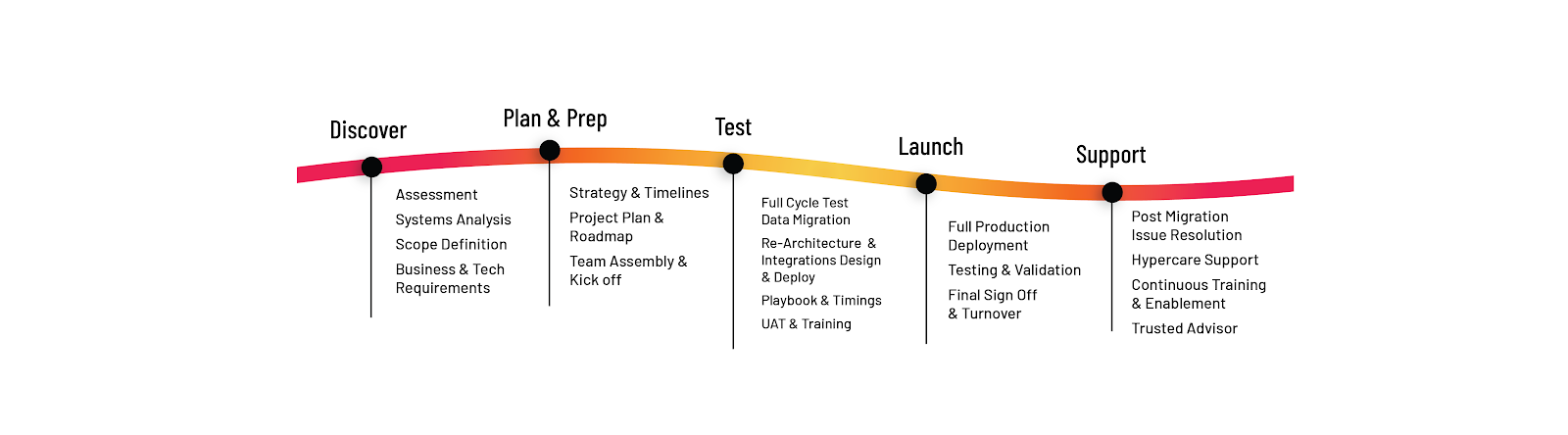
  1. Assessment and strategic planning
  2. Setting up the initial cloud environment
  3. Addressing add-on simplification, consolidation, and customization
  4. Migrating the data
  5. Post-migration change management and hypercare 

Cprime approached Twilio’s migration project with a comprehensive and strategic plan, addressing each challenge with precision and expertise. The solution was multifaceted, involving initial setup, detailed data migration for about 4,000 users, handling of complexities, and robust post-migration support.

Initial Setup:

Cprime began by setting up a clean cloud instance for Twilio’s IT department. This “greenfield” move allowed Twilio to start using the cloud without the burden of existing data, providing a fresh and optimized environment tailored to their needs. Cprime collaborated closely with Twilio to understand their specific requirements and ensure the new cloud setup aligned perfectly with their operational goals.

Data Migration:

The next phase involved the intricate task of migrating Twilio’s extensive data. This included moving 342 Jira projects and over 2,170 Confluence spaces. The complexity of this task was heightened by the need to analyze and resolve issues related to 47 add-ons, which were eventually narrowed down to 10 essential ones for the cloud environment. Cprime meticulously reviewed and remediated approximately 3,500 workflows, ensuring that all critical processes were seamlessly transitioned to the cloud.

Navigating Complex Add-Ons and Customizations:

One of the most challenging aspects of the migration was handling Twilio’s extensive add-ons and customizations. Cprime’s team rebuilt workflows in essential add-ons such as the JSU automation suite, Jira automations, and ScriptRunner in the cloud. This required a deep understanding of Twilio’s existing setup and the ability to replicate and optimize these functionalities in the new environment. To mitigate risks associated with the accelerated timeline, Cprime provided best practices and templates to Twilio to help them develop a comprehensive change management and communication plan. This plan enabled Twilio’s users to understand the changes, self-help where possible, and prepare for the new cloud environment.

Execution Under Compressed Timeline:

Despite the typical six to nine-month timeline for such migrations, Cprime executed the project within a few months, starting in February and going live in early May. Twilio accepted the risks associated with this compressed timeline, understanding that some functionality might not be fully operational on day one. Cprime and Twilio’s collaborative approach and clear communication ensured that both teams were aligned and prepared to address any issues that arose during the transition.

Post-Migration Support:

To ensure a smooth post-migration experience, Cprime provided hypercare support. A full team was available to assist Twilio for a few weeks following the migration, addressing any immediate concerns and helping users adapt to the new environment. This support gradually transitioned to a single dedicated engineer who continues to provide ongoing assistance, ensuring that Twilio’s cloud environment remains stable and optimized.

Through meticulous planning, expert execution, and robust support, Cprime successfully navigated the complexities of Twilio’s migration, delivering a seamless transition to the Atlassian Cloud.

The Results: Achieving Cloud-First Success

The collaboration between Twilio and Cprime yielded remarkable results, demonstrating the effectiveness of a well-executed cloud migration strategy. The benefits of this successful transition were both immediate and long-term, aligning with Twilio’s strategic goals and enhancing their operational efficiency.

  • Successful migration within the ambitious timeline
  • Significant cost savings from shutting down the Data Center instances
  • Simplification through reduction in the number of add-ons from 47 to 10
  • Enhanced performance and reliability of systems
  • Improved user adoption and satisfaction through change management and communication
  • Better alignment with Twilio’s organizational goals, including a cloud-first strategy

Some users were reluctant to move to the cloud. But, with the support of Cprime’s change management and communication plan—before, during, and after the migration—even hesitant users gradually adapted to the new environment. The dedicated hypercare support provided by Cprime ensured that any issues were promptly addressed, facilitating a smoother transition. Over time, users have come to appreciate the benefits of the cloud environment, including improved performance and easier access to tools and data.

In total, this cloud transformation positions Twilio for an exciting future of increased innovation, flexibility, and scalability.

Want to see similar results for your own organization? Get started with an Atlassian Cloud Migration Assessment.

Mastering an Integrated Atlassian Tooling Ecosystem: Strategies, Success Stories, and Best Practices

Are you ready to take your Atlassian tooling ecosystem to the next level? Join our panel of renowned Atlassian experts as they dive deep into the strategies, best practices, and real-world success stories that can help you maximize the value of your technology investments, streamline workflows, and drive innovation across your organization.

In this must-attend panel session, our experts will share stories from the trenches, highlighting the challenges, successes, and lessons learned from their extensive experience working with organizations of all sizes and industries. You’ll gain valuable insights into the best practices and strategies that have proven successful in maximizing the benefits of Atlassian tooling ecosystems.

Learning Objectives:

  • Align tools, processes, and business objectives to mitigate escalating technology costs and boost efficiency
  • Leverage automation and best practices in tool selection to enhance operability, collaboration, and productivity
  • Develop a comprehensive tech stack strategy that empowers your teams with the visibility to optimize, adapt, and innovate
  • Navigate common challenges and pitfalls in implementing and managing an integrated Atlassian tooling ecosystem
Clayton Chancey
ITSM Practice Director
Cprime
Drew Garvey
Practice Director, Agile Tooling Solutions
Cprime
Kyle Krug
Practice Director, Work Management
Cprime

Improving IT Investment Decisions and Business Outcomes with Integrated Enterprise Architecture Management

In partnership with:

Learn how integrating Enterprise Architecture Management capabilities as part of your IT Finance and Agile Planning processes can help you to:

  • Calculate TCO across your entire portfolio of applications, infrastructure and labor
  • Drive more informed IT investment decisions and reliably measure results
  • Improve business outcomes and accelerate your strategic digital journey

This webinar features Ole Lebendig, an Engagement Manager with IBM Apptio and expert in enterprise agile planning and value stream management. Ole is joined by Mahesh Keswani and Matt Chivers, both with the Enterprise Technology & Financial Management Practice at Cprime.

Download now!

Panelists:

Ole Lebendig
Engagement Manager
Apptio, an IBM Company
Matt Chivers
Practice Lead
Cprime
Mahesh Keswani
Practice Lead
Cprime

Optimize Your Tool Stack for Maximum Value

Tooling Solutions That Put People Before Tech

What do you need? To speed up product delivery? To remove waste and free up time for innovation? To boost collaboration and alignment? You’re not alone. Cprime’s flexible Tooling solutions address all of this and more.

Download the solution summary to see how it can work for you.

Real-Time TCO: The Critical Role of Enterprise Architecture Management

Hosted by LeanIX

Companies should focus less on how they can cut IT costs and more on how they can ensure the greatest business impact from their technology investment. To assess and optimize this impact, an accurate understanding of the total cost of ownership (TCO) of applications across your portfolio is essential.

In this webinar, LeanIX, an SAP company, and Cprime will describe how Cprime is partnering to help companies align their Finance, Enterprise Architecture and Lean Portfolio Management systems to produce a comprehensive, real-time view of TCO. They will also share how this is enabling their customers to get the most from their strategic technology investments and accelerate innovation.

Register now to learn:

  • Why enterprise-wide transformation initiatives demand collaboration across Enterprise Architecture, IT and Finance teams
  • How to engage Finance, Business, and IT stakeholders in a product-based business architecture
  • How improved visibility and alignment can accelerate time to market, increase organizational agility, and result in both cost-savings and an optimized IT portfolio management

A Perfect Blend—Aligning Teams and Improving Throughput With Cprime Cloud Migration and Enterprise Agile Coaching

The Client

This Cprime client is one of the world’s foremost networking hardware, software, and telecommunications equipment providers. Since 1984, it has created an expansive portfolio of routers, switches, wireless access points, security products, collaboration tools, managed services, and IoT applications.

Today, the California-based technology company operates in over 100 countries. Recognized for its innovations and commitment to delivering high-quality products and services, the company serves a variety of data-intensive industries, including healthcare, finance, education, and government.

The company reported revenues of over $51 billion in 2022.

The Challenge: Finding a Common Language and Reconnecting Siloed Teams

Because of the size of its workforce and complex portfolio of products and services, the network and communications provider faced a set of challenges typical of many established enterprises. Decades of growth and incremental process changes had created a disconnect between its leadership, departments, and teams.

“Over the years, the company adopted a variety of tools and frameworks—everyone interacted and worked differently,” explains Chuck Badger, Managing Director at Cprime. “If a developer transferred from one business unit to another, they had to start over, both from a tooling and a process perspective.”

“It’s a common dilemma for organizations of this scale,” adds Elida Parish, Managing Director of Customer Success at Cprime. “Throughout the company, they developed pockets of people using different tools and trying different things. Every team had adopted its own process. Moving from area to area, they were speaking past each other—not even using the same terminology.”


“Every team had adopted its own way of working. Moving from area to area, they were speaking past each other—not even using the same terminology.” — Elida Parish, Cprime, Managing Director, Customer Success


Increasing Transparency to Improve Strategic Planning

Besides creating communication issues, the information silos between areas hindered the company executive’s efforts to evaluate the business and plan strategically. The lack of visibility affected the company’s time to market and its ability to plan and invest in future initiatives. Declining quality and increasing costs and delivery times across the organization were also key concerns.

“With everybody on a different page, there was no way for the company to roll up consistent reporting,” explains John Kosco, Cprime Enterprise Agile Transformation Consultant. “They just didn’t have visibility into what was happening in their different agile teams. They needed to raise transparency so leadership could prioritize and manage portfolios to ensure that everyone was doing the right work. And, they had to implement a unified framework to ensure the work was being done right.”

“Leadership recognized that they had to standardize,” says Parish. “The goal was to improve throughput and deliver value faster by adopting a cloud-first, single project management framework, to drive alignment by moving disconnected teams onto a centralized tech stack, and to more effectively identify and meet business needs by creating a unified picture of the business.”

Besides aligning its teams under a standard framework using a central tool, the company wanted to move its infrastructure online to take greater advantage of cloud technologies.

The Solution: Cprime Cross-Functional Teams for Holistic Cultural and Technical Transformation

To accomplish its goals, the company needed to perform three core tasks—promote a common, internally developed agile framework, onboard a centralized platform as a single source of truth for reporting and project management, and migrate all production data onto that platform and into the cloud without disrupting the business. It was a hybrid initiative—both cultural and technical—affecting the company’s largest engineering groups, and thousands of people.


“Cprime was there to help the company find the best approaches to solve its problems and act as a sounding board to help build the internal capability to enable its teams long term.” — Dan Weikart, Cprime Director & Enterprise Agile Coach


“The agile transformation addresses the organization’s cultural mindset and processes,” explains Anthony Crain, Cprime Business Agility Coach. “The Jira Cloud migration and technical tooling transformation provide a standardized platform for the teams to break down the work, identify strengths and weaknesses, and give management insight into exactly what the teams are doing to achieve the company’s desired business outcomes.”

Enabling Cultural Change with the PRIME Approach

The network communications provider turned to Cprime to enable the multi-faceted transformation. It was a decision driven by over a decade of experience working with Cprime as a partner for change within the organization.

“Cprime’s method, PRIME—Prepare, Roadmap, Iterate, Measure, Enable— aligned perfectly with the company’s goals,” says Kosco. “We formed a collaboration infrastructure where the Cprime coaches and cross-functional teams provided the resources to help the company implement a common agile taxonomy. In practical terms, Cprime was there to help them find the best approaches to solve problems, and to act as a sounding board to help them build the internal capability to enable their teams long term.”

Creating a Template for Agile Unity

Using the PRIME approach, Cprime prepared for the agile transformation by meeting with the company leaders to establish a blueprint for forming and educating teams and teams of teams within the organization. With an approved roadmap in place, Cprime began coaching teams on how to execute a new way of working using the new Jira Cloud tools.

“As coaches, Cprime engaged with the leaders and the teams, acting as a translation layer between theory and practice,” says Weikart. “We presented the new ways of working in a consistent, practical fashion that rolled up across the organization.”

Besides traditional instructor-led, role-based workshops, Cprime worked with the company to create 27 Learning Bytes—short guides that reinforce context-specific agile principles and practices. Another eight Agile Primers provide detailed, always-available references that clarify core agile roles and processes. Over 18 months, Cprime’s on-the-ground coaching team expanded from 3 to over 30 members.


“Because of the combined agile and tooling initiatives, positive change is visible everywhere. We delivered growth in earnings, revenue, and each of our key transformation metrics.” — Executive Sponsor


A Technical Jira Cloud Migration to Support a New Agile Methodology

Parallel to the coaches propagating the company’s new agile methodology, the Cprime Customer Success team worked to establish a Jira Cloud environment to centralize reporting and portfolio management, and to foster further alignment.

Leveraging their expertise as an Atlassian Platinum Solution Partner, the Cprime Customer Success team worked to onboard the provider’s teams to its new Jira Cloud infrastructure. This included overseeing a complex data migration from disparate on-site Jira instances.

“In many cases, the Jira data was already there,” says Parish. “But it wasn’t a simple matter of just lifting and shifting the data to the cloud. They were bringing together all their different tools and migrating them into Jira Align.”

Collaborating for Optimal Outcomes

To ensure a successful migration, the multi-disciplinary Cprime team coordinated across time zones to maintain the integrity of the migrated data. The entire process required constant cooperation between the networking provider and the Cprime Customer Success team.

“Not only was Cprime migrating live data, we had to make sure we weren’t stepping on anyone’s toes as they used the system. They had many scrum and kanban boards in production that contained broken workflow validators and other issues. Those needed to be addressed before migration,” says Parish. “To accommodate their data in the cloud, we had to create customizations and methodically massage the live data to avoid duplications. Post migration, clean-up involved working hand-in-hand with the client to reconcile and map the new data meaningfully.”

Working together and communicating internally, the different Cprime teams could avoid issues common to projects involving multiple vendors.

Results: Unprecedented Levels of Visibility, Traceability, and Communication

By overseeing both the migration and the agile transformation, Cprime was in an ideal position to ensure the networking communications provider’s new Jira Cloud infrastructure aligned with its goals and the updated development framework. The combined results have given the company an unprecedented view into its workflows and allowed them to make new strategic connections.

“The insights and synergy the company gained by combining both the tooling transformation and on-the-ground agile coaching provided an exponential return on their investment,” says Parish. “By blending the perspectives, Cprime has helped them see their data in new ways and align more effectively with their other efforts to achieve new levels of visibility and traceability.”

Quantifying Rapid Cultural Change

Using the new tooling and agile methodology, the network communications provider successfully launched over 400 well-formed agile teams—roughly 2,800 Cisco employees—in a single quarter. 90% of those teams aligned their long-standing backlogs with management’s newly formed strategic themes. To assist the transformation, Cprime coaches led 18 role-specific training sessions, training 525 people in under six months. This enabled the company to pursue other internal training initiatives. Overall, Cprime significantly accelerated the company’s ability to deploy a new way of working across its teams.

“They had a highly fractured working environment,” says Weikart. “Now, they have a unified but flexible working environment where everyone speaks the same language, sees consistent information, and is on a path that suits their specific context.”

Increasing Throughput and Accelerating Delivery Schedules and Response Times

With improved collaboration and transparency, the company has also seen an increase in throughput across multiple product lines, accelerated delivery schedules, and improved response times to customer support inquiries. It is continuing to work with Cprime to further transform the organization.

“Because of the combined agile and tooling initiatives, positive change is visible everywhere,” remarks an executive sponsor. “We delivered growth in earnings, revenue, and each of our key transformation metrics. We have even raised our outlook for the next fiscal year because of our healthy backlog and the steps we have taken to improve.”

Would you like to see similar results for your organization?
Explore our flexible Agile transformation and Atlassian tooling solutions.