


The Client
This global technology leader builds popular consumer electronics devices like smartphones, computers, tablets, and wearable accessories, as well as software, productivity, and entertainment products. They have developed a reputation for innovation and a sleek design ethos that have made them an international household name.
The Challenge: Upskilling from Within — Creating New Career Opportunities in an Established Workforce
 In response to a growing global shortage of technical talent and high attrition rates, this client looked inward to address some of its technical staffing needs.
“The rationale is simple—there’s a very competitive hiring landscape for specific roles in the technology workforce economy,” explains Chris Knotts, a Director in the Cprime Learning Practice. “As a result, the device manufacturer wanted to cultivate talent from within their own ranks. Selecting and promoting people already familiar with their culture not only improves employee retention over the long term, it is also more cost effective.”
It was not an idea new to the organization. The company already had a mechanism in place to recruit and upskill employees, but the program had a limited scope and capacity. The device manufacturer wanted to expand its internal retraining capabilities to include two emergent high-demand subject areas—Quality Assurance (QA) and Enterprise Program Management (EPM).
The fundamental challenge for the company, however, wasn’t a lack of expertise, it was a lack of bandwidth.
“They knew exactly what they wanted to do, they just needed help with the execution. They wanted someone to overcome the hurdles that prevented them from doing it themselves,” says Knott. “They needed external muscle to come in and perform the administration, needs assessment, and training design and then get in there and do the actual coaching.”
To achieve that within a limited timeframe, the company required an experienced training partner with established expertise and an inventory of relevant course materials. While they expected a customized training experience tailored to their needs, they did not want to begin from scratch.
Solution: Cprime—a Multi-Disciplined Team with the Right Educational Assets
Based on previous success working together to fulfill its Atlassian tooling needs, the manufacturer shortlisted Cprime as a candidate in its request for proposal (RFP) call. Cprime won the bid on the strength of its expansive subject expertise and proven track record.
“Cprime met all their personnel and asset requirements,” says Knotts. “We had the experience and instructors, and our learning catalog contained the exact course materials that they wanted us to design.”
The Cprime team began the course design phase by sitting down with the management and supervisory teams to further sharpen requirements and clarify expectations. Cprime then collaborated with the company over the course of two months to develop and deliver multiple iterations of the training.
“They knew exactly what they wanted to do, they just needed help with the execution, someone to overcome the hurdles preventing them from doing it themselves. They wanted skilled external muscle to come in and perform the administration, needs assessment, and training design and then get in there and do the actual coaching.” — Chris Knotts, Director, Cprime Learning Practice
Rapidly Iterating to Meet Client Requirements
 Each of the iterations involved further defining the course design and objectives, selecting and refining course content, and creating assessment criteria to determine successful learning outcomes. A multi-disciplined Cprime team of nine people provided input to ensure the courses reflected the most up-to-date industry best practices. Leadership and subject experts from the device manufacturer’s internal talent development team provided regular input to maintain alignment between Cprime’s output and the company’s culture and ways of working.
“We worked directly with their QA and EPM stakeholders, embedding with the functional heads of the teams that we would train, so they could inject their input right from the beginning,” says Knotts. “We ended up with the Quality Assurance and Enterprise Project Management learning tracks based on Cprime library materials but entirely unique to the device manufacturer’s needs.”
The resulting course materials combined core Cprime course content with practical use cases that helped students relate them to real-world situations and expanded their understanding of how the principles fit the manufacturer’s greater project environment.
An experienced Cprime enterprise technology coach then delivered each session, beginning with core concepts and shifting into on-the-job mentorship, demonstrating key competencies on the job.
“The Cprime technology coaches got deeply involved with the teams, fostering the practical application of the software testing they were teaching,” says Knotts. “It wasn’t a matter of spoon-feeding them a lecture, It was very hands-on.”
“We worked directly with their Quality Assurance and Enterprise Program Management stakeholders — embedding with the functional heads of the teams that we would train — so they could include their input right from the beginning.” — Chris Knotts, Director, Cprime Learning Practice
Results: Off-the-shelf Training Content Combined With Custom Coach Delivery
With only two months to prepare, Cprime delivered two intensive, ten-day training sessions. The coaches began training the first cohorts of the device manufacturer’s internal promotion candidates on the new learning tracks in month three.
The Cprime trainers then oversaw concurrent online and localized training sessions at the client’s main California campus, training over 70 people across five cohorts.
Despite the very intensive preparation, planning, and tight timeframes, Cprime received positive feedback from the students and impressed the company leadership with their results.
“Our emphasis on the hands-on, real-world coaching component enhanced what could have easily been dry, theoretical training sessions has been really meaningful for the students,” says Knotts. “Both the students and the stakeholders really liked what we were doing and how we did it.”
Because of early successes with the pilot, the device manufacturer is already looking toward a continued partnership.
“They invited Cprime to plan a second set of sessions,” says Knotts. “They knew exactly what they needed and their standards were high. Because the project was under such heavy scrutiny, It’s been really satisfying to exceed their expectations.”
“Cprime’s emphasis on hands-on, real-world coaching component into what could have been dry, theoretical, training sessions has been really meaningful for the students. Both the students and the stakeholders really liked what we were doing and how we did it.” — Chris Knotts, Director, Cprime Learning Practice

 Designing a modern automated warehousing solution is astonishingly complex. In an unoptimized environment, the sheer number of factors and volume of calculations required to create a design prototype for a new logistics facility can take weeks.
 After achieving consensus with the company’s management and DevOps teams, the Cprime team tailored the new GitLab instance to work specifically within the customer’s Microsoft Azure environment and security context.
 Based on a recommendation from one of their commercial partners, the university team turned to Cprime, GitLab Certified Training Partners. The initial brief was simple, but left room for expansion.


 The manufacturer’s key issue was maintaining consistency and functionality across a vast number of corporate and international websites. Each of the company’s over 30 brands operated multiple semi-autonomous regional websites, each with localized content and requirements. Everything from brand messaging to site performance, content delivery, payment collection, and product fulfillment across the sites was difficult to maintain, inconsistent, and underperforming.
 Aware of the changes required and the complexity of all its moving parts around the globe, the manufacturer’s ecommerce arm reached out to Cprime. The request for help was based on the two companies’ successes working together on a previous transformation.
 Over the course of the engagement, the manufacturer’s ecommerce section went from almost no structured quarterly planning to running regular release trains and regional program increment (PI) planning sessions.
 “We had four delivery teams working with two products,” says the R&D department’s Product Director, “and the products are highly interdependent. The data coming out of each feed the other in a cycle. So the delivery teams worked hard on their own product backlog items (PBIs) but there really wasn’t a mechanism for keeping all four teams aligned at all times.”
 “Although I am an RTE,” Ryan says, “running the Agile Release Train (ART) wasn’t my first task. I needed to thoroughly understand where the teams were in terms of Agile maturity and workflow so I could give the ART the best chance at success.”
 Another objective Ryan and the team focused on, both before and after the enhanced Q2 PI planning event, was formalizing the teams’ use of the SAFe framework to better support their scaled Agile practice as an ART. This was another byproduct of ongoing training and slow-but-steady adjustments to existing roles and processes to better align with best practices that have proved successful in thousands of previous engagements.
 Challenges also grew from the sheer volume of data to migrate and the technical and logistical demands of delivering functioning Jira and Confluence
  Despite the challenges, the company saw immediate results from its Jira and Confluence cloud migration.
 The need for qualified software engineers and DevOps professionals has been speeding up globally for years and shows no signs of slowing down. The financial services industry is no exception, and a large digital transformation necessitates new roles and qualified professionals to fill them. So, our client found themselves in a familiar position: needing to prepare a large number of existing team members to thrive under a new way of working even while zealously working to transform their development organization to support enterprise agility.
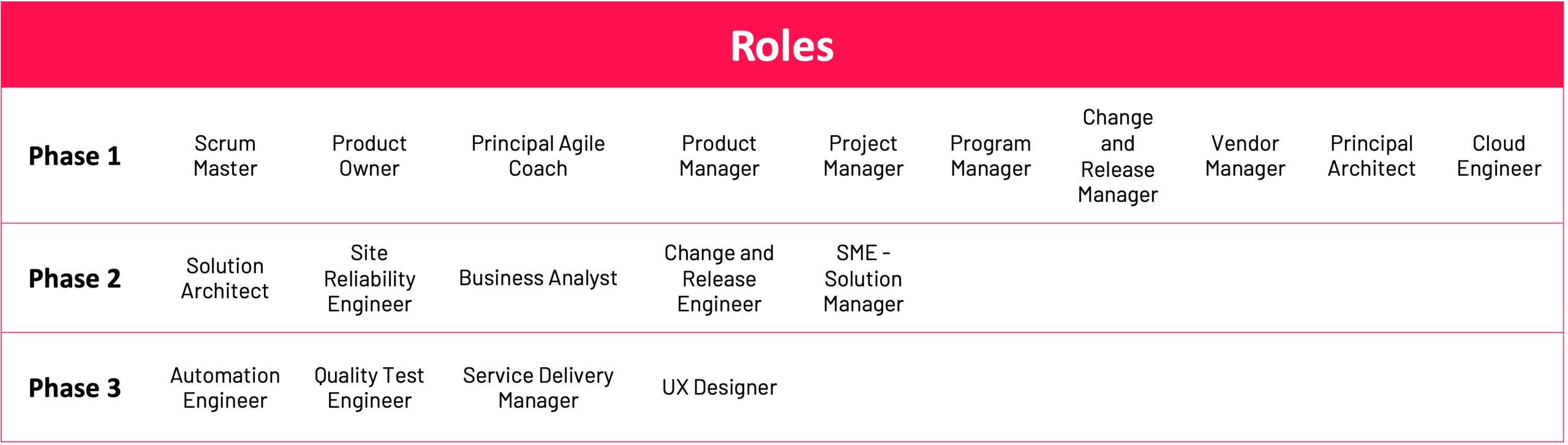
 The Agile Leads course thrilled the client, so they requested more courses in the same format for additional roles. Thus far, we have developed blended learning courses for: