Category: AI-Ready Foundations

Solution in Action: Platform Engineering Evolved with AI

With orchestrated AI agents managing tasks and communication behind the scenes, you can eliminate context switching and stay fully focused on what matters most.

Unlocking the Why: Purpose, Benefits, and Measurable Outcomes

Context drives efficiency. AI-powered automation and smart integrations have the potential to transform platform engineering by eliminating repetitive work and streamlining workflows for both developers and project managers. 

By connecting Atlassian tools like Jira and Confluence with intelligent agents such as Rovo, along with seamless integration across development tools, we automate essential tasks and remove friction. The result is faster delivery, fewer errors, and better collaboration. 

Our AI-powered solution shifts the focus of platform engineering to what matters most: enabling teams to spend less time on routine tasks and more time driving impact.

Bridging the PM-Developer Gap: From Problem to Solution

The Problem ->The Solution -> The Outcome ->
High context switching between tools causes inefficiencies.AI-driven integration of Atlassian tools with intelligent assistants like Rovo and Cline plugin.Reduced context switching, improving developer productivity.
Tedious manual processes slow down both development and project management.Streamlined task management, automated status updates, and smarter documentation.Faster task completion with minimal human intervention.
Managing large engineering projects across multiple tools is complex and error-prone.AI enhances developer flow while supporting project management with real-time insights.Improved project visibility for managers through automated reporting and proactive issue identification.

See It in Action: Platform Engineering Evolved with AI

Engineering Excellence: Key Features

This AI-powered platform engineering solution enhances productivity, minimizes repetitive tasks, and ensures that developers and project managers can operate at their highest potential. With Atlassian tools at the core, AI accelerates workflows, enhances project visibility, and improves collaboration, leading to faster, more efficient software delivery.

  1. AI-Powered Task Understanding: Developers can access task information, requirements, and details without leaving their IDE, ensuring continuous focus and flow state.
  2. AI-Driven Code Implementation Assistance: AI helps developers with fast, contextually relevant code suggestions and solution implementations, speeding up development.
  3. Seamless Integration with CI/CD Pipelines: AI monitors and reports on deployment status automatically, keeping developers focused on their code rather than administrative tasks.
  4. Automated Sprint Documentation Updates: Rovo automatically drafts and updates Confluence documentation based on live Jira data, eliminating manual tracking.
  5. Streamlined Code Implementation: AI suggests full code structures and algorithms, enabling developers to work faster and smarter, while also enabling rapid refinement of solutions
  6. Comprehensive Dashboard Integration: Both PMs and developers can work from centralized Atlassian tools (Jira, Confluence, IDE), ensuring consistency and alignment across the team.
  7. Increased Data Quality: Centralized and automated workflows in Jira and Confluence lead to better data quality, which informs better decision-making and reporting.

Bottom Line Results

Solutions like this boost team productivity by up to 60% with AI-powered Atlassian tools. Reduce context switching, automate tasks, and accelerate development cycles, all while enhancing decision-making and workflow efficiency.

The Product Owner’s Guide to AI Features—Balancing Innovation with Value Delivery

AI is changing the game. But it doesn’t rewrite the rules of product leadership. The opportunity lies in choosing where intelligence creates measurable impact on experience, efficiency, and outcomes.

Product owners today are responsible not just for what gets built, but for why and how. That includes shaping conversations around AI features with purpose, grounding each decision in value, and speaking in terms that resonate from sprint planning to the executive level.

Anchor AI in Outcomes, Not Novelty

The most effective AI features start with value. These two principles help you filter hype from opportunity.

Value Earns Priority

AI should serve the product’s purpose. When evaluating potential features, the most important question remains: What outcome are we enabling? Whether it’s reducing friction, increasing precision, or unlocking personalization at scale, AI belongs when it clearly contributes to business and user value.

Start with what users actually need. Then assess whether AI is the most effective approach to meet that need. Smart recommendations, automated steps, and adaptive content are all strong candidates. The most valuable AI features often feel like natural extensions of a well-designed product. Not flashy, but quietly effective.

Simpler Ideas Can Scale

Effective AI doesn’t always mean advanced. A single well-targeted automation can save hours of user time and scale value across thousands of interactions. Features like smart autofill, behavior-based nudges, or next-action guidance often outperform more complex implementations. Focus on usability and repeatability, not novelty.

Connect the Dots Between Systems, Teams, and Goals

AI features depend on more than code. They require system thinking and team alignment to reach full potential.

AI Features Don’t Stand Alone

AI depends on structured data, consistent flows, and ongoing learning. That means success requires more than a good idea. It demands cross-functional alignment and a clear understanding of how each feature fits into the broader product system.

Product owners play a key role in connecting engineering, data, and design functions. You don’t just approve features. You orchestrate feasibility. That includes knowing what data is available, how models will evolve over time, and what technical or ethical constraints may apply.

Fit Features Into a Larger System

AI features perform better when they are part of an adaptive, connected experience. Look for opportunities to create feedback loops where the system learns and improves. Prioritize features that scale across use cases, expand system intelligence, or lay the groundwork for future automation.

Lead Conversations—Up, Down, and Across

Great product owners manage more than the roadmap. They guide conversations with stakeholders and delivery teams alike.

Translate Business Strategy Into Execution

It’s common for stakeholders to request “something with AI” without clarity on what that entails. Product owners are uniquely positioned to turn ambiguity into action. Anchor conversations around outcomes. Clarify the benefit. Focus on the impact.

Frame AI initiatives in terms of cost reduction, time savings, engagement, or strategic differentiation. Then work with delivery teams to translate those goals into manageable iterations. Being fluent in both business and technical priorities makes you a linchpin, able to ensure every AI investment has a purpose and a path to value.

Career Growth Through Language Alignment

For team-level product owners, fluency in enterprise language creates career momentum. By connecting user stories to strategic value, you position yourself as someone who can operate at scale. AI provides an opportunity to stretch beyond backlog grooming and into product strategy by asking better questions, championing responsible design, and guiding features that align with future-state operations.

Build Features That Scale With the Business

The best AI features adapt, evolve, and expand over time.

Prioritize Expandable Intelligence

Not every AI idea deserves a place on the roadmap. Look for features that extend value over time. Think systems that get smarter with use, experiences that adapt based on behavior, and automations that free up time across teams or functions.

Examples include:

  • Behavioral recommendations that improve with more interactions
  • Automation of repetitive tasks like classification or routing
  • Dynamic personalization that adjusts based on contextual data

These improve user experience while preparing your product to scale as your operating model becomes more fluid, more responsive, and more intelligent.

Design With Trust at the Core

Product value depends on user confidence. Trust must be embedded into every intelligent feature.

Responsible Design Is Product Excellence

Trust is essential for adoption. Regardless of performance, users need to understand what the system is doing and why. Transparency, fairness, and control should be baked into your feature design from the beginning.

Be clear about how the AI makes decisions. Give users appropriate visibility and options for control. Ensure the feature complies with privacy regulations and ethical expectations. Trust doesn’t just protect your product, it elevates it.

Position AI Workstreams as Strategic Progress

Whether you’re optimizing autofill or embedding real-time prediction, AI workstreams now shape how product teams contribute to enterprise evolution. The real challenge is building AI features that activate intelligence in ways that create lasting value.

Product owners are essential to that shift. You have the context, the access, and the influence to decide what gets prioritized and how it gets done. And in doing so, you have the opportunity to shape more than just a product. You can shape how intelligence flows through the business.

Atlassian’s Bold Move to AI-Native: What Leaders Need to Know

Atlassian Teams ’25 marked a decisive moment. Putting the full focus on the platform’s AI-native trajectory, a slew of exciting product announcements prove that it is actively shaping how modern enterprises operate.

With new capabilities embedded across Jira, Confluence, Jira Service Management, and the Strategy and Teamwork Collections, Atlassian has introduced a scalable model for transforming enterprise execution. For leaders focused on performance, alignment, and speed, this roadmap signals a shift from tool deployment to operational reinvention.

Key Product Announcement Highlights

Atlassian is now positioning its platform as a catalyst for orchestrated, intelligent workflows across the business.

AI Becomes the Architecture

Rovo AI is now available across all Atlassian Cloud plans at no cost, no longer as a paid add-on. It delivers an integrated intelligence layer for search, chat, and automation. With the introduction of Rovo Studio, enterprises can also design agents that operate inside the Atlassian ecosystem.

These tools accelerate execution, streamline decisions, and surface knowledge at the moment of need. Instead of relying on disconnected automation pilots or third-party solutions, teams can now work with AI as a built-in capability. It is configurable, contextual, and connected to the rest of the stack.

From Bundled Apps to Integrated Execution

Atlassian’s Strategy and Teamwork Collections represent more than convenience. They are purpose-built environments for aligning strategy with execution.

  • The Strategy Collection (Jira Align, Focus, and Talent) gives leaders continuous visibility into enterprise priorities. It supports dynamic planning, workforce alignment, and portfolio funding within a single coordinated view.
  • The Teamwork Collection (Jira, Confluence, Loom, and Rovo agents) unifies collaboration across teams and platforms. It enhances speed and clarity in daily execution while supporting long-term adaptability.

Together, these collections transform Atlassian from a set of productivity tools into a cohesive operating layer.

Jira Service Management Expands Its Reach

Jira Service Management (JSM) now serves enterprise-wide needs. New capabilities for HR and Customer Service Management expand its footprint well beyond IT. AI features such as sentiment-aware triage and predictive assignment enhance speed, resolution quality, and insight across functions.

This evolution positions JSM as a unified service platform. It enables organizations to streamline delivery without layering on additional tools or sacrificing cross-team alignment.

A Platform for Unified Workflows

Atlassian is executing a clear platform strategy. The transition from “products” to “apps,” combined with standardized global navigation and the Teamwork Graph data layer, provides a modular and integrated foundation for enterprise operations.

This new architecture makes it easier to:

  • Connect workflows across functions
  • Deliver consistent user experiences
  • Enable real-time orchestration of work, data, and engagement

Atlassian is moving from collaboration suite to system of record for intelligent execution.

What Enterprise Leaders Should Prioritize

With AI now embedded at the platform level, enterprise leaders must shift from exploration to orchestration. The value of these tools is no longer hypothetical. The focus turns to where intelligence can generate the greatest impact across operations.

Leaders should begin by identifying the points in their operating model where intelligence has the power to remove friction and accelerate outcomes. These include high-cost handoffs, complex decisions, and workflows that demand speed and scale.

Maximizing these capabilities requires more than layering automation on top of legacy processes. It starts with a fundamental reassessment of whether current workflows are still fit for purpose. Intelligent systems now provide real-time data flow, adaptive execution, and agent-led support that make traditional models obsolete.

Key areas to evaluate include:

  • Decision velocity. Where are approvals, prioritizations, or escalations slowing momentum? Introducing AI agents into these flows can unlock faster execution while maintaining the necessary oversight.
  • Organizational fragmentation. Which departments still operate in isolation, with limited connection to enterprise objectives? The Strategy Collection provides shared visibility that aligns teams with high-priority outcomes.
  • Service delivery. Where do static request queues or disconnected tools reduce responsiveness? Expanding Jira Service Management into HR, customer support, or legal enables enterprise-wide service transformation.
  • Scalability. Are platforms and data architectures designed to support modular, agent-driven operations? A platform-oriented structure prepares the enterprise to scale intelligence without rework or disruption.

Each organization has different starting points. The most successful transformations begin by focusing on the areas where opportunity and urgency converge. That is where intelligent orchestration delivers the fastest returns and creates momentum for broader change.

Cprime’s Role in What Comes Next

Atlassian has stepped confidently into the AI-native future. Cprime is already putting that vision into motion with exciting solutions.

As a platinum partner, we’ve been building AI-powered solutions across the Atlassian ecosystem. Long before Teams ’25. Our teams are actively developing Rovo agents to solve real challenges across strategy, product, and service workflows. These use cases are already producing measurable gains in efficiency, clarity, and coordination.

We bring proven experience in scaling enterprise service models. That foundation positions us to help organizations fully leverage Jira Service Management across business functions like HR, customer support, and finance. And we’re primed with the expertise to guide teams through the adoption of the Strategy Collection to ensure enterprise priorities are continuously reflected in execution.

Our focus is clear: align platform capability with business ambition. Activate AI where it drives outcomes. And rewire the operating model for scale, speed, and strategic clarity.

Let’s make that happen, together.

The Hidden Challenges of AI and What Successful Companies Do Differently

AI is supposed to be the game-changer, the ace up every enterprise’s sleeve. It promises to revolutionize industries, make businesses faster, smarter, and more efficient. And yet, most companies struggle to move beyond proof-of-concept—to leverage AI to its full potential and achieve ROI. The journey from AI curiosity to AI-powered evolution is riddled with roadblocks. You’re not alone if your AI initiatives feel like they’re stuck in a quagmire of data issues, skill shortages, and regulatory uncertainty.

But let’s be clear: those who successfully navigate this ‘messy middle’ of AI adoption dominate. They transform their enterprise portfolio and platform operating models, integrate AI into every function, and create lasting competitive advantages. So how do you get there?

Identifying the Core Challenges in AI Adoption

Successfully implementing AI requires navigating the obstacles that hinder its adoption. From scattered data to a lack of skilled professionals and the ever-evolving regulatory landscape, enterprises must address these hurdles head-on to unlock AI’s full potential.

Data Silos and Fragmentation: The Silent AI Killer

Imagine trying to drive a race car with a hundred different fuel sources—each requiring its own nozzle, pump, and adapter. That’s what enterprises face with data fragmentation. A MuleSoft report found that 90% of IT leaders struggle with data silos. That means AI is often making decisions based on incomplete, outdated, or conflicting information. No wonder so many initiatives fail to deliver real impact.

The solution? Companies must rethink their data strategies, treating data not as isolated business units’ property but as a shared, fluid asset that powers AI-driven decision-making in real time.

The Talent Crunch: Bridging AI Theory and Reality

Hiring AI talent isn’t just tough—it’s cutthroat. With AI evolving at warp speed, enterprises often find themselves either relying too much on external consultants or expecting their existing teams to magically acquire deep AI expertise overnight. According to Boston Consulting Group, 70% of AI adoption challenges stem from people- and process-related issues.

The companies winning the AI race are those that build internal capability alongside external expertise. This means robust upskilling programs, cross-functional AI teams, and embedding AI specialists into core business units rather than isolating them in R&D silos.

Ethical and Regulatory Landmines

Let’s talk about trust. AI makes decisions that impact people’s lives—hiring, lending, medical diagnoses. Get it wrong, and the backlash is fierce. Algorithmic bias, opaque decision-making, and compliance risks aren’t abstract concerns; they’re existential threats to AI’s long-term viability in business.

Regulations are evolving fast, from GDPR to the AI Act. Enterprises that embed ethical AI frameworks now—ensuring transparency, fairness, and governance—won’t just avoid regulatory fines. They’ll build consumer trust, unlock AI’s full potential, and future-proof their investments.

Strategic Approaches to Overcoming AI Implementation Barriers

Overcoming AI adoption challenges demands a strategic, proactive approach. Companies that excel at AI integration do so by breaking down silos, investing in people, and embedding strong governance practices from day one.

Unifying Data: The Foundation of AI Success

You wouldn’t build a skyscraper on quicksand, so why launch AI on shaky data infrastructure? Enterprises must move from fragmented, siloed data structures to a unified, orchestrated data ecosystem. This means AI-driven platforms that allow seamless, real-time data exchange across departments. The goal? Turn every business function into an AI-fueled decision engine, where insights flow freely, and AI can continuously refine its accuracy.

Investing in Talent: AI Fluency for Every Level

Successful organizations have rethought their approach to AI training. AI isn’t just for data scientists and engineers. Product managers, marketing teams, customer service reps, and executives can all benefit, but only if they receive effective training. AI-first companies foster a culture where AI is woven into daily workflows, ensuring adoption isn’t just technical but cultural.

Look at companies like VWV, which introduced an “AI innovation programme” that engaged employees in AI-driven projects, sparking real excitement and practical efficiency gains. AI isn’t about replacing people—it’s about augmenting them.

AI Governance: Not an Afterthought, but a Differentiator

AI governance isn’t just about compliance; it’s about trust. Enterprises that embed robust governance frameworks from the start—including clear ethical guidelines, bias monitoring, and transparent decision-making—will gain a sustainable edge. AI-first businesses don’t just ‘use’ AI; they build trust around it, ensuring every AI-driven action is aligned with business values and customer expectations.

Learning from Successful AI Integrations

By examining how industry leaders have navigated their own AI journeys, businesses can uncover key lessons and actionable strategies to accelerate their own transformations.

GSK’s AI-Powered Acceleration

When the world was scrambling for a COVID-19 vaccine, GSK was already ahead. But now, AI is integral to their drug discovery, manufacturing, and decision-making processes, via the groundbreaking KGWAS system. CEO Emma Walmsley elaborated on AI’s impact, noting that it enhances productivity by improving the identification of biological targets, modeling clinical trials, and predicting patient responses.

JPMorgan Chase’s Generative AI Leap

JPMorgan Chase isn’t waiting to see where AI goes—they’re directing its trajectory. With a generative AI suite deployed across 200,000 employees, they’re streamlining everything from customer interactions to internal operations. And CEO Jamie Dimon? He’s all in, pushing for AI adoption at every level, recognizing that it’s not just about automation—it’s about business reinvention.

Leading Superannuation Firm’s 1100% Increase in AI Platform Engagement

With guidance from our own AI Center of Excellence, transformation experts from Cprime | Elabor8 helped a leading superannuation firm achieve a staggering 1100% increase in AI platform engagement through a combination of strategic upskilling and uplift roadmap development. Revitalizing a flagging AI transformation, this success set the client up with an enterprise-wide foundation for future AI initiatives.

Charting a Path Forward: Own Your AI Future

The ‘messy middle’ of AI adoption is where companies either stall or soar. The ones who win? They don’t wait for perfect conditions—they build the foundations necessary for AI to thrive. This means:

  • Breaking down data silos and ensuring AI has access to high-quality, real-time information.
  • Developing in-house AI fluency so teams at every level understand and integrate AI into their workflows.
  • Embedding governance and trust from the ground up to ensure AI remains an asset, not a liability.

AI is the future of business. Enterprises that embrace its complexity today will be tomorrow’s market leaders. This is not up for debate. The question is whether your business will be the one leading the charge.

The Smart Way to Measure and Scale AI ROI

AI investments are accelerating, yet ensuring a strong return on investment (ROI) remains a persistent challenge. While traditional ROI measurements—such as cost savings and efficiency gains—are useful, they fail to capture AI’s full strategic impact. To truly optimize AI spend, organizations must evaluate both quantitative and qualitative metrics while focusing on long-term organizational capabilities.

Enterprise AI adoption is surging. Forrester Research predicts AI spending will grow at an annual rate of 36% up to 2030, capturing 55% of the AI software market. However, this rapid expansion also increases pressure on companies to justify AI’s business value. Organizations with mature AI strategies are already reaping benefits; McKinsey’s 2024 State of AI report finds that such companies experience cost reductions and revenue gains, making strategic AI investment an imperative.

Measuring AI ROI Beyond Traditional Metrics

Many organizations still assess AI projects based solely on immediate cost savings or revenue generation, failing to recognize AI’s full potential. Like digital transformation, AI should be viewed as a strategic investment with both short-term benefits and long-term business impact.

AI delivers measurable value across multiple dimensions. Operational efficiency is one such area, where AI-driven automation reduces manual workflows and optimizes processes, leading to a 3-5% increase in sales productivity, according to McKinsey. Beyond efficiency, AI significantly enhances decision-making by providing real-time insights and predictive analytics, enabling businesses to make more informed, strategic choices.

Another critical area of impact is customer experience. AI-driven personalization and automation are transforming how businesses engage with their customers, ensuring more tailored and seamless interactions at scale. Additionally, AI plays a pivotal role in scalability and agility, helping organizations turn complexity into a competitive advantage. By automating and optimizing processes, businesses become more adaptable, resilient, and better equipped to navigate rapidly evolving markets.

Qualitative and Quantitative Metrics for AI Success

To justify AI investments, businesses must look beyond cost reduction and incorporate long-term value indicators.

Quantitative Metrics:

  • Reduction in Operational Costs – Both forecasts and current case studies support AI’s ability to cut manual work and streamline workflows, delivering efficiency gains.
  • Increase in Productivity – AI augments human capabilities, enabling teams to focus on high-value work, reducing ideation and content creation time.
  • Revenue Impact – AI-driven personalization boosts customer conversion rates and marketing effectiveness.
  • Time Savings – AI-powered automation speeds up processing times and eliminates bottlenecks in operations.

Qualitative Metrics:

  • Improved Employee Engagement – AI enhances employee satisfaction by reducing repetitive tasks, enabling more meaningful work.
  • Enhanced Customer Satisfaction – AI-powered chatbots and automation improve responsiveness and personalization.
  • Competitive Differentiation – Businesses leveraging AI effectively and with purpose stand out in the market.
  • AI-Driven Cultural Transformation – Organizations that transform internally to fully embrace AI benefit from more data-driven decision-making and greater agility.

Focusing on Long-Term Organizational Capabilities

AI investment should not be short-sighted. Its true power lies in enabling Intelligent Orchestration—where people, processes, and technology harmoniously integrate to drive continuous adaptability and resilience.

A key aspect of AI’s long-term value is its ability to optimize core business systems. 

Systems of Work benefit from AI-driven automation that reduces inefficiencies and embeds decision intelligence, streamlining operations and increasing overall productivity. 

Meanwhile, Systems of Insight leverage AI to transform raw data into strategic intelligence, empowering businesses with enhanced foresight and more accurate predictive analytics. 

Additionally, Systems of Engagement improve both customer and employee experiences through AI-driven predictive interactions, fostering more personalized and effective communication.

By aligning AI investments with long-term organizational transformation, businesses ensure agility, scalability, and lasting operational excellence. AI’s role in orchestrating these systems enables companies to stay competitive and resilient as change accelerates.

Maximizing AI Value Through Intelligent Orchestration

To drive maximum ROI, AI investments must be holistic, not siloed. Businesses should integrate AI across functions, leveraging it as a core element of an intelligently orchestrated ecosystem.

Best Practices for AI Optimization:

  • Align AI with Business Goals – AI should directly support enterprise objectives, ensuring clear strategic alignment.
  • Start with High-Impact Use Cases – Begin with initiatives that yield immediate ROI, such as AI-powered automation in customer service.
  • Leverage AI for Real-Time Insights – AI-driven analytics enable businesses to act swiftly on market shifts and customer behaviors.
  • Continuously Optimize AI Performance – AI requires ongoing monitoring, refinement, and integration to deliver sustained value.
  • Prioritize AI Governance and Security – AI’s success hinges on ethical deployment, stakeholder alignment, and clear governance frameworks.

The Impact of a Mature AI Strategy

Businesses that adopt a long-term AI strategy see significant gains. McKinsey highlights high-performing enterprises that attribute 10%+ of EBIT growth to AI implementation. Imagine what your business could accomplish with:

  • 25% improvement in operational efficiency via AI-driven automation.
  • 40% faster decision-making powered by AI-enabled insights.
  • 15% increase in customer satisfaction due to AI-driven personalization.

To maximize AI spend, businesses must look beyond cost efficiency and focus on AI’s strategic, long-term value. Expanding ROI measurement frameworks to include both tangible and intangible benefits is critical.

By leveraging AI, intelligently orchestrated with all business systems, organizations build lasting resilience, optimize workflows, enhance insights, and transform customer engagement. Companies that align AI investments with business strategy, scale intelligently, and continuously refine implementation will secure the greatest competitive advantage in the years to come.

4 Insightful ServiceNow GenAI Use Cases to Reduce Manual Work for Agents with Case Summarization

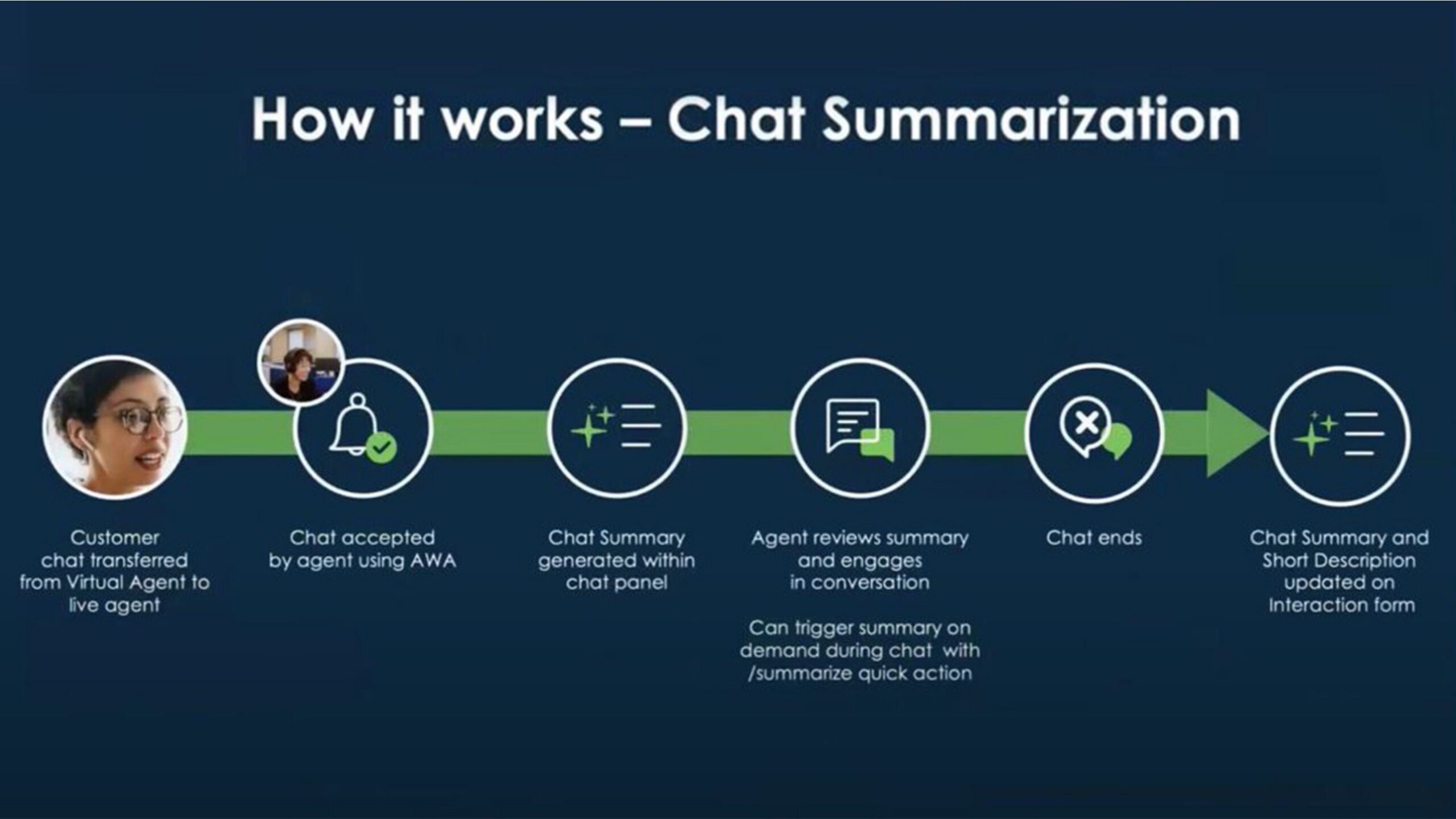
Case Summarization for IT workflows is the latest inclusion in the ServiceNow Vancouver release powered by GenAI. This feature helps employees quickly locate and understand essential document details. It consolidates relevant information and touchpoints from IT, HR, and customer service cases into summary notes within seconds.

It is an exciting time for the tech industry. With all the buzz around AI, INRY, a ServiceNow elite partner, is in a great position to combine AI technologies like Generative AI (GenAI) on the Now platform. We are powered by proprietary ServiceNow large language models (LLMs) tailored to understand the Now Platform, workflows, and automation use cases. 

Case Summarization for IT workflows

The Large Language Model (LLM) for case summarization is based on a specialized version of the 15-billion-parameter StarCoder model. It was developed as part of ServiceNow’s co-led open BigCode initiative and tuned with Nvidia accelerated computing and DGX Cloud.

Case Summarization leverages generative AI to seamlessly filter information, including the data from IT environments, HR records, and customer service cases. The aim is to streamline and enhance the efficiency of IT operations. The feature enables faster handoffs between team members and achieves more efficient resolution processes.

Case Summarization: Focus on Value by Reducing Manual Efforts

The Case Summarization feature is designed to help employees focus on more valuable work, improve employee satisfaction, and reduce burnout. It reads and summarizes relevant information, including case or incident details, previous touchpoints, and actions by all involved parties, to create detailed case summary notes within seconds.

Objectives of Case Summarization

  • Reduce manual work for agents with overviews and insights to help them start work fast.
  • Easily summarize case or incident records with the click of a button
  • Quickly review pertinent information with an “at-a-glance” view
  • Keep data secure using ServiceNow’s native LLM

The technology reads and distils information from IT tickets, case files, service requests, and conversations for customer or employee issues to create summary notes in seconds. It helps automate manual tasks, reduces hand-off times between teams, speeds resolutions, and increases productivity for employees and customers.

Case Summarization models are trained on real-world data sets specific to the Now Platform, workflows, and automation use cases. The features enable faster and more reliable results and are now available to select customers through the ServiceNow Assist product.

4 Key Use Cases of Generative AI Case Summarization

One of the critical use cases for generative AI is summarization — refining all the actions and touchpoints in a case into a single summary. This could make handoffs smoother between agents and allow teams to resolve problems more quickly, improve processes, and increase alignment. 

Additionally, generative AI significantly simplifies navigating institutional knowledge and policies within the service platform’s knowledge base. This enhancement aids users in quickly finding relevant information and understanding organizational guidelines, thereby improving overall efficiency and user experience.

  • The capability helps streamline handoffs between representatives and accelerate reporting
  • Sharing case resolutions with other teams will become easy
  • The results can make IT workflows more data-driven
  •  Increase alignment and boost productivity across the organization

A recent study by Valoir revealed that when applied effectively, AI can substantially reduce a worker’s workload, possibly by up to 40%. This significant reduction in workload can lead to enhanced productivity and work-life balance for employees.

Benefits of Case Summarization

Case Summarization helps organizations realize immediate productivity gains. It simplifies processes and enables employees to focus on solving problems quickly and efficiently.

For instance, Case Summarization utilizes generative AI to meticulously read and filter key information from various domains, including IT, HR, and customer service cases. This process includes analyzing customer or incident details, previous touchpoints, actions taken, and the eventual resolution. Consequently, it efficiently automates the generation of summary notes, which are invaluable for future reference and streamlined operations.

The Take!

The new generative AI capabilities use specialized LLM optimized for the ServiceNow platform. The GenAI models are designed to learn ServiceNow workflows, automation use cases, and processes. They are currently available to a limited number of customers within the Vancouver release.

From Guesswork to ROI: The Critical Role of Metrics in AI-Driven Development

Companies across the globe are eagerly experimenting with various AI solutions. Pilots abound, some of them costing millions. Enthusiasm for this shiny new tech is at an all-time high. But there’s a problem: who’s measuring the actual return on investment (ROI) from these AI initiatives? Even after lengthy pilot programs with various AI tools like Github Copilot, many companies are considering expensive rollouts based, essentially, on hype and their teams’ gut feelings.

For savvy executives, that just won’t do.

This leap into AI—which reminds me of the early days of Agile adoption—begs the question: how can businesses assess the value of their AI investments without effective measurement?

The Importance of Metrics in Agile and AI

Without concrete metrics to gauge the improvements and ROI from AI tools, companies are navigating in the dark, making decisions based on hype rather than hard evidence. They’re risking financial resources, and (perhaps more importantly) they could miss out on genuinely transformative opportunities as a result. Without measurement, there is no visibility, and without visibility, there is no way to ensure that investments in AI are sound, strategic, and ultimately successful.

I clearly remember the path many organizations took in past years with Agile methodologies, and today’s rapid push toward integrating AI into software development processes is following the same course. Both require huge paradigm shifts in mindset, experimentation, and, crucially, a commitment to measurement. 

In Agile, metrics like velocity, sprint burndown, and release burnup are great for gauging team performance, project progress, and overall efficiency. You can base decisions on these metrics, adapt strategies, and continuously improve. Based on the same pattern, the successful adoption of AI in software development demands we establish clear, relevant metrics and figure out how to monitor them effectively.

The Challenge of Measuring AI’s Impact

Applied to software development, AI tools can increase productivity, which is little easier to measure. But they can also enhance code quality, reduce the incidence of bugs, and facilitate more innovative solutions by freeing developers from repetitive tasks. These indirect benefits, are harder to quantify and incorporate into an ROI calculation, even though we intrinsically know they’re valuable. So, we don’t only need to measure the immediate impact of AI on development speed and efficiency; we also need to somehow capture its broader contributions to project outcomes and team dynamics.

The Solution: Integrated Measurement with Allstacks

Organizations need a solution that enhances developer productivity but also integrates seamlessly with tools for comprehensive metrics. That’s the key to navigating the complexities of measuring AI’s impact on software development. 

Our holistic framework offers precisely this combination, letting you quantify the ROI of AI investments.

The framework does it all: 

  • Automating repetitive tasks
  • Suggesting code improvements
  • Facilitating faster debugging and code review processes 
  • Powering fast and high-quality user story generation

But there’s more. Beyond GitHub Copilot-style coding assistance, it comes with industry-leading implementation and enablement services. It empowers development teams, getting them up and running quickly so you can see quantifiable results in as little as ten weeks. 

We’re talking immediate efficiency gains, as you’d expect. But also improved code quality, and developer satisfaction increases over time. 

But still doesn’t supply concrete measurement to prove all the claims I just made. That’s why the true power of the framework lies in its seamless, baked-in integration with Allstacks. With comprehensive metrics automatically measured and monitored through Allstacks, the sky’s the limit.

Allstacks serves as the analytical backbone. You set a baseline at the start of an implementation, and Allstacks provides ongoing automatic reporting throughout the pilot and beyond. It tracks key performance indicators (KPIs) relevant to software development, such as time saved on coding tasks, reduction in bugs or errors, and improvements in project delivery timelines.

This ability is further enhanced by custom reporting capabilities that tailor metrics to your organization’s specific needs and goals. Adoption rate, decrease in time to market for new features, the reduction in technical debt, and more—Allstacks provides the flexibility to focus on the metrics that matter most.

With this integrated approach to measurement, there’s no question about the value. Developers appreciate a quality tool that makes their lives easier, while executives have clear, data-driven insights into the ROI of their AI investment. 

It’s a win-win scenario.

What’s Your Next Step?

By setting clear metrics from the outset and leveraging ongoing, automatic reporting, you can confidently navigate the complexities of AI adoption, making informed decisions that align with your strategic goals.

Achieve Greater Alignment with AI-Powered OKRs in Jira Align

OKRs in Jira Align FAQs addressed in this article:

  • What are OKRs in Jira Align? — OKRs in Jira Align are a framework for setting and measuring objectives and key results, helping organizations align their strategic goals with actionable outcomes.
  • How does AI enhance OKRs in Jira Align? — AI enhances OKRs in Jira Align by providing intelligent insights, real-time tracking, and predictive success analytics, making it easier to set, manage, and achieve strategic objectives.
  • What are the benefits of AI-powered OKRs? — The benefits of AI-powered OKRs include improved strategic alignment, dynamic tracking, predictive success insights, and better decision-making based on real-time data.
  • How can AI help in aligning program-level objectives with company-level objectives? — AI helps align program-level objectives with company-level objectives by analyzing relationships and providing insights to ensure all levels of the organization contribute to overarching strategic goals.
  • What role does AI play in generating well-formed OKRs? — AI suggests objectives and key results based on historical data and existing work, helping organizations set realistic and aligned OKRs that are grounded in actual projects.
  • How do AI-powered OKRs assist in adapting strategies? — AI-powered OKRs provide real-time visibility and predictive insights, enabling organizations to adjust their strategies based on current data and changing business conditions.
  • What future enhancements are planned for AI-powered OKRs in Jira Align? — Future enhancements include value funding, workstream management, advanced predictive analytics, scenario planning, and deeper integration with execution data.
  • Why is real-time tracking important for OKRs? — Real-time tracking is important for OKRs because it allows organizations to monitor progress continuously, identify potential issues early, and make necessary adjustments to stay on track.
  • How can organizations benefit from AI-powered OKRs in Jira Align? — Organizations can benefit from AI-powered OKRs in Jira Align by achieving greater strategic alignment, improving agility, making informed decisions, and driving continuous improvement in goal setting and execution.

Objectives and Key Results (OKRs) have become a cornerstone for organizations aiming to align their strategic goals with actionable outcomes. By providing a clear, measurable framework, OKRs enable enterprises to synchronize their long-term vision with day-to-day operations, ensuring that every team and individual is working towards the same objectives. 

However, the journey from setting these objectives to realizing their full potential can be fraught with challenges. This is where the integration of AI with OKR management, particularly through tools like Jira Align, can make a significant difference.

Cprime has developed an AI-powered solution that enhances the capabilities of Jira Align, making it easier for organizations to set, manage, and achieve their OKRs effectively. This innovative approach not only streamlines the OKR process but also provides real-time insights and intelligent recommendations, helping enterprises to stay agile and responsive to changing business conditions.

In this blog post, we will explore how AI-powered OKRs can transform your organization’s approach to goal setting and execution. We will focus on the practical applications of this technology, the future enhancements on the horizon, and how these advancements can help you get the most out of your investment in Jira Align. 

By the end, you will have a clearer understanding of how to leverage AI to unlock your agile future and drive greater strategic alignment across your enterprise.

This article is largely based on our recent expert-led webinar, “AI-Powered OKRs: Unlock your Agile Future with Cprime and Jira Align”. For more information, including a demo of the solution, watch the full webinar-on-demand at your convenience.

Understanding OKRs in Jira Align

Objectives and Key Results serve as a powerful framework for capturing and measuring expected business outcomes. At their core, OKRs consist of two components: objectives, which define the overarching goals, and key results, which provide specific, measurable indicators of success. This structure ensures that everyone in the organization is aligned and working towards the same strategic objectives.

There are numerous benefits of implementing OKRs:

  • They promote transparency by making goals visible across the organization
  • They foster alignment by ensuring that all teams and individuals are moving in the same direction
  • They simplify the goal-setting process with a clear, straightforward approach

However, to fully realize these benefits, it is crucial to adhere to best practices. OKRs should be value-based and specific, focusing on outcomes rather than tasks. They should also be revisited regularly to ensure they remain relevant and aligned with the evolving business landscape. Additionally, aligning OKRs across different levels of the organization, rather than cascading them, helps maintain strategic coherence and ensures that every effort contributes to the overall goals.

With this foundational understanding of OKRs, we can now explore how the integration of AI can enhance their effectiveness and help organizations overcome common challenges in setting, managing, and achieving their objectives.

The Role of AI in Enhancing OKRs in Jira Align

Integrating AI with OKR management, particularly through Jira Align, represents a significant advancement in how organizations can set, manage, and achieve their strategic objectives. AI brings a new level of intelligence and efficiency to the OKR process, providing several key benefits that enhance the overall effectiveness of this framework.

  • Intelligent Insights and Real-Time Tracking: AI-powered OKRs leverage historical data and industry benchmarks to suggest realistic and aligned objectives, ensuring ambitious yet achievable goals.
  • Dynamic Tracking and Predictive Success Insights: AI provides real-time visibility into OKR progress, allowing early identification of issues and enabling strategy adjustments to stay on track.
  • Better Alignment Across the Enterprise: AI analyzes relationships between objectives to ensure program-level goals contribute to overall strategic objectives, maintaining coherence and direction.

With these capabilities (and more!), CprimeAI-powered OKRs in Jira Align provide a robust solution for organizations looking to enhance their goal-setting and execution processes.

Read the white paper, “Misaligned to Mastered: How Cprime’s AI-Powered OKR Solution Amplifies Atlassian’s Jira Align Features” for full details on the new solution.

Practical Applications of AI-Powered OKRs in Jira Align

The integration of AI with OKR management in Jira Align offers several practical applications that can significantly enhance the way organizations set and achieve their strategic goals. Here are three key areas where AI-powered OKRs can make a substantial impact.

Aligning Program-Level Objectives with Company-Level Objectives

One of the most critical challenges in OKR management is ensuring that objectives at different organizational levels are aligned. CprimeAI helps bridge this gap by analyzing the relationships between program-level objectives and company-level goals. 

By providing insights into how these objectives align, AI ensures that every team and department is contributing to the overarching strategic objectives. This alignment is essential for maintaining coherence and ensuring that all efforts are directed towards the same long-term vision.

Generating Well-Formed OKRs

Setting realistic and aligned OKRs can be a daunting task, especially for organizations new to this framework. Our AI solution simplifies this process by suggesting objectives and key results based on existing work and historical data. This capability is particularly useful for organizations looking to reverse-engineer objectives from ongoing projects.

By analyzing the current work defined in the epic backlog, CprimeAI can generate several objectives and their corresponding key results that align with the strategic direction and goals of the company. This not only helps in setting well-formed OKRs but also ensures that they are grounded in the actual work being done, making them more realistic and achievable.

Adapting Strategies Based on Real-Time Insights

AI-powered OKRs provide dynamic tracking and predictive success insights, enabling organizations to adjust their strategies as needed. This real-time visibility into the progress of objectives allows for timely interventions and course corrections, ensuring that the organization remains agile and responsive to changing conditions.

For instance, if the AI identifies that certain key results are not on track to be achieved, it can provide recommendations for adjustments. This proactive approach helps organizations stay aligned with their strategic goals and make informed decisions based on the latest data.

With these practical applications, CprimeAI-powered OKRs in Jira Align offer a powerful tool for enhancing strategic alignment and agility. Importantly, though, it’s not a final solution.

Future Directions and Enhancements

The integration of AI with OKR management in Jira Align is an evolving journey, with several exciting enhancements on the horizon. These future developments aim to further improve decision-making, portfolio management, and overall strategic alignment within organizations.

Value Funding and Workstream Management

One of the key areas of focus is the introduction of value funding and workstream management features. These enhancements will enable organizations to better prioritize their efforts and allocate resources more effectively. By understanding which epics and initiatives provide the most value, organizations can make more informed decisions about where to invest their time and resources.

More Advanced Predictive Analytics and Planning

Additionally, the AI-powered solution will continue to evolve to provide more advanced predictive analytics and scenario planning capabilities. This will allow organizations to forecast the success of their OKRs more accurately and explore different strategies to achieve their goals. 

For example, if certain objectives are identified as having a lower likelihood of success, the AI can offer alternative scenarios and recommendations to improve the chances of achieving those objectives.

Deeper Integration With Execution Data

Another exciting development is the deeper integration with execution data. By seamlessly connecting OKR progress with execution metrics like sprint velocity and release progress, organizations can gain a holistic view of how day-to-day activities contribute to strategic objectives. This integration will enhance alignment and efficiency, ensuring that every effort is directed towards achieving the organization’s long-term vision.

These future enhancements will further solidify the role of AI-powered OKRs in driving strategic alignment and agility. By leveraging these advanced capabilities, organizations can stay ahead of the curve and continuously adapt to the ever-changing business landscape.

Could Your Organization Benefit From AI-Powered OKRs in Jira Align?

The integration of AI with OKR management in Jira Align offers a transformative approach to setting, managing, and achieving strategic objectives. By providing intelligent insights, real-time tracking, and advanced predictive analytics, AI-powered OKRs help organizations unlock their agile future and drive greater strategic alignment. 

Watch the full webinar on demand to gain a comprehensive understanding of AI-powered OKRs. Or, request a personalized demo to see firsthand how Cprime’s AI-optimized OKR solution can amplify Jira Align’s features and enhance your strategic planning processes.


Agile and AI: Navigating the Future

In the realm of software development, the integration of artificial intelligence (AI) with Agile methodologies marks a pivotal evolution. This fusion promises to redefine efficiency, innovation, and adaptability in project management and execution. 

As businesses seek to harness these technologies, understanding their potential to transform software development becomes crucial. This exploration delves into how AI can amplify the Agile framework, offering insights into a future where development processes are not just accelerated but also enriched with precision and creativity.

The Agile Evolution: Accelerated by AI

Agile methodologies revolutionized software development by introducing flexibility and responsiveness to rapidly changing requirements. The advent of AI technologies propels this agility to new heights, offering tools that automate tasks, predict trends, and facilitate decision-making. 

This synergy between Agile practices and AI doesn’t just speed up development; it enriches it with data-driven insights, making the process more adaptive and intelligent. By integrating AI into agile processes, teams can automate mundane tasks, allowing them to concentrate on innovation and problem-solving. This partnership also elevates the quality of the output. 

As we harness AI’s capabilities within Agile frameworks, we unlock unprecedented potential for innovation and efficiency in software projects.

Holistic AI Integration: Beyond Coding

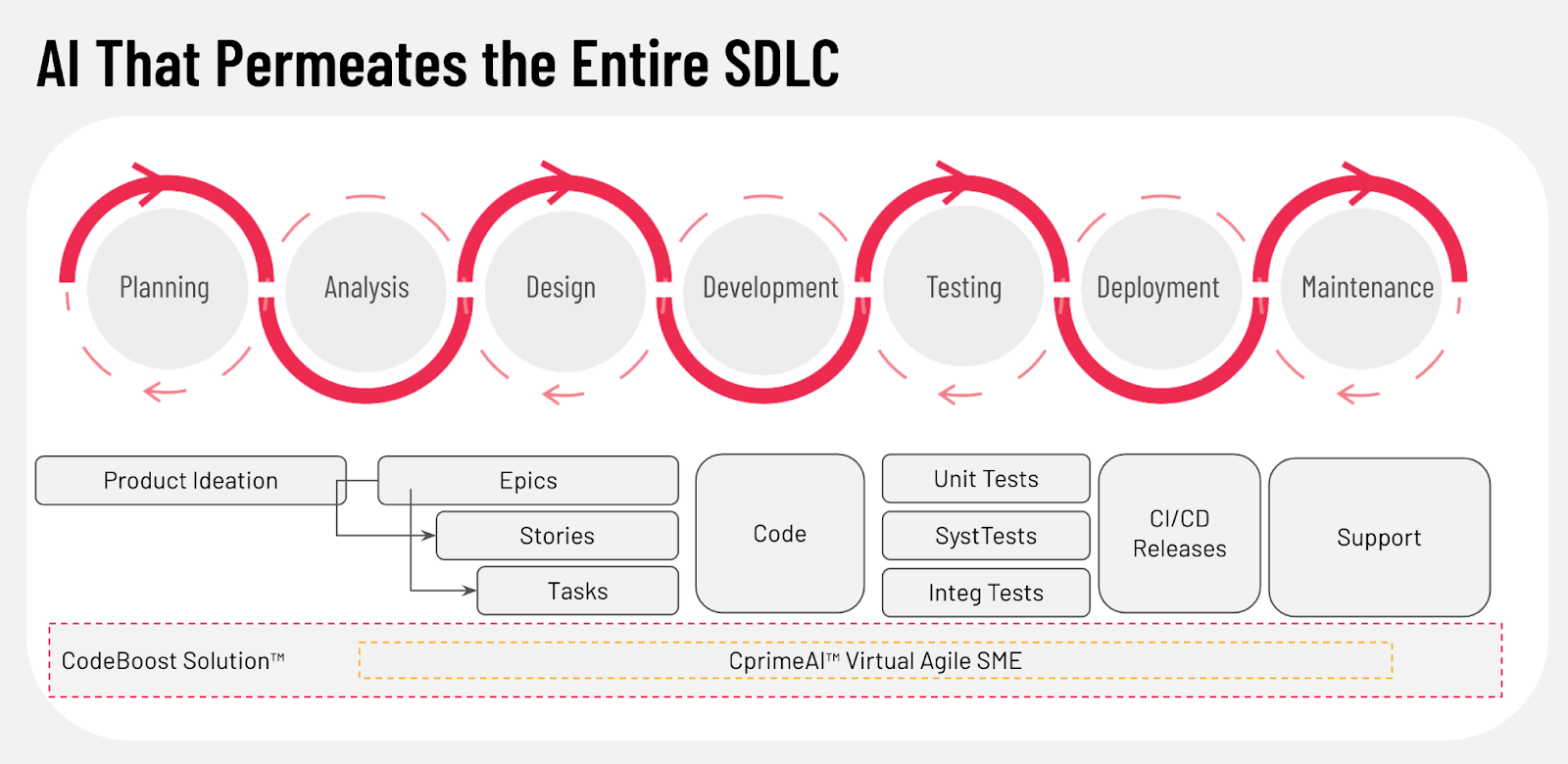
Integrating AI across the software development life cycle (SDLC) transcends mere automation of coding tasks. It’s about embedding AI from project inception through to support, aligning it with every role and task for comprehensive efficiency gains. This approach ensures AI’s capabilities are fully leveraged, from enhancing planning with predictive analytics to refining testing through automated error detection.

Measuring Success: The Role of Metrics in AI Integration

The integration of AI into software development emphasizes the importance of metrics for tracking progress and evaluating effectiveness. Utilizing data from various systems teams can establish performance baselines and measure the impact of AI tools. 

These metrics offer insights into productivity enhancements and areas needing improvement, guiding teams towards optimized AI utilization. By quantifying AI’s contributions, organizations can make informed decisions, ensuring their investment in AI technologies drives tangible improvements in their development processes.

Tailoring AI for Software Development: The CprimeAI™ Advantage

CprimeAI exemplifies the shift towards custom AI solutions tailored for specific challenges in software development. By offering AI-assisted support and seamless integration with development tools, CprimeAI enhances both security and productivity. 

Its role-based access control ensures sensitive project information remains protected, while its integration capabilities streamline workflows. This specialized approach to AI integration highlights the importance of solutions designed with the unique needs of software development teams in mind, paving the way for more efficient and secure development processes.

CodeBoost™: Revolutionizing the SDLC with AI

CodeBoost, powered by CprimeAI, introduces a comprehensive framework for leveraging AI across the entire software development life cycle, from ideation to support. By aligning AI technologies with each phase of development, CodeBoost ensures that AI’s full potential is harnessed to enhance efficiency, quality, and innovation. 

This framework represents a paradigm shift in software development, where AI is not just an auxiliary tool but a core component of the development process. CodeBoost demonstrates the future of software development, where AI and agile methodologies converge to create a more dynamic, efficient, and effective development ecosystem.

For an in-depth demo of both CodeBoost and other use cases for the CprimeAI platform, watch our webinar-on-demand, A Framework for Development in the AI Age.

Agile Reimagined: The Transformative Power of AI

Agile methodologies have reshaped software development with promises of flexibility, speed, and collaboration. Yet, there’s a gap between these promises and the reality many teams face. 

The integration of AI into Agile practices presents a compelling opportunity to bridge this gap. By enhancing Agile’s core principles with AI’s capabilities, we can unlock a new level of efficiency and innovation—a new chapter in Agile’s evolution that’s long overdue, in my opinion.

The Promise of Agile, and Why It Hasn’t Delivered

Agile methodologies were meant to allow software development teams to escape the rigidity of traditional models. At its core, Agile promised enhanced transparency, quicker delivery cycles, adaptability to change, and improved collaboration. These principles aimed to make software development more responsive to customer needs and market dynamics. 

Despite widespread adoption and numerous success stories, the full realization of these promises remains elusive for some. Challenges in maintaining the pace of delivery, ensuring complete transparency, and achieving the desired level of adaptability and collaboration have led teams to seek further optimizations. 

This gap between Agile’s promises and its practical outcomes sets the stage for the integration of AI, offering a pathway to not just meet but exceed the original expectations set by Agile methodologies.

AI as the Catalyst for Agile Evolution

The integration of AI into Agile methodologies is not about reinventing the wheel but about oiling it for smoother, faster, and more efficient rotation. AI allows us to automate routine tasks, analyze vast amounts of data for actionable insights, and predict outcomes with a high degree of accuracy. These capabilities can significantly enhance the responsiveness and efficiency of Agile practices. 

By embedding AI into the Agile framework, teams can achieve a higher level of transparency, faster delivery cycles, and a more profound adaptability to change, thus fulfilling Agile’s original promises more comprehensively.

Enhancing Agile Practices with AI

AI’s potential to refine Agile practices extends beyond automation and predictive analytics. It can transform the way teams approach key components like user story generation and backlog prioritization. 

Traditionally, creating detailed and consistent user stories has been a manual and time-consuming process, often leading to variability in quality and scope. AI, however, can standardize this process, ensuring each user story is comprehensive and aligned with project goals, thereby enhancing the overall planning and execution phases of Agile projects.

Moreover, AI-driven tools can analyze past project data to identify patterns and suggest optimizations for backlog items, ensuring that teams focus on the most impactful tasks. This not only improves project efficiency but also ensures that the final product is closely aligned with customer needs and expectations. 

By leveraging AI in these critical areas, Agile teams can overcome common challenges, making their workflows more efficient and their outcomes more predictable and successful.

Overcoming Challenges in AI Integration

Integrating AI into Agile frameworks presents its own set of challenges, from the complexity of AI technologies to the need for new skill sets among team members. However, these challenges are not insurmountable barriers but rather opportunities for growth and innovation. 

The key to successful integration lies in a strategic, step-by-step approach that includes training, experimentation, and adaptation. And, as with any iterative process, measurement and recalibration is a necessity. Set a baseline, track key metrics that matter, and fine tune the rollout as the data comes in. 

Organizations can start small, focusing on automating one or two routine tasks with AI, and gradually expand its use as they gain confidence and expertise. It’s also crucial to foster a culture of continuous learning, encouraging team members to develop the skills necessary to work alongside AI tools effectively

By viewing the integration of AI into Agile practices as a journey rather than a destination, teams can navigate the complexities of this process, turning potential challenges into a competitive advantage that drives efficiency, innovation, and success.

Looking Forward: The Agile of Tomorrow

Powering Agile using AI marks a pivotal shift towards a more dynamic, efficient, and innovative approach to software development. As we look to the future, it’s clear that this synergy will redefine what it means to be truly Agile. The Agile of tomorrow is not just about adapting to change—it’s about anticipating it, driving it, and thriving in it.

Organizations that embrace AI as an integral part of their Agile practices will find themselves at the forefront of software development, setting new standards for efficiency and innovation. The question is no longer if AI will become a part of Agile methodologies but how quickly and effectively organizations can integrate it to lead the way in software development innovation. 

I’d love to hear your thoughts on the intersection of AI and Agile in the modern development organization. Join the conversation below!