Resource Topic: AI Transformation

What is Technology Business Management?

Register for this live webinar today!

Join us for this introductory webinar to explore what TBM is, why it matters, and how it enables organizations to align IT investments with business goals. Whether you’re in IT, finance, or business leadership, this session will help you understand the fundamentals of TBM and how it drives smarter decision-making, cost transparency, and strategic alignment.

AI That Works: A Pragmatic Guide for Service Management Leaders 

Turn everyday service management into an engine of intelligent flow. 

AI is redefining how service teams operate, cutting resolution times by up to 50%, automating 70% of routine requests, and freeing talent for higher-value work. 
But success doesn’t begin with a grand AI strategy. It begins by solving real service challenges: faster triage, continuous coverage, unified knowledge, and actionable insights. 

This practical guide shows how to use Atlassian Jira Service Management and Rovo to: 

  • Automate repetitive requests and reduce backlog
  • Extend coverage without expanding headcount 
  • Surface answers instantly across systems 
  • Predict and prevent recurring issues 
  • Deliver insights leaders can act on without analyst support 

Written for ITSM and service management leaders, this ebook translates AI potential into measurable outcomes you can activate today. 

Ready to see what AI can do for your service organization? 
Fill out the form to get your copy of AI That Works and start building a smarter, more resilient service operation. 

TBM Conference 2025: Strategy, spend, and execution, rewired for impact 

Miami, Florida | November 10–12, 2025 

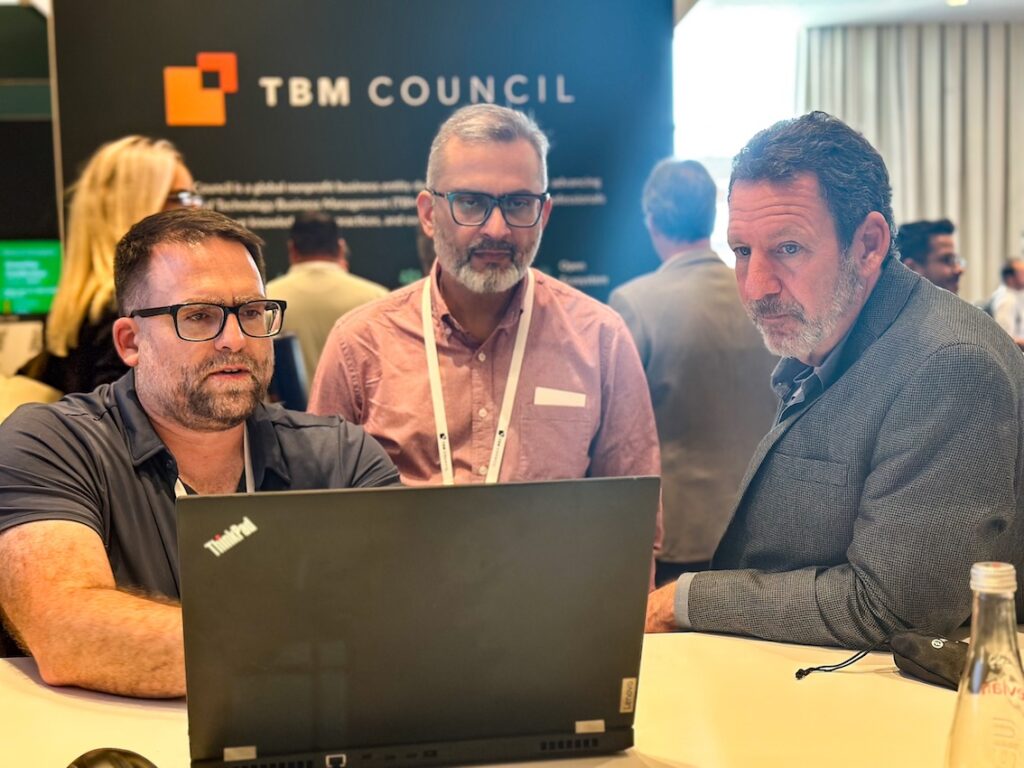
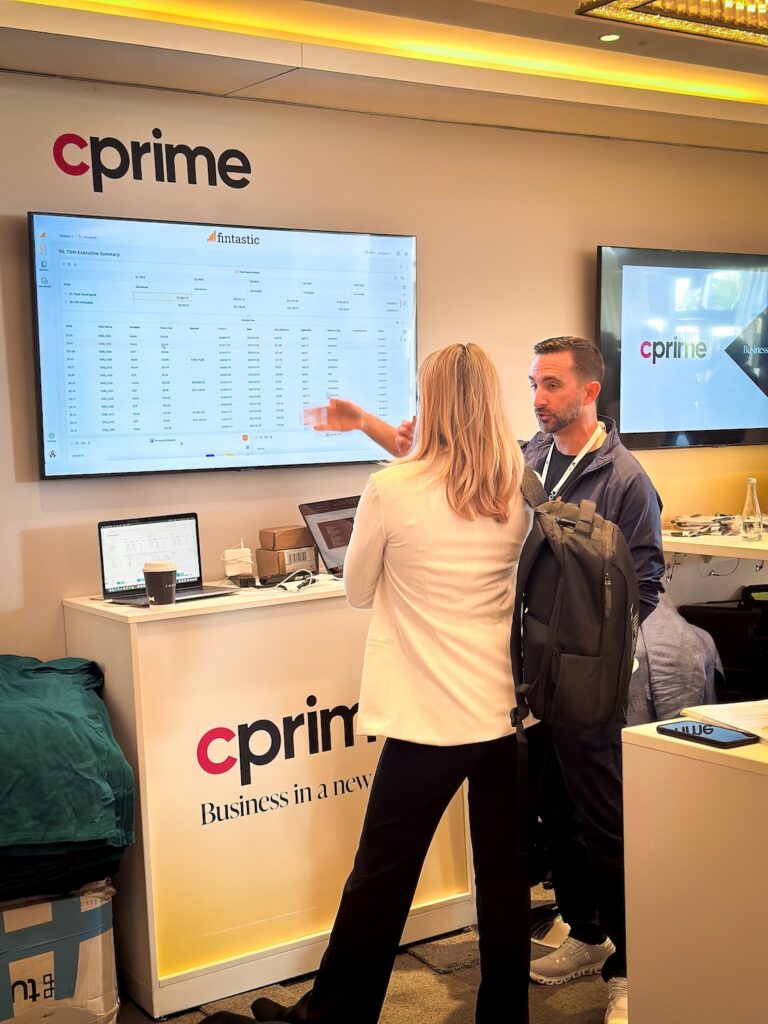
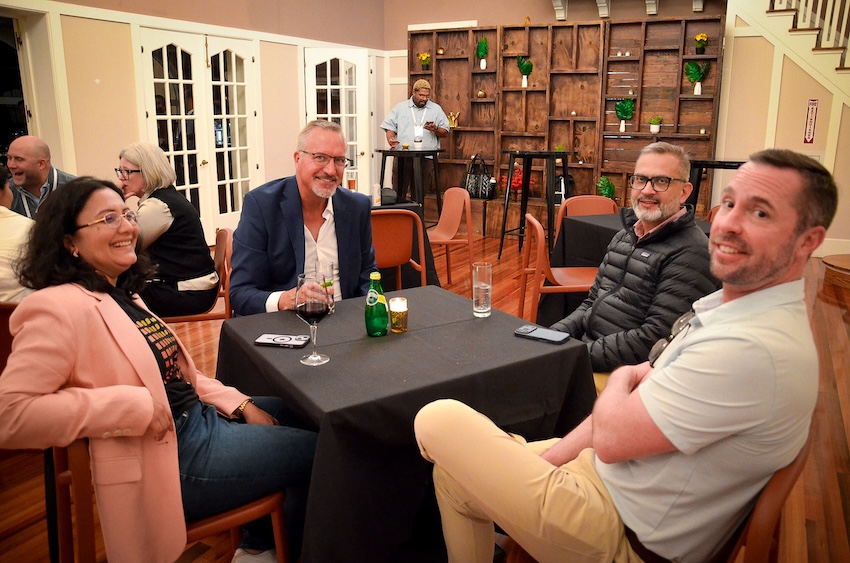
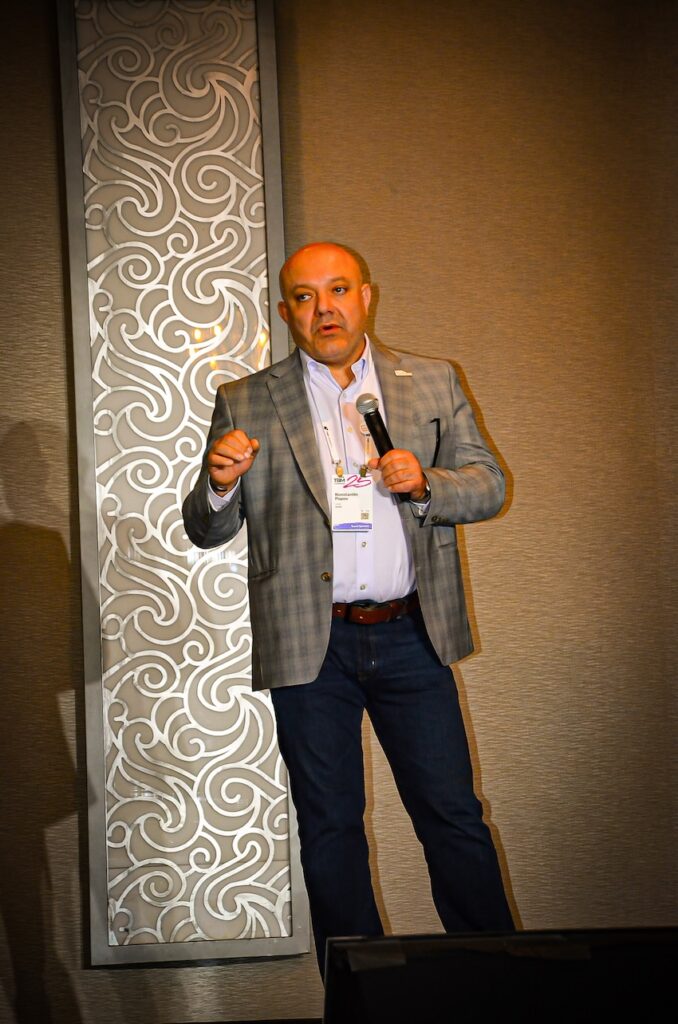
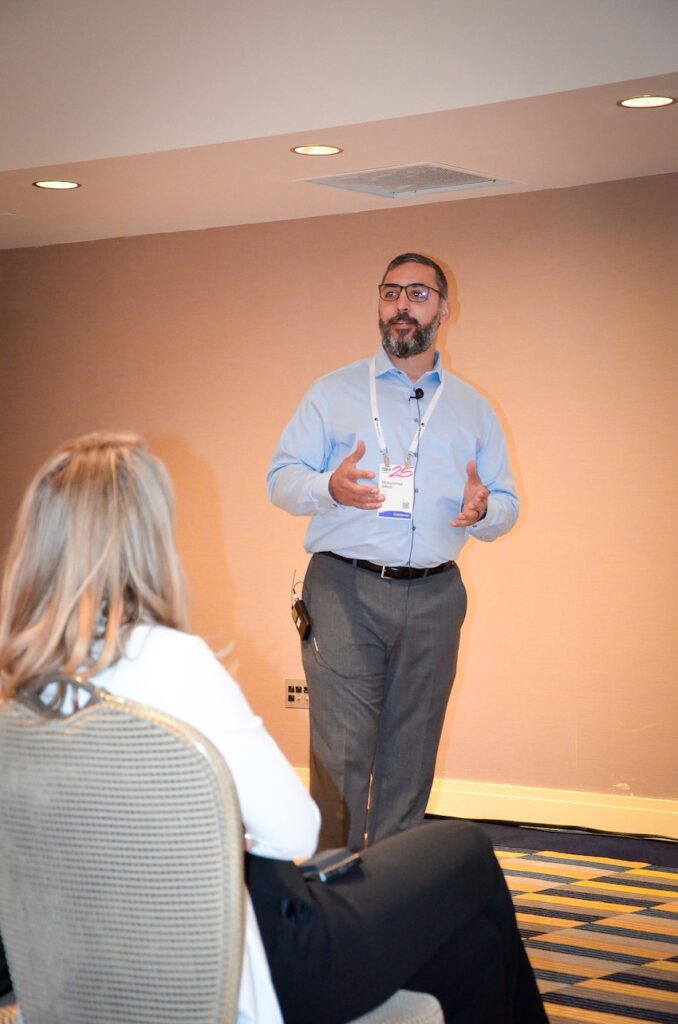
The 2025 TBM Conference brought together leaders who are reshaping how enterprises manage technology, optimize investment decisions, and accelerate value. Over three days, we engaged in deep conversations about connecting strategy, spend, and execution into a single system that drives measurable business outcomes.

Our team hosted sessions across TBM, cost optimization, AI-driven decisioning, and modern operating models. We explored how CIOs, CFOs, and transformation leaders are aligning financial governance, portfolio management, and architecture to move beyond incremental improvements and build connected, high-velocity enterprises.


What we explored at TBMC 2025 

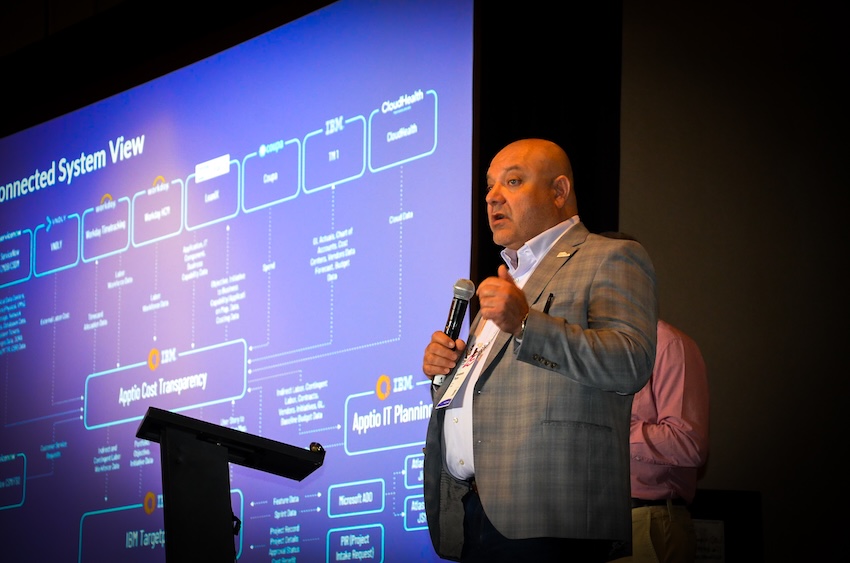
The evolution of TBM inside a modern operating model — Sessions focused on how TBM now anchors the economic intelligence layer of the Enterprise Operating Model, enabling real-time visibility, smarter trade-offs, and funding that adapts as priorities shift. 

AI’s role in accelerating financial and operational performance — Leaders discussed how AI enhances forecasting, strengthens investment decisions, and reduces the lag between planning and execution. The message was clear: AI-powered financial operations set the pace for enterprise agility.

Closing the orchestration gaps that stall transformation — Breakout discussions highlighted the friction points that slow value flow—siloed portfolios, outdated funding cycles, architectural constraints—and how connected TBM practices help enterprises scale impact faster.

Real stories from enterprise practitioners — Our sessions covered practical examples of how organizations modernized financial governance, improved cross-functional alignment, and strengthened ROI visibility while advancing their operating model maturity.


From Listening to Leading: Our Journey to TBMC 2025

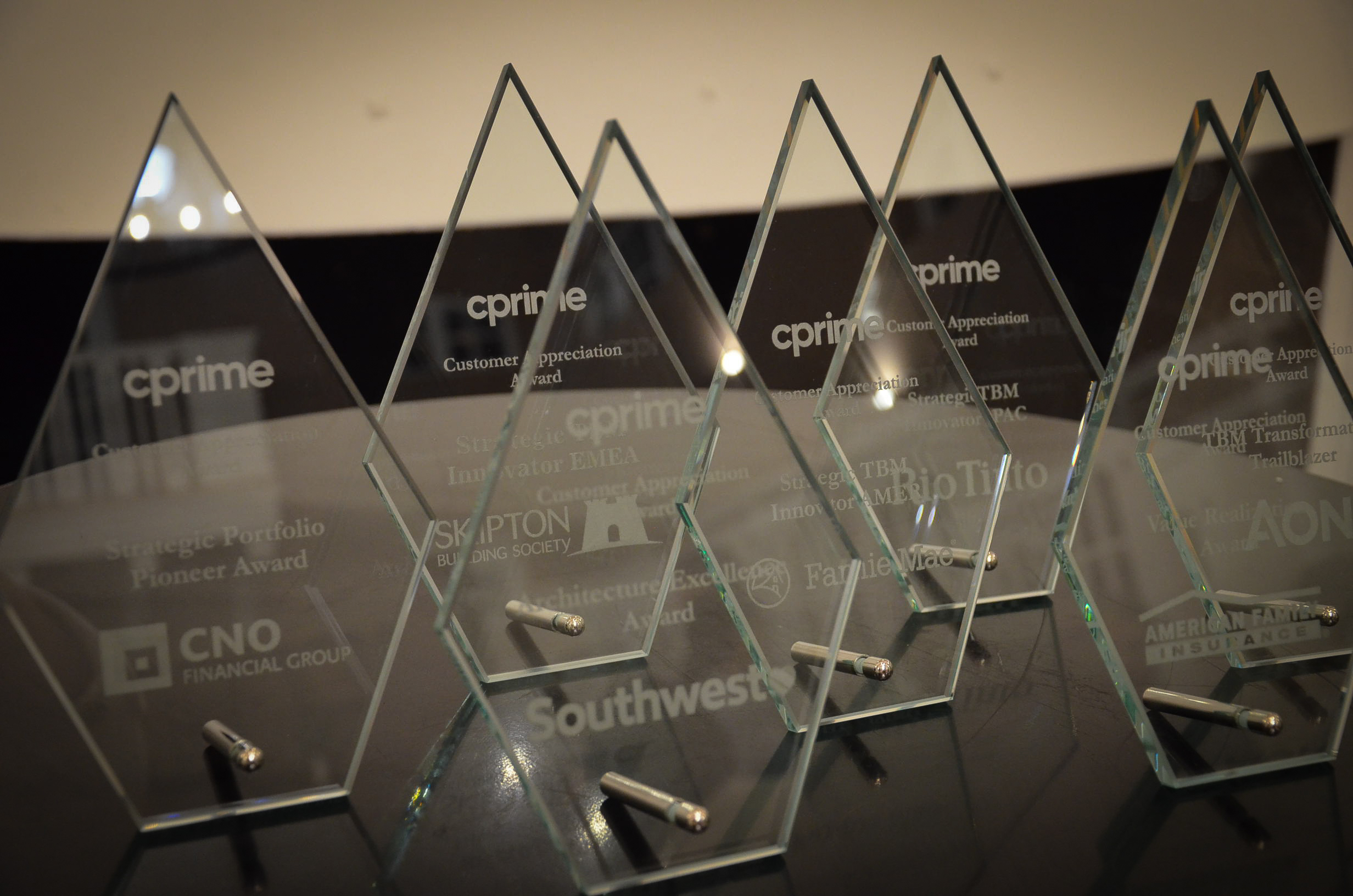
Discover how Cprime is shaping the future of enterprise operating models at TBMC 2025 with clients CNO Financial.


Featured insights and session materials

Explore related resources from TBMC 2025, including expert commentary, session highlights, and analysis on the future of TBM and operating models.

Session recaps:

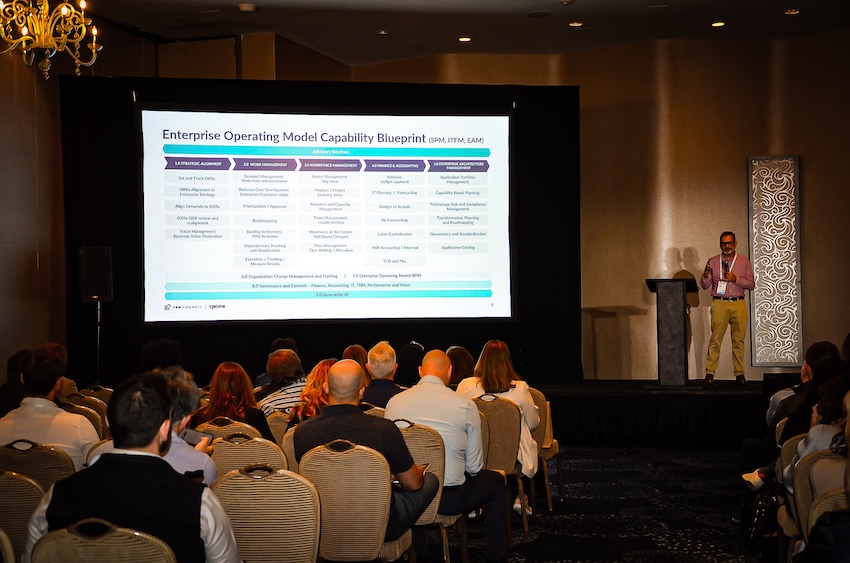
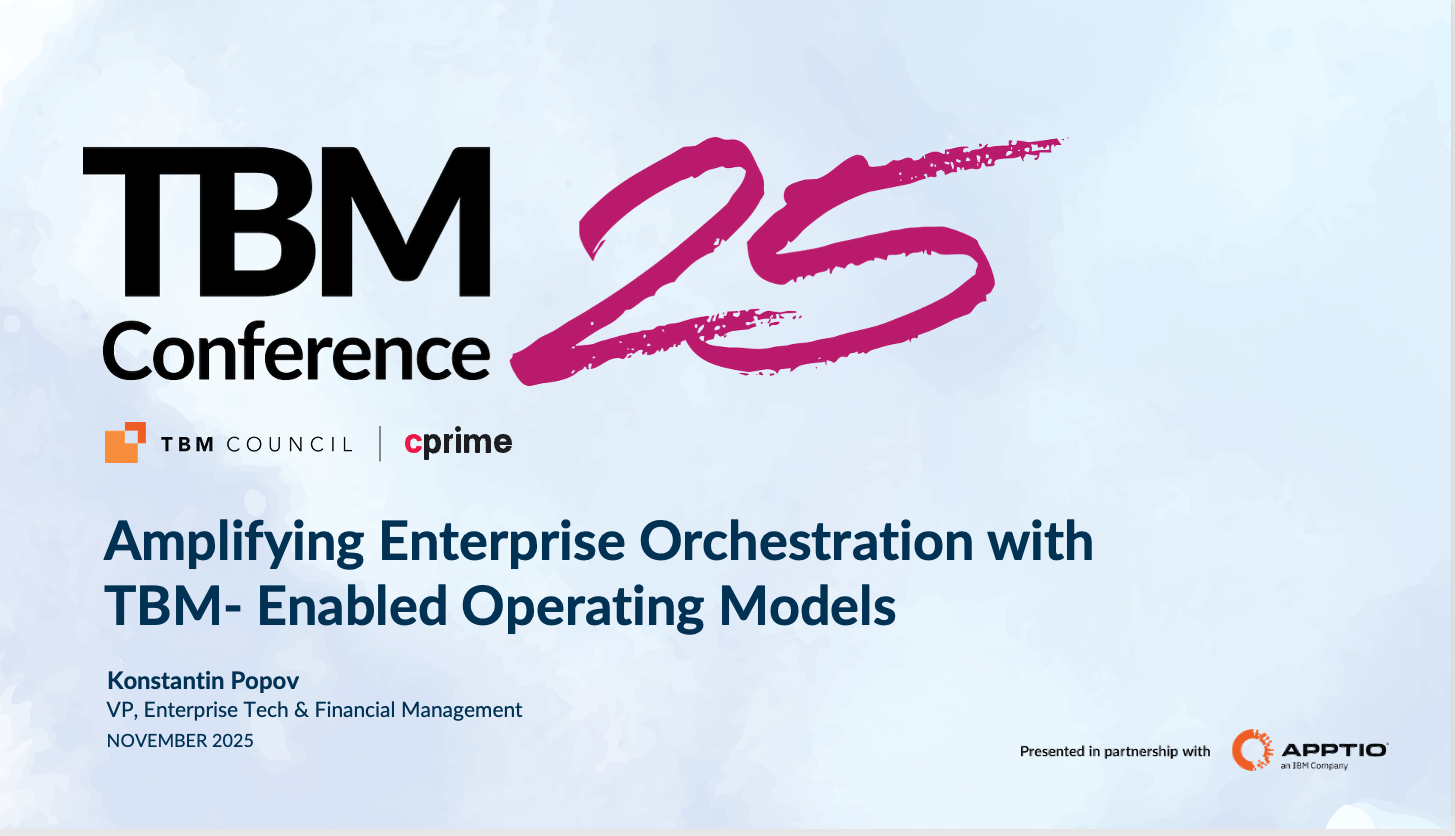
Amplifying Enterprise Orchestration with TBM-Enabled Operating Models 

Learn how leading enterprises link strategy to execution through modern operating models, from product-led design to enterprise finance. Using TBM, organizations move beyond structure to systematically measure, govern, and optimize value flow in real time. 

Speaker: Konstantin Popov

Session recaps:

Next-Gen Enterprise Operations: AI, Platform Integration, and Predictive Intelligence

Discover a systematic approach to value creation that aligns customer success with enterprise performance across every business function. 

Speakers: Konstantin Popov and Luke Hohmann

Session recaps:

EBM + TBM: The Decision Engine Powering Adaptive, Value-Driven Operating Models

Explore how leading financial institutions reimagine governance and risk management within modern enterprise operating models. 

Speakers: Konstantin Popov and Dickerson Miles

Session recaps:

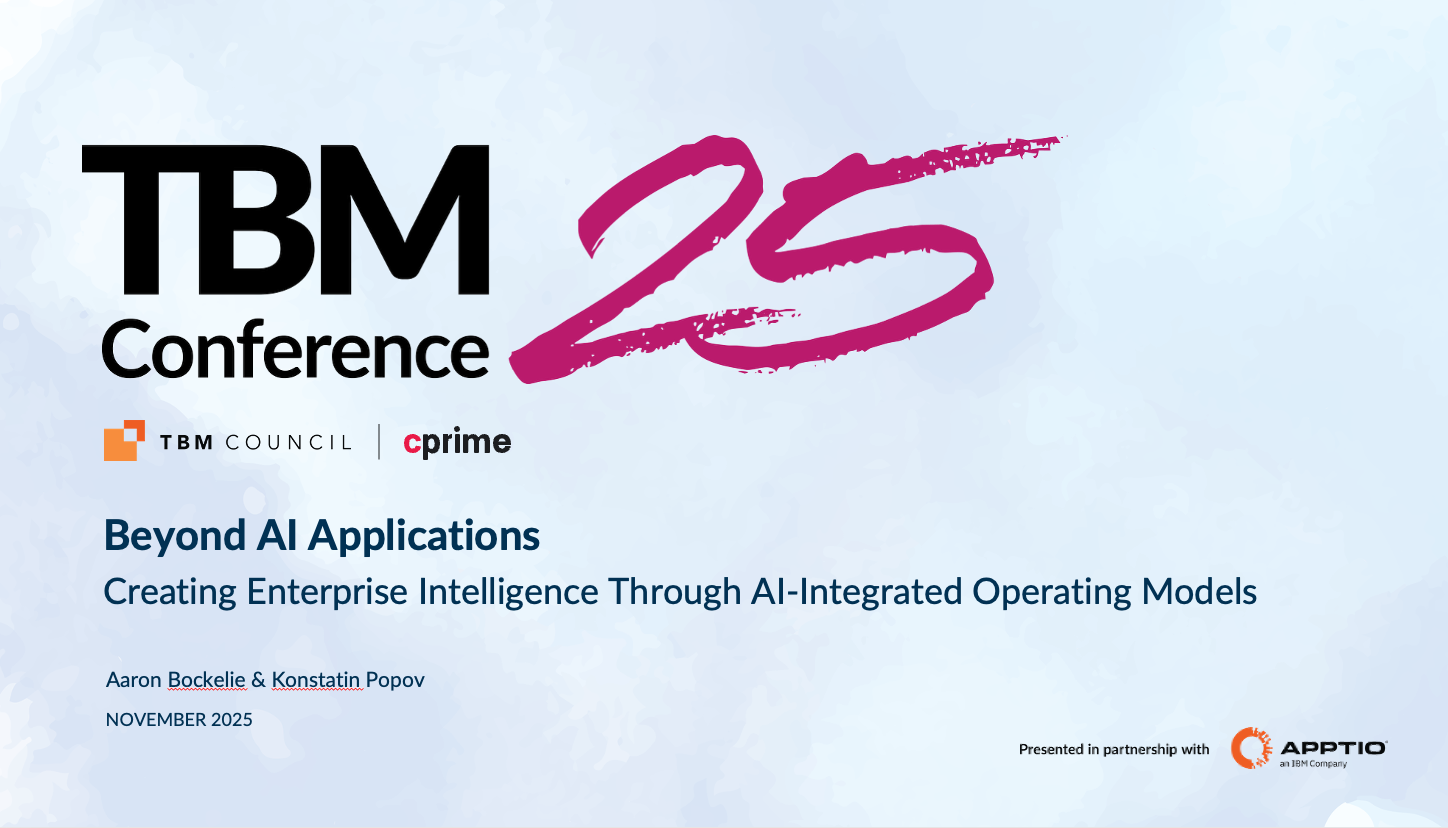
Beyond AI Applications: Creating Enterprise Intelligence Through AI-Integrated Operating Models 

Learn how leading enterprises build AI-enabled operating models that eliminate complexity through intelligent automation and deploy AI systematically. 

Speakers: Konstantin Popov and Aaron Bockelie

Session recaps:

Capable by Design: How We Align Spend with Strategy 

Experience our approach to integrating Enterprise Architecture Management into the Strategic Portfolio Management (SPM) and IT Financial Management (ITFM) lifecycle. 

Speaker: Mahesh Keswani

Session recaps:

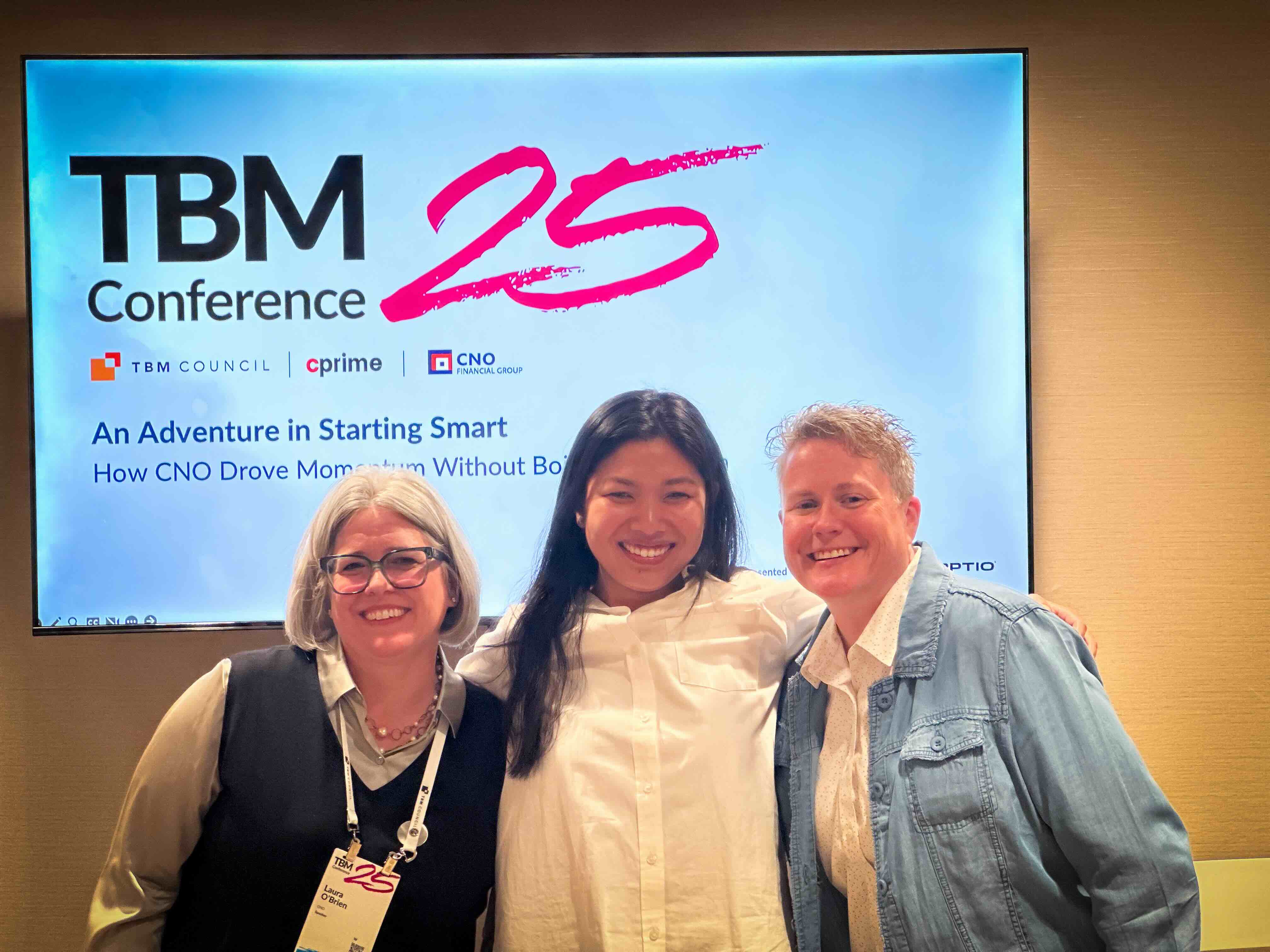
An Adventure in Starting Smart: How CNO Drove Momentum Without Boiling the Ocean 

The story of how CNO built a connected operating model using Apptio Targetprocess and existing tools like Jira, starting with just 30 licenses and no mandate. 

Speakers: Laura O’Brien (CNO), Lindy Quick (CNO), and Oona Ziegler

Session recaps:

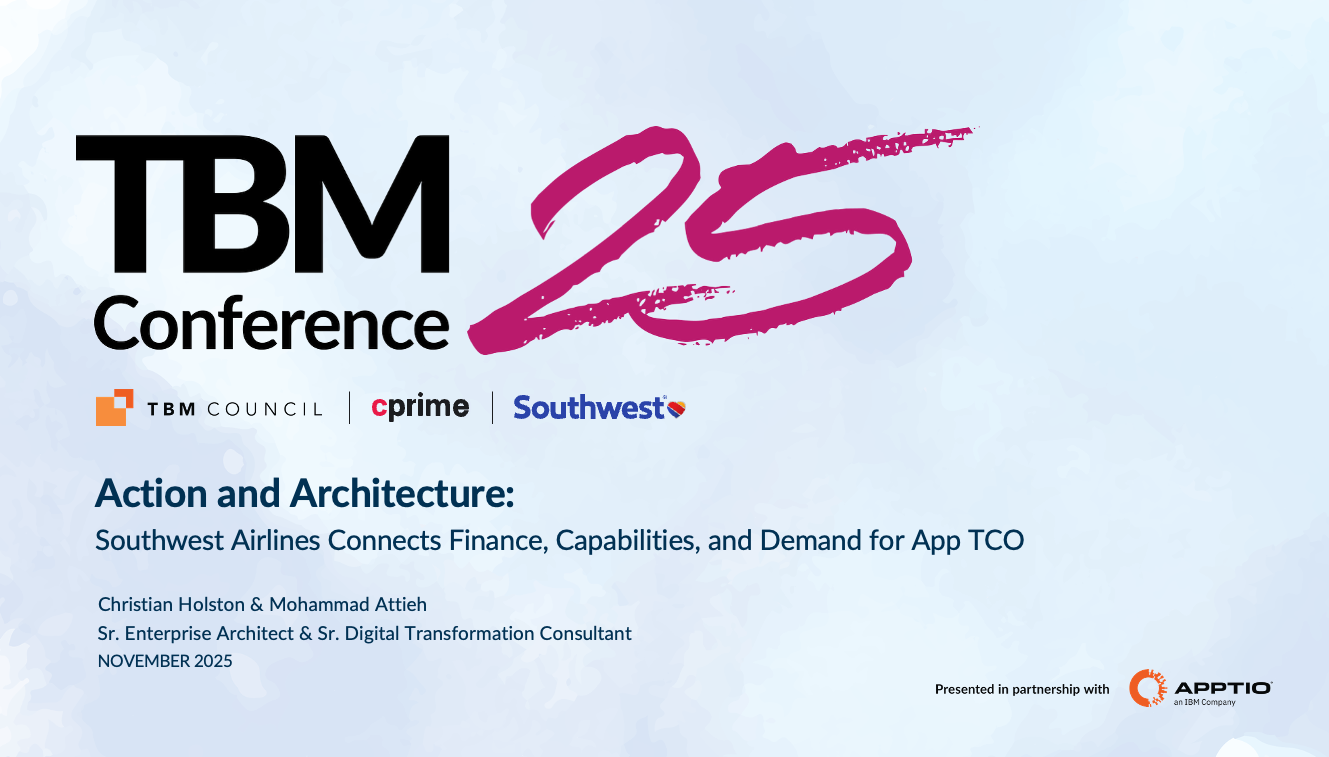
Action and Architecture: Southwest Airlines Connects Finance, Capabilities and Demand for App TCO 

See how Southwest Airlines uses Apptio ADM, Datalink, and Targetprocess—integrated with LeanIX—to connect IT, business capabilities, applications, and demand. 

Speakers: Mohammad Attiah and Murat Oran

Session recaps:

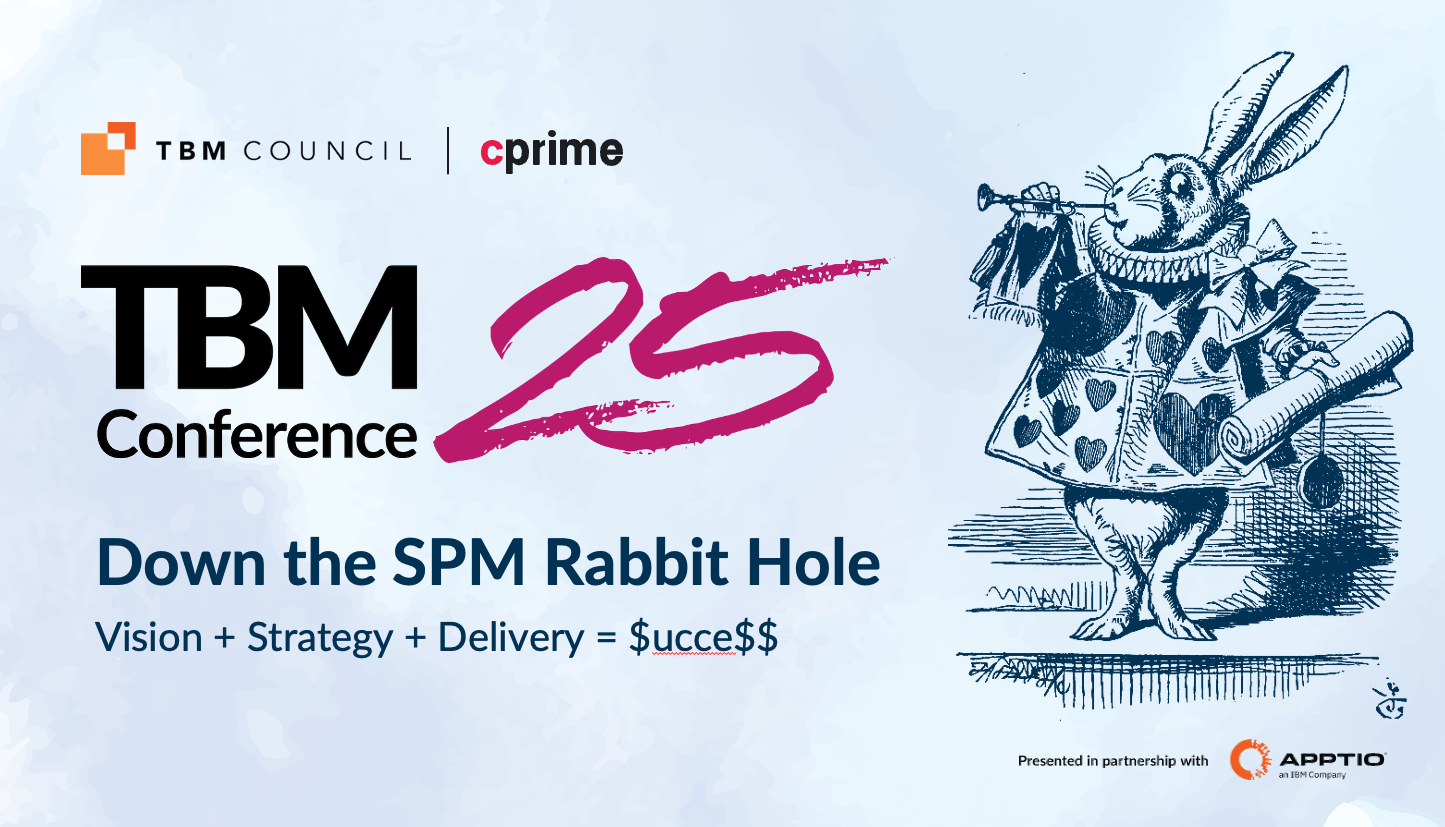
Down the SPM Rabbit Hole: Vision + Strategy + Delivery = $ucce$$

Learn how Apptio Targetprocess can automate calculation of labor capitalization based on work item categorization and capacity allocation. 

Speaker: Maxim Danilevsky

Cprime Conversations Podcast

Your operating model isn’t broken… it’s disconnected.

Learn why well-intentioned transformation initiatives keep falling short, and discover the proven framework that leading companies are using to navigate disruption, optimize costs, and unlock sustainable growth. 


Continue the conversation

If you’re assessing how TBM, financial governance, and operating model modernization can accelerate impact across your enterprise, schedule a working session with our experts.
We’ll explore where value flow slows down inside your organization and identify the highest-leverage opportunities to improve outcomes.


Related resources

Maximizing Value with Technology Business Management: A Strategic Guide

Financial Intelligence in Motion: Where TBM Meets FinOps in AI-Native Enterprises

Future-Proofing the Enterprise Operating Model through Enterprise Architecture Management (EAM)

Rewire Your Portfolio. Orchestrate Intelligence. Scale Impact. 

Discover how AI‑augmented Lean Portfolio Management transforms strategy into measurable results across your enterprise. Enterprises today face a new portfolio imperative—speed, precision, and adaptability at scale. Traditional portfolio management struggles to keep pace. This white paper explores how AI‑augmented LPM reshapes the portfolio into a living system that senses change, predicts outcomes, and orchestrates work in real time. 

Inside, You’ll Learn How To: 

• Identify misaligned investments and reallocate funding with confidence 

• Shift from static annual planning to real-time orchestration 

• Build the foundations for an AI‑first operating model using a five‑stage maturity framework 

• Amplify human leadership by pairing foresight with intelligent execution 

Scaling AI with Purpose: How a Superannuation Leader Orchestrated 1100% Growth

The Starting Point

When we partnered with a leading superannuation organization, they had begun identifying AI opportunities but needed a strategic path forward. Early discovery and PoC initiatives were underway with strong internal enthusiasm, but scaling beyond isolated success required structure. Leadership set a bold ambition to lead with AI, and needed a structured approach to get there. The strategy centered on increasing AI literacy and empowering teams to identify high-value opportunities, while managing concerns around role changes and alignment through thoughtful change facilitation.

Barriers to Scale

Initial AI use cases had delivered measurable value, amplifying skills and saving time. However, without a clear roadmap, adoption risked becoming fragmented and inefficient. The General Manager of Technology recognized this and urged leadership to create a scalable, hands-on onboarding model that would enable broader learning and enterprise-wide participation. Strong thought leadership was already present, but momentum could stall without a cohesive, cross-functional strategy to harness it.

How We Activated Adoption

We partnered with the client to orchestrate a scalable adoption model through a structured approach designed for adaptive execution:

  • Defined commitment levels, secured executive sponsorship, and established a realistic roadmap timeline.
  • Designed short, high-frequency workshops (30-minute sessions, 3–4 times weekly) totaling around 4 hours to build momentum and maximize engagement.
  • Activated continuous feedback loops to keep stakeholders aligned and enable real-time iteration.
  • Partnered directly with internal teams to foster cross-functional collaboration and ensure change enablement remained central to the rollout.

A Roadmap for Scalable Intelligence

We delivered an AI adoption roadmap with a phased rollout strategy and embedded support systems:

  • A clearly articulated AI adoption journey tailored to team readiness and use case maturity.
  • Success metrics and learning paths personalized for various business units.
  • Phased onboarding that acknowledged different teams would progress at different speeds.
  • Strategic communication and change facilitation to drive alignment, reduce resistance, and accelerate buy-in.

Business Impact at Scale

Our orchestrated approach drove measurable, enterprise-wide outcomes:

  • AI platform engagement surged 1100%, transforming adoption across the enterprise.
  • Identified and activated adoption champions to lead from within.
  • Established a Community of Practice (CoP) to enable continuous learning and cross-functional collaboration.
  • Surfaced a dozen new business use cases, several of which advanced through a tech lean canvas process.
  • Implemented three AI use cases within six months, backed by dedicated technical resources.
  • Published a formal AI policy, aligning execution with governance and strategic goals.

Laying the Groundwork for What’s Next

This engagement shows how an intelligent adoption strategy unlocks enterprise-scale AI impact. By balancing bold vision with practical execution, the organization accelerated AI maturity, built trust, and laid the groundwork for what’s next.

Looking to scale AI with precision and purpose? Let’s orchestrate what’s next.

New Ways of Working: Driving Enterprise Transformation in the Digital Era

A leading financial services company has addressed delivery transparency, prioritization alignment, and automated reporting by leveraging IBM Targetprocess. Centralizing shared budgets and simplifying the budgeting process has improved transparency and focused on product-centric prioritization and funding.
The integration with their cloud Jira environment has enabled them to track progress, enhance roadmaps, prioritization, planning ceremonies, and connect their OKR strategy to all IT initiatives. This has resulted in increased visibility and automated reporting into cross-functional dependencies, centralized initiative progress, and executive directives, allowing for quick reactions to pivot funding and resources to drive competitive advantage.
In this presentation, you will learn:
  • How IBM Targetprocess connects funding, budgeting, and execution, providing a comprehensive view for stakeholders.
  • Strategies for streamlining planning and communication of prioritized roadmaps to teams.
  • Techniques for empowering agile resource management, enabling swift adjustments to maintain a competitive edge.
  • The importance of establishing a foundation for continuous improvement, fueling data-informed decision-making.

Speakers:

Konstantin Popov
VP, Enterprise Tech, Strategic Portfolio, & Financial Management
Cprime

Outlearn. Outmaneuver. Outperform: How to win as an AI Native Enterprise in the VUCA World

In partnership with:


In a Volatile, Uncertain, Complex, and Ambiguous (VUCA) world, Business Agility—the ability to sense and respond to change faster than the rate of change itself – is the key to winning. In an AI powered world of change, sustained success requires more than planning—it demands continuous learning. Enterprises need intelligent systems that connect strategy to execution, enable rapid feedback, and align teams around the flow of value.

Enterprises must not only rapidly test whether their strategies are working, but also whether their current structures and value streams are aligned with the evolving needs of their customers. That means learning at every level: adjusting direction, adapting workflows, and reforming how value is delivered—based on insight, not instinct. Accelerated with AI Agents working 24/7, this is the AI Native Enterprise.


You’ll discover how to:

  • Leverage AI-native insights in ServiceNow to fuel real-time decision-making, optimize investments, and drive enterprise visibility.
  • Use SAFe’s Lean Portfolio Management to create flow, establish guardrails, and foster fast learning at every level of the organization
  • Connect strategy to delivery through digital workflows and operationalized feedback loops that enhance governance, adaptability, and speed.
  • Reduce the friction of continuous learning and adaptation with ServiceNow’s intelligent workflows that make it easier to re-align and reform value streams as insights emerge
  • Rely on Cprime’s experience to implement and scale these solutions effectively

Whether you’re starting or scaling, this session will offer actionable insights and real-world stories to help you evolve your operating model and accelerate value delivery.

Key Takeaways:

  • How ServiceNow enables AI-driven Strategic Portfolio Management
  • How SAFe and ServiceNow work together to accelerate enterprise feedback loops
  • The role of Cprime in orchestrating successful SAFe + ServiceNow adoption
  • Real-world use cases demonstrating measurable business impact


Panelists:

Ken France
VP, Enterprise Agility
Cprime
Steve Adolph
Strategic Advisor
Scaled Agile
Fred Champlain
Agile Evangelist
ServiceNow

Lead with Intelligence. Operate Without Friction.


The Shift to AI-Native: A New Operating Reality for Enterprise Leaders

AI-native enterprises are scaling faster, adapting smarter, and outperforming the competition.

This white paper reveals how to move beyond digital optimization and architect a business that learns, adapts, and orchestrates in real time.

  • Discover the five stages of AI evolution—plus how to identify where you are now
  • Learn the structural shifts that separate AI-native enterprises from everyone else
  • See how Guided Evolution helps scale AI without disruption
  • Understand the operating model behind real-time intelligence, agent execution, and continuous optimization

“AI-native enterprises orchestrate work across systems and teams. They operate in real time, responding to signals as they emerge. They scale intelligence across the operating model—embedding AI into every function, not just isolated touchpoints.”

Authored by members of the AI Center of Excellence Executive Council, this paper reflects the vision and experience of the leaders driving Cprime’s most ambitious enterprise AI transformations.

Download the executive white paper!

Fill out the form to receive your copy and take the first step toward operating with intelligence.

The AI–First Imperative: Revolutionizing Customer Engagement in the AI Age

AI-first leaders are architecting experiences that adapt in real time.

Campaigns, segments, and static cycles no longer deliver the speed or relevance customers expect. Customer engagement now demands continuous orchestration, powered by AI agents that act, learn, and optimize on their own.

This white paper maps the path forward for executives who are ready to scale personalization, speed up decision-making, and unlock value across every customer touchpoint.

“AI agents are already researching, scripting, designing, deploying, and refining, with minimal human input.”

Inside, you’ll learn how to:

  • Activate agentic AI to elevate experience across the full journey
  • Orchestrate content, data, and systems into intelligent customer flows
  • Rewire engagement models for speed, relevance, and adaptability

“This shift  goes far beyond tools. It’s about rethinking how you create, connect, and deliver.”

AI-first transformation starts at the edge, where your customers are.

Let this be your blueprint for intelligent, always-on engagement.

The AI Revolution in Financial Services: Which Side of History Are You On?

In an era where technology is the cornerstone of business innovation, the financial services industry is undergoing a transformative shift. The market is going to look significantly different in three years, and the survival of key players in the industry hangs in the balance.

Three catalysts for this change are Artificial Intelligence (AI), machine learning, and generative AI. This article aims to provide an in-depth look into how these technologies are not just buzzwords but essential tools for financial institutions.

Download this white paper now to explore their applications, the advantages they offer, the challenges that come with them, and a roadmap for organizations looking to integrate AI into their operations.

When the dust settles, where will YOUR organization be?