

Author: Elizabeth Walsh

Building Resilient Enterprises with AI-Powered Adaptation

Enterprise resilience now advances through responsiveness, not recovery. As economic volatility, AI-native competitors, and persistent supply chain risks converge, traditional models of resilience are being eclipsed by systems that adapt, optimize, and evolve continuously.

Adaptation has become a core design principle, shaping how enterprises operate. And the organizations that embed adaptability into their operating models are creating more than safeguards—they’re unlocking new pathways for performance and growth.

Gartner projects that by 2026, enterprises that fully leverage AI will outperform peers by 25% in both revenue and operational efficiency. This moment marks a blueprint for reinvention and long-term advantage.

Resilience Reimagined: From Static Strength to Adaptive Agility

Historically, resilience has been understood as an enterprise’s capacity to absorb disruption and return to baseline. But the speed and complexity of today’s business environment demand more. Resilience now means maintaining flow while shifting direction—operating in motion, not just bouncing back from impact.

Modern resilience spans three core capabilities:

  • Operational resilience keeps core systems and services functional under pressure. This includes cloud-native infrastructure, embedded cybersecurity, and distributed workflows designed for continuity.
  • Strategic resilience allows organizations to recalibrate quickly as markets shift, regulations change, or new entrants emerge. Enterprises make faster decisions and align resources without needing to pause or reset.
  • Cultural resilience empowers people to act decisively in fluid environments. Teams are supported with the tools, autonomy, and clarity to navigate change without waiting for top-down direction.

Each of these layers is strengthened by AI. When systems are instrumented to sense change and respond in real time, resilience becomes an always-on capability, visible in how companies prioritize, how they deploy, and how they win.

The Role of AI in Real-Time Enterprise Adaptation

Enterprises that lead with AI create living systems that learn from what’s happening now and optimize what happens next. Across industries, we’re seeing the shift from rigid infrastructure to intelligent orchestration.

AI-first organizations orchestrate intelligence, automation, and people across every layer of their business.

That orchestration manifests in several ways:

  • AI-powered risk scanning detects anomalies across cybersecurity, logistics, and operations before they escalate, activating mitigation protocols instantly.
  • Predictive analytics reduce downtime by identifying potential failures, suggesting corrective actions, and improving resource allocation across departments.
  • Adaptive workflows refine themselves over time, leveraging machine learning to improve with each interaction and trend shift.

In practical terms, this means supply chains that re-route in real time to avoid delays. Cyber defenses that adjust dynamically to block new threats. Financial planning systems that shift capital allocation based on live economic indicators. These capabilities are already powering the enterprises setting the pace.

Intelligent Orchestration as the Enterprise Operating Model

Forward-looking organizations embed orchestration directly into how they operate.

Intelligent orchestration aligns data, automation, platforms, and people into one continuously adapting system. This model enhances the human element, equipping decision-makers with live intelligence and scalable execution.

It’s the difference between managing disruption and flowing through it with purpose.

Case in point: A global retailer struggling with supply chain volatility used intelligent orchestration to radically improve performance. Instead of relying on delayed manual adjustments to purchasing, the organization deployed AI-powered decision intelligence to continuously monitor demand trends, supplier reliability, and shipping constraints. Inventory is now reallocated automatically as conditions shift, cutting lead times, reducing waste, and increasing customer satisfaction.

The result is strategic resilience driven by systems that move faster than markets.

The Five Core Capabilities of Adaptive Enterprises

Organizations building toward continuous adaptation invest in five interlocking capabilities:

1. AI-Powered Decision Intelligence

Enterprises accelerate performance when AI engines continuously ingest, analyze, and recommend actions from operational data. These systems surface decisions in real time and enable immediate execution across functions.

2. Data Fluidity

Adaptation relies on data that moves without friction. Integrated platforms update in real time, ensuring decisions reflect the current state of both internal operations and external conditions. This eliminates blind spots and delays, making the entire business more responsive.

3. Platform-Orchestrated Operations

Legacy systems are giving way to modular, API-first architectures. These building blocks can be assembled, disassembled, and reconfigured to meet shifting priorities, allowing enterprises to pivot without pulling apart their infrastructure.

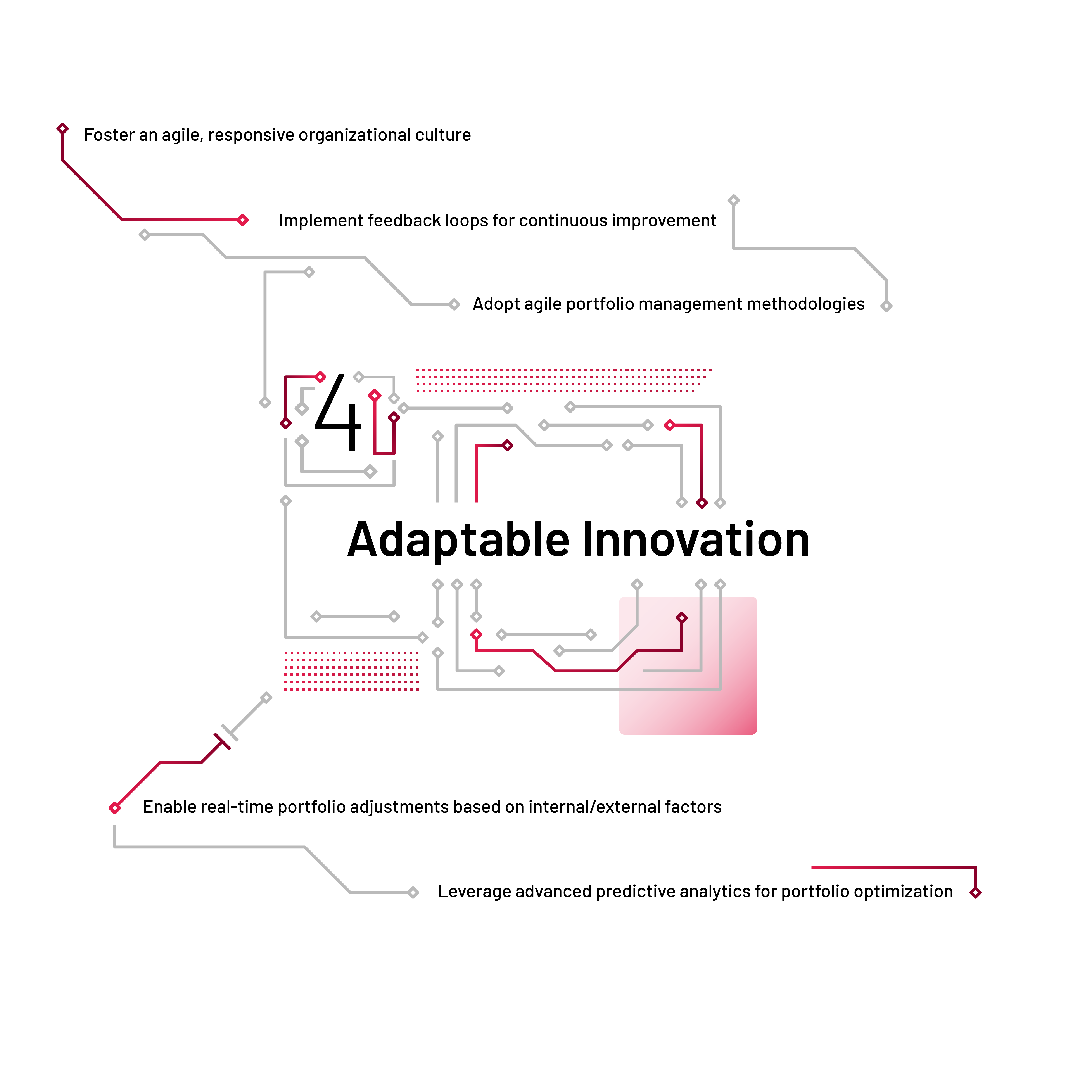
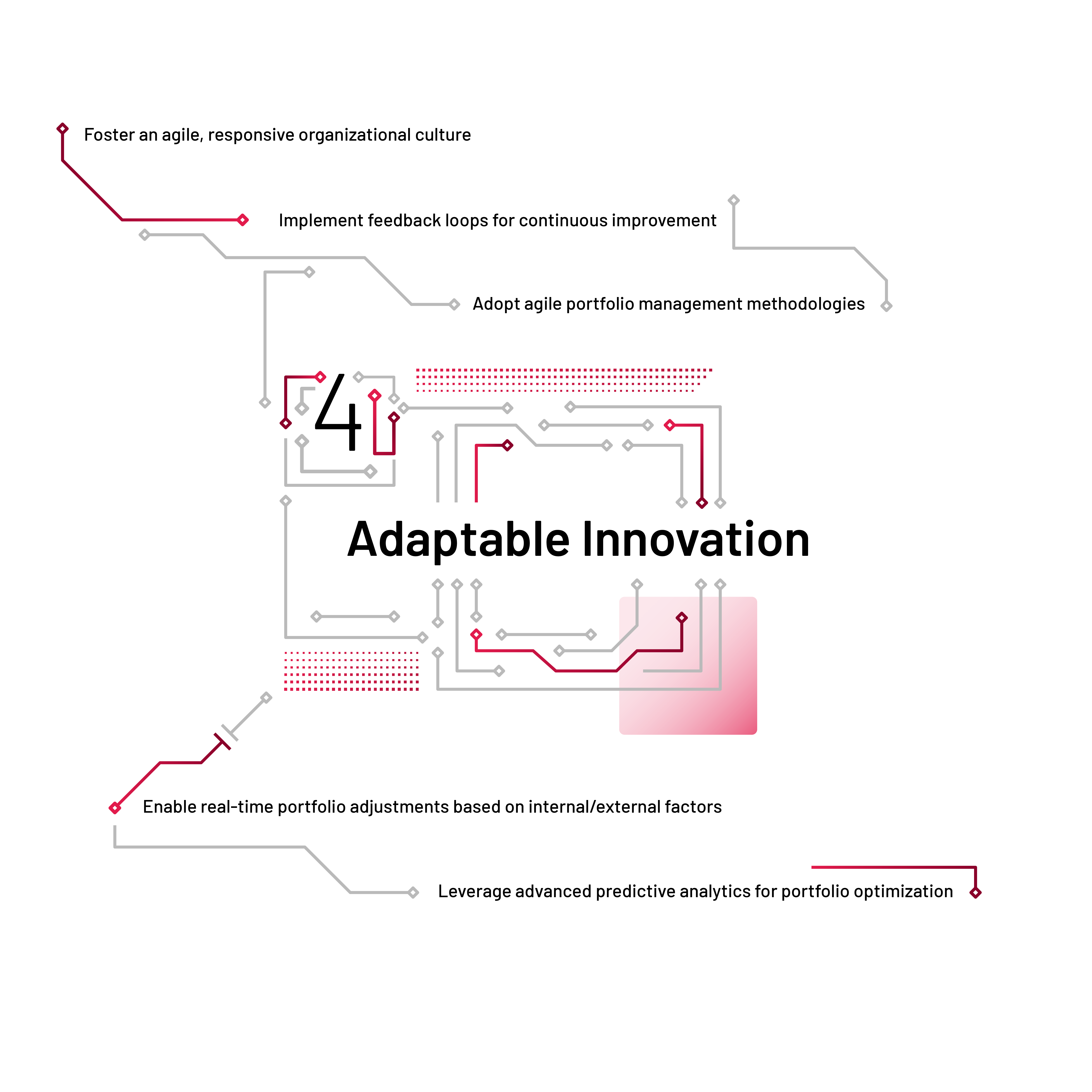
4. Autonomous Adaptation

Workflows that learn from usage patterns and improve autonomously are becoming the default. By embedding machine learning into processes, organizations cut cycle times, reduce manual effort, and ensure continuity without intervention.

5. Trust-Embedded Governance

Speed without governance introduces risk. Adaptive enterprises integrate compliance, auditability, and ethical oversight into the core of their systems. This allows innovation to move at full velocity without outpacing accountability.

Guided Evolution: Turning Adaptability into Strategy

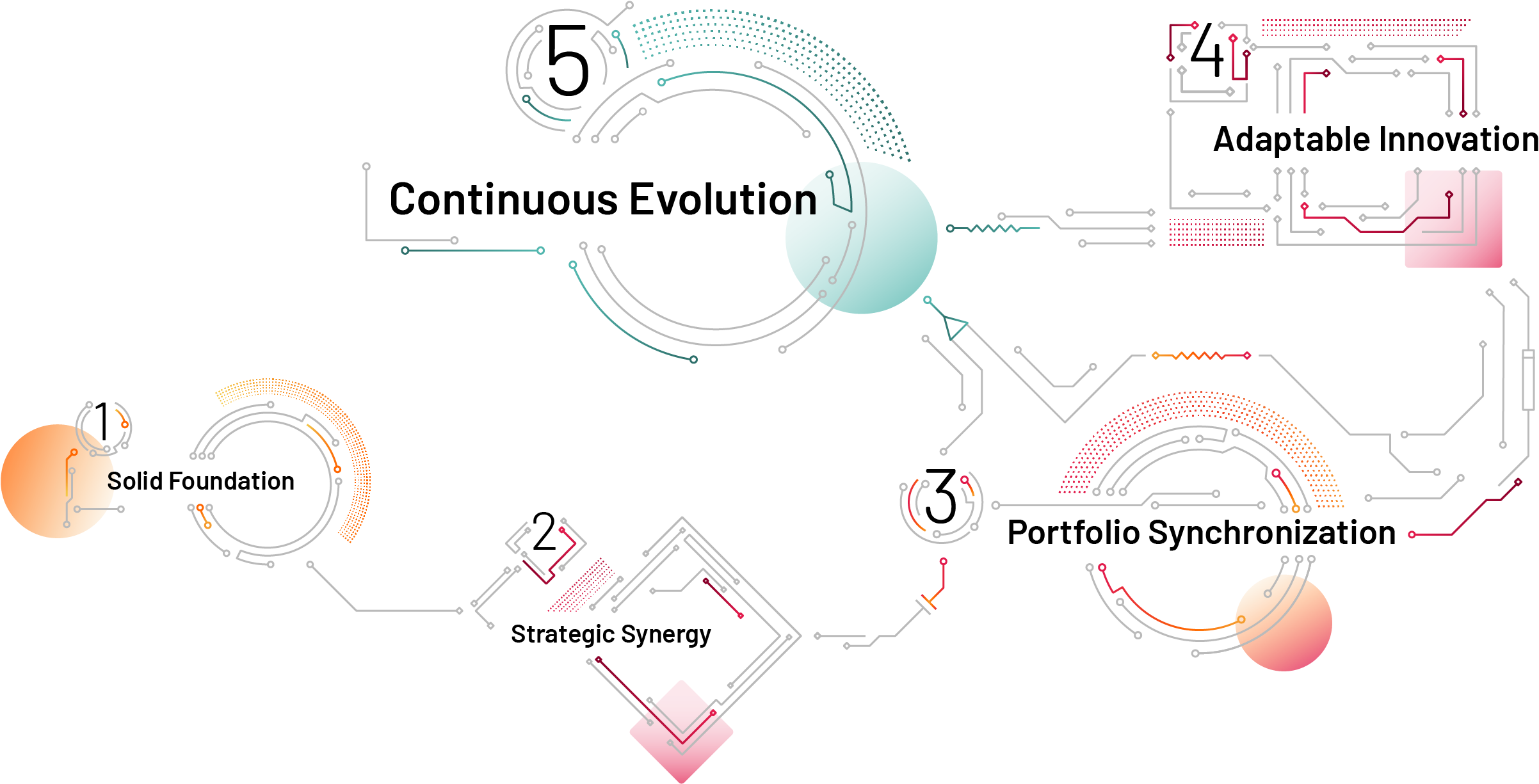
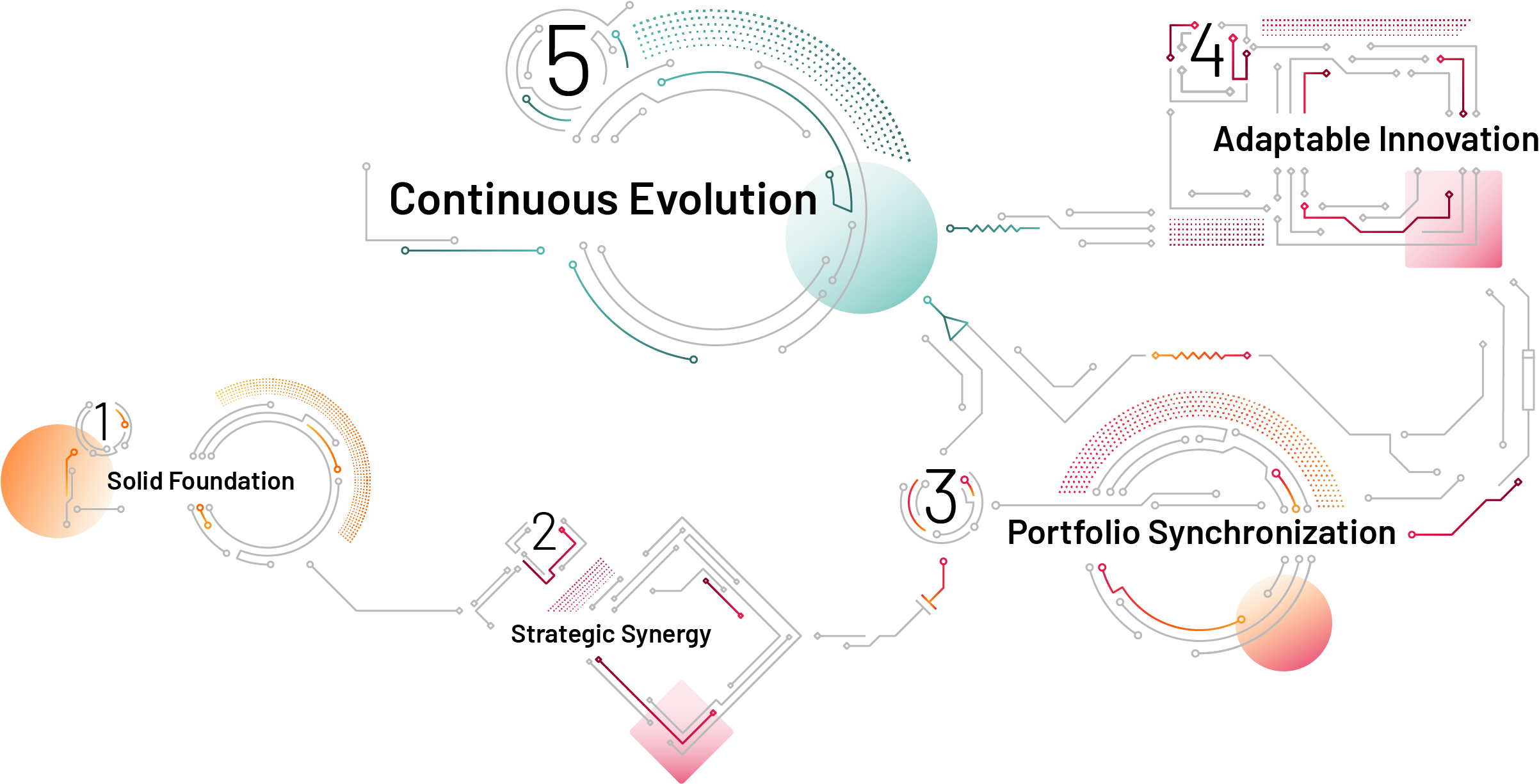
Resilience isn’t a single initiative. It’s a journey that advances in stages and compounds in value. Guided Evolution provides a structured approach to enterprise-wide transformation that ensures AI, automation, and human ingenuity move in sync.

Foundational Shift – Strategic Portfolio Management

Adaptive organizations start with alignment. AI-augmented portfolio management tools assess current investments, shifting funding toward initiatives that deliver the highest value in current conditions. Leaders gain visibility into how their bets perform and can course-correct without delay.

Process Intelligence – Operational Optimization

Once strategic alignment is achieved, attention turns to execution. AI identifies inefficiencies, reallocates resources dynamically, and continuously refines how work gets done. This drives down costs while increasing speed and agility.

Autonomous Workflows – Intelligent Service Management

Next comes resilience at the infrastructure level. AI-enabled IT service management predicts and prevents incidents, automates fixes, and enables always-on performance. Downtime becomes rare. Manual troubleshooting becomes optional.

Predictive Market Strategy – Responsive Positioning

Organizations with adaptive infrastructure can shift their go-to-market strategies as fast as their environments change. AI monitors macroeconomic shifts, customer behavior, and competitor activity, helping leadership adjust strategy while others are still assessing the impact.

Human-Centric Agility – AI-Enhanced Experiences

Resilience ends where engagement begins. AI-powered personalization and real-time automation enable enterprises to support customers and employees with exactly what they need—before they ask. This is where intelligent systems meet human satisfaction.

Resilience as a Competitive Strategy

Enterprises that build adaptability outperform in uncertainty, accelerate through change, and strengthen with every cycle.

AI-native decision-making. Self-optimizing systems. Predictive execution across every function. These upgrades form the foundation of next-generation resilient enterprises.

Those who commit to intelligent orchestration today will shape the direction of their industries tomorrow.

Atlassian Names Cprime as Winner of the Year 2024-2025 Cloud Transformation Services Award

CARY, N.C. – Apr. 8, 2025 – Atlassian announced today that Cprime has been named a winner of the Atlassian Partner of the Year 2024-2025 in the Cloud Transformation Services category. This award honors its exceptional contributions to Atlassian customers throughout 2024, showcasing its innovation, expertise, and dedication to delivering cloud transformation solutions.

Selected from a global network of partners, Cprime was recognized for its ability to drive meaningful customer outcomes, develop groundbreaking solutions, and expand the impact of Atlassian products. Cprime’s commitment to excellence and collaboration has played a key role in helping businesses worldwide achieve greater success with Atlassian’s tools.

“We’re honored to be named Atlassian’s Partner of the Year for Cloud Transformation. This recognition speaks to the strength of our partnership with Atlassian and the outcomes we’ve achieved together.” said Krishna Indukumar, Senior Vice President of Technology Sales at Cprime. “We’re proud of the legacy we’ve built, and we’re all in on what’s next—reimagining the future of work with fresh purpose and bold ambition. Most of all, we’re grateful for our people. Their passion and commitment to impact are what truly set us apart.”

“Our Partner of the Year winners represent the very best of our ecosystem- driving innovation, delivering cutting-edge solutions, and demonstrating unwavering commitment to customer success.” Said Bill Hustad, Head of Channel and GTM Ecosystems at Atlassian. “We are proud to celebrate their achievements and recognize the incredible impact they’ve made in helping customers unlock their full potential with Atlassian.”

This year, 32 partners from around the world were recognized in the Atlassian Partner of the Year program, reflecting the outstanding contributions of solutions providers, technology innovators, and services experts within the Atlassian ecosystem.

About Cprime

In the Age of AI, Cprime reshapes operating models and rewires workflows to deliver enterprise transformation. ​ We are your Intelligent Orchestration Partner, combining strategic consulting with industry-leading platforms to drive innovation, enhance efficiency, and shift your enterprise toward AI native thinking.

How AI Is Transforming Customer Service Automation

The next wave of competitive advantage is being shaped by how companies structure engagement through systems that anticipate, orchestrate, and resolve customer needs in real time. AI in customer service automation now goes far beyond efficiency. Agentic AI is redefining the entire operating model for customer experience.

From Automation to Orchestration: A Strategic Shift

Rules-based automation delivered scale, but it never delivered flow. Predefined scripts, decision trees, and static workflows are too rigid for the speed and complexity of modern service environments. Agentic AI moves beyond automating tasks to orchestrating outcomes—adapting in real time to customer behavior, intent, and business conditions.

This shift replaces reaction with precision. Instead of managing queues, enterprises are building systems that resolve issues before they escalate. Service becomes fluid, embedded, and self-adjusting.

AI-Powered Chatbots as Frontline Operators

Chatbots are no longer limited to triaging basic questions. Powered by large language models, today’s agents operate as decision-makers: retrieving account data, updating orders, processing returns, and solving complex multi-step issues without escalation.

In telecom, healthcare, and financial services, AI-driven chatbots now serve as always-on frontline operators. They interpret sentiment, pull data from multiple systems, and act with accuracy and speed.

These aren’t enhancements to call centers. They are replacements for outdated workflows—reducing response times, increasing resolution rates, and delivering consistent, context-aware experiences at scale.

Predictive Support at the Edge of the Experience

Agentic AI enables enterprises to detect and solve problems before a customer reaches out. Predictive systems interpret signals across channels—usage drop-offs, search behavior, churn indicators—and launch preemptive engagement.

SaaS platforms initiate onboarding reinforcement when users go silent. Retailers reroute shipments in response to regional weather events. Travel platforms rebook delayed passengers and coordinate logistics automatically, without requiring customer input.

This orchestration model reduces inbound volume and removes friction from the customer journey. Every interaction becomes an extension of intelligence working behind the scenes.

Real-Time Optimization That Powers Precision

AI-native systems are engineered to optimize not just for speed, but for outcomes. They assess sentiment, urgency, and customer value to determine the best path forward, then execute across systems without waiting for manual review.

AI agents draft replies, pull knowledge base content, summarize case history, and adjust tone, all in real time. Routing decisions shift dynamically as new signals come in. Service teams operate with better context, and customers receive faster, more relevant responses.

This is not automation with AI layered on top. It’s orchestration built from the ground up, structured for adaptability and speed.

Human-Centered, AI-Orchestrated Engagement

The strongest service models combine machine precision with human empathy. Agentic AI handles high volume and repeatable tasks, while human agents focus on complex conversations and strategic accounts.

In this orchestration model, AI augments every live interaction: surfacing relevant insights, flagging priority issues, and recommending next steps. Agents resolve faster, with less guesswork and more context. Customers feel known, not processed.

Service organizations that operate this way report lower attrition, stronger loyalty, and higher margins. AI doesn’t remove the human—it amplifies the value of human interaction.

Designing for Flow, Not Efficiency

The enterprise goal has shifted. Efficiency alone is no longer the target. Intelligent orchestration removes complexity entirely—building systems that operate fluidly across platforms, departments, and customer journeys.

AI monitors intent continuously, resolves routine issues autonomously, and pulls humans in only when necessary. Friction disappears. Experiences accelerate. Resolution becomes the default state, not the result of a well-handled exception.

Leaders are investing in this architecture now because the return is clear:

  • Fewer inbound requests
  • Higher resolution rates
  • Lower cost to serve
  • Greater customer lifetime value

AI in customer service automation is the new infrastructure for enterprise engagement, and agentic AI is the force driving it forward.

Improving Customer Experience: How AI-Driven CX Fuels Revenue and Retention

Customer experience (CX) is the defining battleground for business success. Every interaction shapes perception, and every friction point is an opportunity—either to strengthen loyalty or to drive customers away. Companies that master CX don’t just satisfy customers; they create revenue engines, competitive moats, and brand advocates who amplify growth. The real challenge isn’t understanding CX’s importance—it’s executing at scale, ensuring every touchpoint delivers value, and leveraging AI to transform customer interactions into a seamless, predictive, and frictionless experience.

CX and Business Growth: The Data-Driven Connection

Customer experience directly influences financial performance. Businesses that invest in CX report higher revenue growth than those that deprioritize it. Even a 5% increase in customer retention can boost profitability by as much as 95%, as returning customers tend to spend more while requiring less marketing investment. 

The impact goes beyond retention—brands that consistently deliver strong CX earn higher Net Promoter Scores (NPS), leading to greater organic referrals and lower acquisition costs.

The Cost of Poor CX: A Risk Businesses Cannot Afford

Ignoring CX doesn’t just lead to frustrated customers—it creates systemic weaknesses that erode profitability. A single negative experience can prompt 84% of consumers to abandon a brand entirely, and dissatisfied customers don’t stay silent. They share their frustrations widely, damaging trust and credibility. 

Meanwhile, the cost of replacing lost customers is unsustainable. Acquiring a new customer is five times more expensive than keeping an existing one. Companies that neglect CX are forced to overspend on marketing and discounts just to maintain market share.

CX Leaders in Action: Amazon and Disney

Industry leaders are proving that CX is a fundamental business strategy. 

Amazon’s dominance is built on more than just selection and pricing. Its AI-powered recommendations, frictionless checkout, and proactive customer support create an experience that keeps customers engaged and spending. 

Disney approaches CX through immersive engagement, using MagicBand technology and AI-powered guest services to eliminate friction at every touchpoint. Customers experience effortless interactions, from entering parks to making purchases, reinforcing brand loyalty and increasing lifetime value.

AI is Redefining Customer Experience

Traditional digital transformation improves efficiency, but AI-native CX fundamentally redefines engagement. Instead of simply enhancing interactions, AI enables brands to anticipate needs and orchestrate experiences in real time.

  • AI-Driven Personalization – AI analyzes behavior, preferences, and historical interactions to provide hyper-relevant recommendations, content, and support.
  • Proactive Engagement – AI systems predict customer needs before they are expressed, resolving potential issues and removing friction from the experience.
  • Omnichannel Consistency – AI ensures seamless transitions across digital and physical experiences, maintaining continuity regardless of how or where customers engage.

From Strategy to Execution: Becoming AI-Native in CX

The most successful brands are not just implementing AI—they are rearchitecting customer engagement around it. Becoming AI-native in CX requires a shift from reactive engagement to intelligent orchestration that ensures customers receive what they need before they ask.

  • Mindset Shift: Traditional rule-based CX strategies rely on predefined paths, but AI-driven engagement continuously adapts based on real-time signals, ensuring each interaction is relevant and valuable.
  • Technology Shift: AI agents are no longer just support tools; they handle routine interactions, allowing human teams to focus on complex, high-value engagements that require emotional intelligence.
  • Operational Shift: AI must be embedded at every stage of the customer journey, from initial discovery to post-purchase support. Orchestrating CX at this level eliminates friction, reduces costs, and enhances overall customer satisfaction.

CX is the Growth Strategy for the AI Era

Customer experience is no longer a differentiator—it is a growth strategy. Companies that embed AI-driven CX strategies will reduce churn, lower costs, and unlock new revenue streams. AI-native brands will set the pace for the next era of customer engagement, while those that hesitate will struggle to compete in a market where customer expectations move faster than ever.

Want to Learn More?

Discover how AI-native enterprises are transforming customer engagement. Read The AI-Native Imperative to see how AI-first strategies are shaping the future of CX.

Customer Experience Automation Just Won’t Cut It Anymore

Customer experience automation has optimized operations for years, improving efficiency and reducing costs. But automation alone is no longer enough. Today’s technology allows us to deliver far better experiences, so that’s what customers expect.

Businesses that rely on traditional rule-based systems are reactive—processing requests after they happen rather than anticipating needs; hoping they predicted the customer’s behavior and delivered the right experience. But, far too often, they didn’t.

Today’s leaders in automated customer experience (CX) are moving beyond static workflows, leveraging agentic AI and intelligent orchestration to create proactive, real-time engagement.

Instead of simply streamlining processes, AI-driven customer experience automation platforms are reshaping interactions. ServiceNow’s AI-powered system has reduced case-handling times by 52%, not just by automating responses but by dynamically adapting to customer needs. AI no longer waits for input—it anticipates, interprets, and acts instantly.

AI-Driven Chatbots, Sentiment Analysis, and Real-Time Engagement, Amplified

Early chatbots followed pre-programmed scripts, leading to frustrating interactions. AI-driven virtual assistants, powered by LLMs and agentic AI, now understand intent, context, and sentiment. These systems go beyond providing canned answers; they navigate conversations, learning from interactions and adjusting in real time.

Pizza My Heart reimagined ordering with an AI chatbot, Jimmy the Surfer. Unlike conventional bots, Jimmy adapts to customer requests dynamically, creating a seamless, frictionless experience that eliminates the frustration of rigid, rule-based interactions.

Sentiment Analysis: Understanding and Acting in Real Time

AI can now detect frustration or hesitation in a customer’s voice or text and automatically adjust its approach. With sentiment analysis, businesses can respond instantly to signals they used to just track.

Agentic AI elevates this by autonomously shifting tone, prioritizing urgent cases, and modifying engagement strategies in the moment. Instead of waiting for complaints to escalate, AI actively prevents negative experiences, driving loyalty and retention.

Real-Time Customer Engagement: Proactive, Not Reactive

Customers no longer accept delays. AI-driven customer experience automation platforms continuously monitor engagement across web, mobile, social, email, and voice, orchestrating responses that match customer intent instantly.

Unlike traditional automation, agentic AI doesn’t just optimize workflows. It predicts and preemptively resolves issues before they surface. Businesses leveraging this approach move from reactive problem-solving to seamless, real-time adaptation.

Unlike traditional support models, AI agents remove cost barriers, making proactive engagement scalable. Businesses can now reach out at key moments—checking whether a customer has used a newly ordered product, following up after a doctor’s appointment, or ensuring a recently serviced car runs smoothly. Instead of relying on surveys, AI agents build real connections, anticipating needs and engaging customers as naturally as a trusted advisor would.

And agents are only getting better.

Intelligent Orchestration: The Next Phase of AI-Powered CX Automation

Enterprise AI-Driven CX Platforms

ServiceNow and Adobe Experience Cloud go far beyond automation. They are integrating agentic AI and intelligent orchestration to unify customer interactions. These platforms interpret real-time signals, autonomously adapting to ensure a consistent, intuitive experience.

Conversational AI and Virtual Assistants in Automated Customer Experience

Google Dialogflow, Moveworks, and OpenAI’s GPT models are evolving beyond simple task execution. With agentic AI, virtual assistants can initiate problem-solving, refine their approach dynamically, and escalate complex issues seamlessly.

Customer Data Platforms (CDPs) for Hyper-Personalization

AI-powered CDPs like Adobe RT-CRP, and Dynamics 365 Customer Insights analyze data in real time to shape interactions at the moment they occur. Rather than static personalization models, intelligent orchestration ensures offers, messaging, and recommendations shift based on real-time engagement and behavioral cues.

AI-Powered Sentiment Analysis & Adaptive Engagement

IBM Watson, ServiceNow, and Sprinklr now enable AI to modify responses based on tone, urgency, and context. These platforms dynamically adjust engagement strategies to maintain positive customer relationships.

Autonomous Workflow Automation and Self-Service in CX

Platforms like OpenAI Operator and Anthropic Computer Use exemplify how CX is evolving beyond rule-based processes. AI now autonomously refines workflows based on real-time demand, while self-service platforms like ServiceNow dynamically adjust resources to optimize resolution speed.

Ensuring AI Enhances, Not Replaces, Human Connection

Customers value fast responses but still expect human empathy in critical moments. AI-driven systems must recognize when a conversation requires a human touch. When service touchpoints, data, and AI are intelligently orchestrated, it enables seamless escalation, ensuring that AI supports, rather than replaces, high-value human interactions.

Agentic AI as a Decision Partner, Eclipsing CX Automation

AI is now enabling better decisions. Agentic AI equips human agents with real-time insights, suggested responses, and proactive guidance, enhancing service quality and efficiency.

Importantly, customers should always know when they are interacting with AI versus a human. Transparency builds trust, and AI models must be designed to align with customer expectations, privacy requirements, and fairness standards.

Beyond Automation: The Future of Customer Experience Automation

AI-powered customer experience automation is moving from efficiency to immediacy. Businesses that integrate agentic AI and intelligent orchestration are evolving beyond the simple streamlining of workflows that automation provides. 

They’re redefining how engagement happens in real time. 

The future of CX is about eliminating friction altogether—creating seamless, proactive, and intuitive experiences that meet customer needs the moment they arise… or earlier.


Sources:

AI in Customer Experience: Moving from Mass Personalization to True Individualization

AI-driven personalization is now a standard practice. The vast majority of companies already use AI to some extent to improve customer experience. Consumers expect AI-enhanced recommendations, targeted messaging, and curated content. 

The problem? When every brand offers similar levels of customization, personalization stops being a competitive advantage.

Static personalization struggles to keep pace with real-time behavior. Most AI-driven personalization still relies on historical data, predefined rules, and static customer segments. This approach creates friction: outdated recommendations, irrelevant offers, and experiences that fail to reflect the customer’s immediate needs.

Consumer expectations have outgrown these limitations. Research from McKinsey found that 71% of consumers demand real-time, personalized interactions, and 76% become frustrated when they don’t get them. Brands that fail to deliver hyper-relevant, context-aware engagement risk losing customer trust and loyalty.

The new standard is AI-driven intelligent orchestration, where AI understands, predicts, and adapts in real time, creating truly individualized customer experiences.

AI Moves from Prediction to Real-Time Individualization

AI now does more than predict what a customer might want. It continuously adapts based on real-time behavior, creating a seamless and responsive experience.

Unlike traditional segmentation, AI now uses contextual intelligence. Instead of placing customers into static groups, AI processes continuous data streams, capturing micro-moments, detecting intent, and adjusting engagement instantly. This shift moves beyond mass personalization toward dynamic individualization.

AI agents are taking proactive engagement to the next level. Virtual assistants, predictive analytics, and AI-powered workflows anticipate customer needs before they arise. 

True individualization scales effortlessly. AI-driven platforms process massive data volumes in real time, enabling hyper-personalized engagement across millions of customers. For enterprises looking to differentiate in customer experience, this AI-native mindset is imperative.

Key Technologies Powering AI-Driven Individualization

Several AI capabilities are driving the shift from static personalization to real-time individualization:

  • Reinforcement Learning: AI continuously optimizes customer interactions based on real-time feedback, ensuring every touchpoint improves over time.
  • Natural Language Processing (NLP): AI-powered conversational interfaces deliver human-like engagement, enhancing self-service and support experiences.
  • Computer Vision: AI enhances in-store and omnichannel personalization by recognizing behaviors and preferences.
  • Generative AI: Dynamic, AI-generated content personalizes messaging at scale, ensuring relevance in real time.

Eliminating Data and Integration Barriers

Siloed data remains the biggest obstacle to true individualization. AI can only deliver adaptive customer experiences when it has access to unified, cross-functional data streams. Yet, many enterprises still rely on legacy systems that process data in batches, creating delays and missed engagement opportunities.

Real-time intelligent orchestration changes this. Enterprises adopting AI-native platforms can move beyond static segmentation and batch updates, enabling continuous, intelligent individualization. Effective API integrations connect AI across different applications, ensuring data flows seamlessly across marketing, sales, customer support, and product interactions.

Privacy remains critical. AI-driven individualization requires extensive data collection, making security and compliance non-negotiable. Brands must implement governance frameworks that align with GDPR, CCPA, and evolving AI regulations to maintain trust and transparency.

Case Studies: AI in Action

McDonald’s is revolutionizing service speed with AI-powered automation. The company is integrating AI-driven smart kitchen equipment and AI-enabled drive-thrus to reduce wait times and improve order accuracy. These AI enhancements are set to expand McDonald’s customer base from 175 million to 250 million by 2027.

In B2B and SaaS, ServiceNow is leveraging AI agents to improve workplace productivity. AI-powered workflows assist in customer support, email drafting, and invoice processing, with human oversight for final approvals. These AI integrations have cut handling time for complex cases by 52%, driving measurable business value.

The Commonwealth Bank of Australia (CBA) integrated AI-driven messaging and live chat, handling 50,000 inquiries daily with context-aware responses. AI also improved fraud detection, reducing risk while maintaining seamless customer interactions.

AI-Driven Individualization is No Longer Optional

Mass personalization is no longer a differentiator. AI-powered individualization is the next frontier, where AI continuously learns, adapts, and delivers seamless customer experiences at scale. Enterprises that embrace real-time, AI-driven engagement will lead the market. Those that don’t risk irrelevance.


Sources:

The Hidden Challenges of AI and What Successful Companies Do Differently

AI is supposed to be the game-changer, the ace up every enterprise’s sleeve. It promises to revolutionize industries, make businesses faster, smarter, and more efficient. And yet, most companies struggle to move beyond proof-of-concept—to leverage AI to its full potential and achieve ROI. The journey from AI curiosity to AI-powered evolution is riddled with roadblocks. You’re not alone if your AI initiatives feel like they’re stuck in a quagmire of data issues, skill shortages, and regulatory uncertainty.

But let’s be clear: those who successfully navigate this ‘messy middle’ of AI adoption dominate. They transform their enterprise portfolio and platform operating models, integrate AI into every function, and create lasting competitive advantages. So how do you get there?

Identifying the Core Challenges in AI Adoption

Successfully implementing AI requires navigating the obstacles that hinder its adoption. From scattered data to a lack of skilled professionals and the ever-evolving regulatory landscape, enterprises must address these hurdles head-on to unlock AI’s full potential.

Data Silos and Fragmentation: The Silent AI Killer

Imagine trying to drive a race car with a hundred different fuel sources—each requiring its own nozzle, pump, and adapter. That’s what enterprises face with data fragmentation. A MuleSoft report found that 90% of IT leaders struggle with data silos. That means AI is often making decisions based on incomplete, outdated, or conflicting information. No wonder so many initiatives fail to deliver real impact.

The solution? Companies must rethink their data strategies, treating data not as isolated business units’ property but as a shared, fluid asset that powers AI-driven decision-making in real time.

The Talent Crunch: Bridging AI Theory and Reality

Hiring AI talent isn’t just tough—it’s cutthroat. With AI evolving at warp speed, enterprises often find themselves either relying too much on external consultants or expecting their existing teams to magically acquire deep AI expertise overnight. According to Boston Consulting Group, 70% of AI adoption challenges stem from people- and process-related issues.

The companies winning the AI race are those that build internal capability alongside external expertise. This means robust upskilling programs, cross-functional AI teams, and embedding AI specialists into core business units rather than isolating them in R&D silos.

Ethical and Regulatory Landmines

Let’s talk about trust. AI makes decisions that impact people’s lives—hiring, lending, medical diagnoses. Get it wrong, and the backlash is fierce. Algorithmic bias, opaque decision-making, and compliance risks aren’t abstract concerns; they’re existential threats to AI’s long-term viability in business.

Regulations are evolving fast, from GDPR to the AI Act. Enterprises that embed ethical AI frameworks now—ensuring transparency, fairness, and governance—won’t just avoid regulatory fines. They’ll build consumer trust, unlock AI’s full potential, and future-proof their investments.

Strategic Approaches to Overcoming AI Implementation Barriers

Overcoming AI adoption challenges demands a strategic, proactive approach. Companies that excel at AI integration do so by breaking down silos, investing in people, and embedding strong governance practices from day one.

Unifying Data: The Foundation of AI Success

You wouldn’t build a skyscraper on quicksand, so why launch AI on shaky data infrastructure? Enterprises must move from fragmented, siloed data structures to a unified, orchestrated data ecosystem. This means AI-driven platforms that allow seamless, real-time data exchange across departments. The goal? Turn every business function into an AI-fueled decision engine, where insights flow freely, and AI can continuously refine its accuracy.

Investing in Talent: AI Fluency for Every Level

Successful organizations have rethought their approach to AI training. AI isn’t just for data scientists and engineers. Product managers, marketing teams, customer service reps, and executives can all benefit, but only if they receive effective training. AI-first companies foster a culture where AI is woven into daily workflows, ensuring adoption isn’t just technical but cultural.

Look at companies like VWV, which introduced an “AI innovation programme” that engaged employees in AI-driven projects, sparking real excitement and practical efficiency gains. AI isn’t about replacing people—it’s about augmenting them.

AI Governance: Not an Afterthought, but a Differentiator

AI governance isn’t just about compliance; it’s about trust. Enterprises that embed robust governance frameworks from the start—including clear ethical guidelines, bias monitoring, and transparent decision-making—will gain a sustainable edge. AI-first businesses don’t just ‘use’ AI; they build trust around it, ensuring every AI-driven action is aligned with business values and customer expectations.

Learning from Successful AI Integrations

By examining how industry leaders have navigated their own AI journeys, businesses can uncover key lessons and actionable strategies to accelerate their own transformations.

GSK’s AI-Powered Acceleration

When the world was scrambling for a COVID-19 vaccine, GSK was already ahead. But now, AI is integral to their drug discovery, manufacturing, and decision-making processes, via the groundbreaking KGWAS system. CEO Emma Walmsley elaborated on AI’s impact, noting that it enhances productivity by improving the identification of biological targets, modeling clinical trials, and predicting patient responses.

JPMorgan Chase’s Generative AI Leap

JPMorgan Chase isn’t waiting to see where AI goes—they’re directing its trajectory. With a generative AI suite deployed across 200,000 employees, they’re streamlining everything from customer interactions to internal operations. And CEO Jamie Dimon? He’s all in, pushing for AI adoption at every level, recognizing that it’s not just about automation—it’s about business reinvention.

Leading Superannuation Firm’s 1100% Increase in AI Platform Engagement

With guidance from our own AI Center of Excellence, transformation experts from Cprime | Elabor8 helped a leading superannuation firm achieve a staggering 1100% increase in AI platform engagement through a combination of strategic upskilling and uplift roadmap development. Revitalizing a flagging AI transformation, this success set the client up with an enterprise-wide foundation for future AI initiatives.

Charting a Path Forward: Own Your AI Future

The ‘messy middle’ of AI adoption is where companies either stall or soar. The ones who win? They don’t wait for perfect conditions—they build the foundations necessary for AI to thrive. This means:

  • Breaking down data silos and ensuring AI has access to high-quality, real-time information.
  • Developing in-house AI fluency so teams at every level understand and integrate AI into their workflows.
  • Embedding governance and trust from the ground up to ensure AI remains an asset, not a liability.

AI is the future of business. Enterprises that embrace its complexity today will be tomorrow’s market leaders. This is not up for debate. The question is whether your business will be the one leading the charge.


Intelligent Orchestration: How Integrated Systems Drive Success

Enterprise silos slow businesses down, which makes them less competitive. When teams, data, and systems operate in isolation, workflows break down, decisions take longer, and customers feel the disconnect. 

A Forrester report found that knowledge workers lose an average of 12 hours per week searching for data instead of acting on it. That’s nearly a third of their workweek wasted. Now imagine a large enterprise with 10,000 employees—this equates to 120,000 hours lost every single week, a staggering operational cost that many organizations fail to quantify.

But that’s just one of the problems siloed operations create.

The Problems Caused by Siloed Operations

Disconnected Teams and Processes

Many organizations struggle with fragmented workflows. IT, HR, finance, and operations often run on different platforms that don’t communicate. This lack of integration slows collaboration and limits efficiency. Bottlenecks go unnoticed, and businesses miss opportunities to respond quickly to market shifts. 

Example: Consider an enterprise launching a new product: if marketing operates on one system, sales on another, and production on a third, delays arise, miscommunication happens, and the go-to-market strategy falters.

Data Silos Limit Decision-Making

When key data is trapped in separate systems, decision-makers work with incomplete or outdated information. Leaders either rely on manual reporting or lack the visibility needed to align strategies. Hindering cross-department collaboration makes it harder for companies to leverage real-time insights. 

Example: A retailer struggling to optimize inventory may face stockouts in one location and excess stock in another, simply because inventory data is not synchronized across stores, warehouses, and suppliers.

Operational Inefficiencies

Legacy systems and disconnected processes force employees to waste time on repetitive, manual tasks. Instead of automating workflows, businesses lose productivity to unnecessary administrative work. 

Integration allows companies to streamline operations, eliminate redundant work, and reduce costs associated with inefficiencies. 

Example: Take a global manufacturer relying on email chains and spreadsheets to track procurement. A single missed update can result in delayed shipments, stalled production, and lost revenue.

Customer and Employee Experience Gaps

A lack of system integration affects both employees and customers. Employees struggle with cumbersome workflows that require constant switching between disconnected tools. Customers experience inconsistent service when teams lack access to real-time information. Cross-functional collaboration is essential for delivering seamless customer interactions. 

Example: Imagine a bank where a customer requests a loan, but their existing relationship with the bank—prior accounts, mortgage applications, or past inquiries—remains invisible to the loan officer. This lack of visibility frustrates the customer and slows down approvals.

Increased Security Risks

Fragmented security strategies make organizations more vulnerable to threats. Without a unified security framework, risks go undetected, and compliance efforts become inconsistent. MIT Sloan Review reports that more than 86% of audit and risk professionals believe that data silos weaken risk management efforts. 

Example: A healthcare organization handling patient data across multiple unlinked systems could face compliance violations if security gaps allow unauthorized access to sensitive records.

The Powerful Benefits of Intelligent Integration

Unified Systems Improve Efficiency

When organizations integrate their systems, they eliminate bottlenecks and improve operational agility. A centralized data platform ensures that teams have access to the same information, enabling faster decision-making. 

Example: A logistics company tracking shipments across a global supply chain gains real-time visibility into delays and can dynamically reroute deliveries to meet customer expectations. With AI, delays can be predicted and automatically avoided before customers are affected at all.

Automation Eliminates Manual Work

With integrated workflows, businesses can reduce reliance on repetitive manual processes. AI-powered automation speeds up critical operations and allows employees to focus on strategic work instead of administrative tasks. 

Example: A tech company using AI-driven contract review can cut legal review time from weeks to hours, accelerating deal closures.

Real-Time Data Enhances Decision-Making

Business intelligence tools provide up-to-the-minute insights across departments, ensuring leaders can make informed choices based on accurate, real-time data rather than static reports. 

Example: A retailer tracking in-store and e-commerce purchasing trends in real time can adjust promotions, optimize supply chains, and improve customer targeting. Agentic AI can potentially automate these processes with little or no human intervention.

Better Customer and Employee Experiences

Integrated systems improve both customer engagement and employee satisfaction. AI-powered platforms deliver personalized customer interactions, while user-friendly internal systems increase productivity and reduce frustration. 

Example: A telecom provider leveraging integration can equip customer service agents with full histories of prior interactions, allowing for faster resolutions and a more tailored support experience. AI integration can take this a step further by suggesting appropriate personalized solutions to customer issues instantly.

Scalability and Future-Proofing

As businesses grow, system integration ensures they can scale without introducing unnecessary complexity. Cloud-based architectures allow enterprises to expand efficiently without costly infrastructure overhauls. 

Example: A SaaS company entering new global markets can leverage cloud-based localization services and payment integrations to streamline expansion. LLMs are quickly becoming incredibly adept at these kinds of localization efforts.

The Technologies Powering Integration

Companies that successfully integrate their systems can fully leverage powerful tools designed to connect workflows, automate processes, and enhance collaboration.

  • Enterprise & IT Service ManagementAtlassian and ServiceNow provide workflow automation and unify operations by seamlessly integrating IT with the rest of the organization.
  • AI-Powered Business IntelligenceApptio and PowerBI offer unmatched visibility into data across all systems, enabling data-driven decision-making and real-time analytics.
  • Customer and Employee Experience PlatformsServiceNow and Adobe enhance engagement through AI-powered personalization and predictive issue resolution.
  • DevOps and Agile ToolchainsJira, GitHub, and Kubernetes streamline development and deployment with powerful automation and integrated workflows.
  • Cloud and Infrastructure Automation – AWS, Azure, and Google Cloud support flexible, cost-effective scaling that can be further enhanced with AI-powered technology and financial management capabilities.

A Strategic Approach to Intelligent Integration

Companies don’t need to overhaul their entire IT infrastructure at once. The most effective integration strategies take a phased approach:

  • Start with high-impact areas – Identify the most critical pain points and focus on integrating those first.
  • Secure stakeholder buy-in – Demonstrate early success to gain broader support across the organization.
  • Validate with pilot programs – Test and refine before scaling.
  • Expand integration strategically – Use data-driven insights to determine where additional integration efforts will drive the most value.

The Competitive Advantage of Integrated Systems

Businesses that connect their systems operate with greater speed, agility, and intelligence. They remove roadblocks, improve decision-making, and deliver better experiences for customers and employees alike.

Disconnected systems hold companies back. Integrated ones create new opportunities for efficiency, innovation, and sustained growth.


Sources:

Technology Alone Won’t Cut It: Building an AI-Ready Culture to Support AI Transformation

Organizations invest heavily in AI tools and infrastructure—to the tune of well over $1 trillion globally since 2022—but often fail to generate meaningful results. The tech they’re implementing isn’t the issue. It’s the lack of cultural and operational readiness. AI only becomes valuable when it is embedded into the business, informing decision-making, improving workflows, and delivering measurable outcomes.

Many businesses treat AI adoption as an IT upgrade, assuming that implementing new tools will automatically improve efficiency. This approach frequently leads to underwhelming results. 

Companies that achieve real success take a different approach: they integrate AI into everyday operations, ensuring teams understand its capabilities and trust its recommendations. AI adoption requires organizations to rethink how work gets done, how decisions are made, and how data is used.

Change Management Determines AI’s Impact

AI disrupts workflows, decision-making, and job roles, making structured change management essential. Without clear leadership, employees may view AI as a threat rather than a tool. Resistance, confusion, and lack of trust can stall adoption.

Successful AI-driven organizations make change management a priority. Leaders must communicate AI’s role transparently and ensure employees see its value. 

When AI adoption is positioned as a tool for augmenting strategic decision-making, teams are more likely to engage. Deloitte, for example, has successfully integrated AI-powered document review into its legal and compliance teams by providing clear training and demonstrating tangible efficiency gains.

Companies also need to establish feedback loops. Employees who interact with AI daily should have input on refining models and improving usability. AI adoption should be an evolving process, not a one-time rollout.

Building a Data-Driven Culture to Make AI Work

AI adoption depends on a company’s ability to make informed, data-driven decisions. Moving from instinct-based decision-making to AI-backed strategies requires significant shifts in processes, incentives, and leadership priorities. But this isn’t going to happen if the organization’s culture doesn’t support that goal.

Trust is one of the biggest barriers to AI adoption. Employees often hesitate to rely on AI-generated recommendations because they don’t understand how AI reaches its conclusions. To bridge this gap, organizations must foster data literacy at all levels. Leadership should actively model data-driven decision-making, ensuring that teams see AI as a valuable input rather than an opaque black box.

Fostering trust also means maintaining human oversight, allowing users to validate AI-generated outputs, and continuously refining models based on user feedback. When employees understand and trust AI, they are more likely to integrate it into their decision-making processes.

For example, financial institutions use AI-powered fraud detection to flag suspicious transactions. AI models analyze transaction patterns in real-time, identifying anomalies that human analysts might miss. Instead of replacing fraud investigators, AI enables them to focus on the most urgent cases.

AI Must Be Embedded Into Business Systems

AI’s impact is diminished when it operates in isolation. Siloed data, disconnected workflows, and fragmented systems prevent AI from delivering its full value. The most successful organizations integrate AI into the platforms employees already use, such as CRM systems, finance software, and customer support tools. Intelligently orchestrating these systems across the organization ensures that AI insights are easily accessible and immediately actionable.

For instance, AI-powered customer support tools, like ServiceNow and Jira Service Management, are used by Amazon and Salesforce to analyze customer inquiries in real-time and recommend responses based on previous interactions. This streamlines service delivery while maintaining human oversight, improving both speed and accuracy.

The key to success is phased integration. Instead of deploying AI across the entire organization at once, companies should focus on high-impact use cases first—areas where AI can deliver quick wins. Once teams see tangible benefits, broader adoption follows more naturally.

AI Can Work Even When Data Isn’t Perfect

Data quality is often cited as a barrier to AI adoption, but waiting for a flawless dataset can delay progress indefinitely. Many leading AI initiatives thrive despite incomplete or inconsistent data. The best approach is to deploy AI where it can add value while simultaneously improving data practices.

A prime example is Subtle Medical, which enhances medical imaging even with imperfect datasets. Their AI models improve image resolution and reduce scan times, demonstrating that AI can deliver measurable benefits despite data limitations.

Final Thoughts

AI adoption requires more than acquiring the right technology. It requires building a culture that enables AI to generate business value. Companies that embed AI into existing systems, integrate it with decision-making processes, and actively manage change see the greatest impact. By ensuring AI works alongside human expertise rather than attempting to replace it, organizations can achieve sustained improvements and unlock AI’s full potential.

Organizational Change That Works: A Smarter, Smoother Approach

We all know businesses must continuously evolve to stay competitive. Yet, traditional approaches to organizational change often fail due to widespread disruption, internal resistance, and competing priorities. 

Research shows that as much as 88% of large-scale transformation initiatives do not achieve their intended results, often because they attempt to drive change too quickly and without the necessary alignment across teams. Organizations need a method that minimizes risk, delivers value quickly, and builds toward long-term success.

Guided Evolution offers a more effective path. Rather than pursuing sweeping overhauls that can destabilize an organization, this approach prioritizes incremental, adaptive improvements that align with the business’s strategic goals. By evolving in a controlled, intentional manner, companies can avoid the pitfalls of transformation fatigue and achieve sustainable success.

What is Guided Evolution?

Guided Evolution is a structured, step-by-step approach to change that reduces friction while accelerating value realization. Unlike traditional transformation efforts that attempt to overhaul entire systems at once, Guided Evolution enables organizations to implement meaningful, scalable improvements with minimal disruption.

This approach works because:

  • Changes are integrated into daily operations rather than introduced as abrupt shifts.
  • Incremental improvements build confidence and momentum across teams.
  • The organization continuously adapts to emerging needs rather than struggling through a single, large-scale transformation.

Achieving true enterprise-wide transformation is not just about modernizing individual workflows or integrating systems—it requires an orchestrated approach that optimizes how people, processes, and technology interact. Organizations that take a fragmented approach often experience inefficiencies, while those that evolve their Systems of Work, Systems of Insights, and Systems of Engagement in harmony are best positioned for long-term success.

Intelligent Orchestration: The Three Systems That Must Evolve Together

Change cannot happen in isolation. A truly effective transformation requires all three foundational systems within an organization to evolve in sync. Without coordination, isolated improvements in one area may create new inefficiencies elsewhere.

Guided Evolution ensures that transformation across these systems is deliberate and cohesive, reducing friction and maximizing impact.

System 1: Systems of Work (How the Organization Operates)

The way an organization operates—its workflows, tools, and processes—determines its efficiency and scalability. Many companies struggle with outdated systems and disjointed workflows that hinder productivity. Fragmented processes create inefficiencies, forcing employees to navigate multiple platforms or rely on manual workarounds that slow operations. 

For example, one study found that “70% of employees spend upwards of 20 hours a week chasing information across different technologies instead of doing their job.” Additionally, as businesses grow, scaling operations without a structured approach to workflow optimization becomes increasingly challenging, potentially costing organizations millions

Guided Evolution addresses these issues by introducing targeted automation initiatives that streamline workflows without overwhelming employees. Rather than attempting full-scale automation from the outset, businesses can begin by identifying the most inefficient processes and gradually implementing AI-driven enhancements. 

This phased integration allows teams to adjust at a manageable pace, increasing adoption rates and minimizing disruption. Cross-functional collaboration also improves as silos are gradually eliminated, making the transition toward optimized operations smoother and more sustainable.

System 2: Systems of Insights (How the Organization Makes Decisions)

Organizations thrive when they can make informed, data-driven decisions, yet many struggle with limited visibility, data inconsistencies, and decision-making bottlenecks. A lack of real-time insights prevents leaders from responding proactively to challenges, while siloed data makes it difficult to draw meaningful conclusions. When data remains fragmented across departments, translating insights into measurable actions becomes a cumbersome and often delayed process.

Guided Evolution helps overcome these challenges by first establishing a strong foundation for real-time insights. Implementing connected dashboards creates a unified source of truth, ensuring that decision-makers have access to accurate and timely data. 

From there, organizations can gradually apply predictive analytics to shift from reactive to proactive strategies, using historical patterns to anticipate future trends. 

Over time, AI-driven recommendations refine resource allocation and operational efficiencies, ensuring that insights lead directly to strategic improvements rather than remaining isolated reports with no clear action path.

System 3: Systems of Engagement (How the Organization Connects with People)

An organization’s ability to engage with employees and customers directly influences satisfaction, loyalty, and long-term success. However, many businesses struggle with disjointed engagement strategies that result in inconsistent experiences. 

Customers and employees alike expect seamless, personalized interactions—with one survey reporting that 82% of customers prefer chatbots over waiting for a representative—yet disconnected systems often create frustration. Manual processes further exacerbate the issue, slowing response times and preventing organizations from adapting to changing expectations.

Guided Evolution fosters stronger engagement by first focusing on high-impact, low-risk optimizations in customer service and employee workflows. By identifying areas where quick improvements can deliver immediate benefits, organizations build momentum for deeper transformation. 

AI-driven personalization can then be introduced in phases, allowing engagement strategies to evolve based on data rather than guesswork. Then, real-time feedback loops ensure that interactions remain relevant and continuously improve, reinforcing a dynamic engagement model that adapts to both customer and employee needs.

Why a Guided Approach to Change Matters

Large-scale transformation efforts often fail because they demand too much, too fast, leading to resistance and operational disruption. Guided Evolution provides an alternative that ensures sustainable change by making transitions manageable, measurable, and scalable.

Why This Works Better:

  • Reduces resistance by introducing more gradual shifts rather than radical disruptions.
  • Builds momentum through incremental wins that demonstrate value and ROI early in the process.
  • Creates a flexible framework that allows organizations to course-correct and refine their strategies as they evolve.

Example: A Realistic Path to AI-Driven Optimization

Rather than deploying AI-driven automation across the entire business in one sweeping initiative, organizations should start with the areas where automation can eliminate bottlenecks most effectively, such as IT workflows. Once success is demonstrated, AI-driven enhancements can expand into other areas, building trust and adoption across teams.

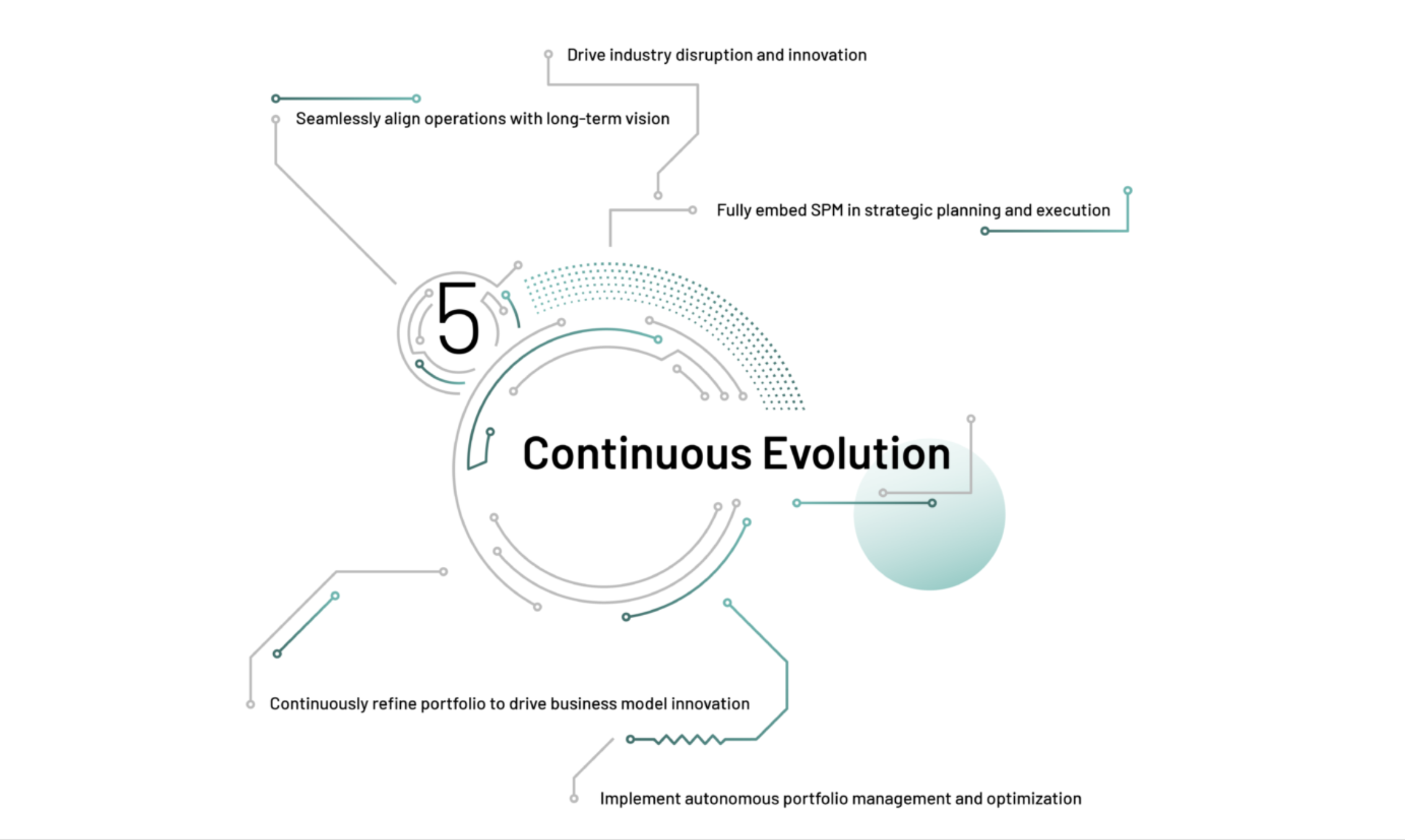
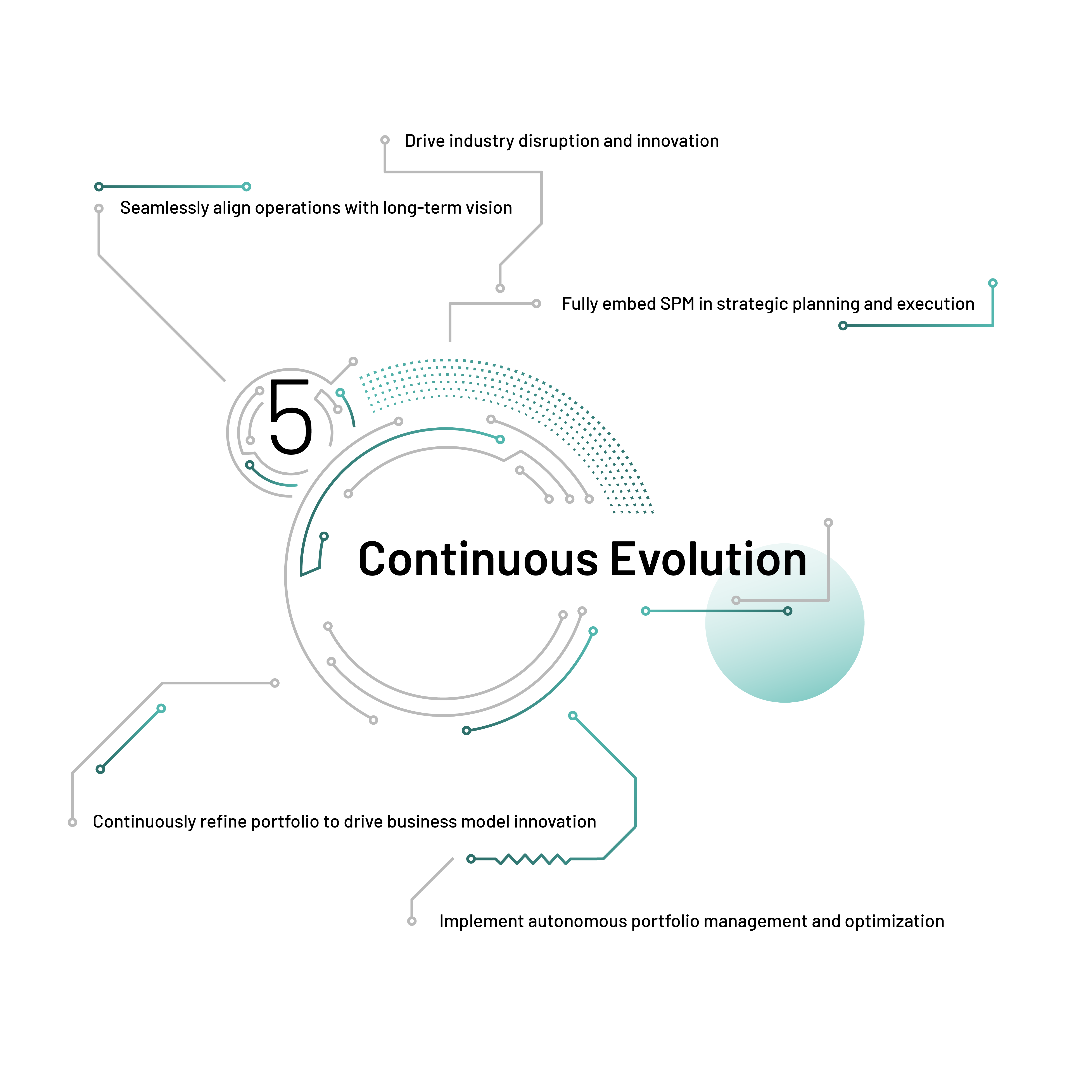
The Path Forward: Continuous Evolution

The ultimate goal of transformation is to create an enterprise where technology, processes, and people work in seamless coordination, all at the speed of change. However, this cannot be achieved overnight. The only way to get there is through intelligently orchestrated, step-by-step evolution across Systems of Work, Insights, and Engagement.

Organizations that embrace this guided approach to change will be better positioned to adapt, grow, and lead in the market of the future. The time to start is now.