Today I want to tackle a question that comes up all the time in my Implementing SAFe® class:
“What do I do if someone wants to change a Feature mid Planning Interval (PI)?”
This is a real-life scenario that we need to know how to handle effectively.
First things first, let’s remember that SAFe is a fractal model. What we do at the Team Level, we also do at the Agile Release Train (ART) Level, although the frequencies may differ. For instance, we have a Team Sync every day at the Team Level, but at the ART Level, we might have a Coaches Sync or an ART sync once or twice a week.
(SAFe® and Scaled Agile Framework® are registered trademarks of Scaled Agile Inc.)
Handling Changes at the Team Level
Now, let’s consider a situation where someone outside the team wants to change a story within an Iteration, making the Iteration Goal obsolete. According to the Scrum Guide,
“The Sprint Goal is an objective set for the Sprint that can be met through the implementation of the Product (Scrum) [/ Team (SAFe)] Backlog.”
[In SAFe we refer to Sprints as Iterations]
Only the Product Owner has the authority to cancel the Iteration before the time-box ends, usually under the influence of Stakeholders, the Development (Scrum) / Agile (SAFe) Team, or the Scrum Master.
An Iteration cancellation should only happen if the Iteration Goal becomes obsolete, which might occur due to a change in company direction or market/technology conditions. However, given the short duration of Iterations, cancellation rarely makes sense. You’d hope that any directional change could be accommodated in the next Iteration, which is never more than 9 days away on a 2-week cycle. Plus, it gives the team time to consider and refine the new work for the next Iteration.
In my years of practicing Scrum, I’ve only canceled ONE Iteration, and that was to demonstrate the transaction cost of canceling an Iteration.
When an Iteration is canceled, the transaction cost includes:
Reviewing completed and “Done” Backlog items, re-estimating and returning incomplete items to the Team Backlog,
Holding a retrospective to learn what needs to be done differently so that future iterations don’t suffer the same fate,
Finally, regrouping for another Iteration Planning to plan for the remaining days in the current Iteration.
People often ask me, “Can’t we just swap some stories out?”
But I believe this sets a dangerous precedent. There’s a two-way commitment: the team works together to deliver the Iteration Goal, and in return, everyone agrees to leave the team alone for the duration of the Iteration to meet that goal. We can’t maintain this commitment if there’s a constant moving feast.
If the team starts conceding to this level of change, it will become the norm, leading to increased uncertainty at Iteration Planning and variability within an Iteration.
However, it’s important to note that as the team works, they keep the Iteration Goal in mind. They can change the contents of the Iteration Backlog as long as they continue working towards the Iteration Goal.
This is fundamentally different from someone outside the team changing a story in the Iteration Backlog.
Handling Changes at the ART Level
Now, let’s apply the same principle at the ART Level, where Teams have made a commitment to their PI Objectives.
“Planning Interval (PI) Objectives are a summary of the business and technical goals that an Agile Team or train intends to achieve in the upcoming PI.”
Most PIs last 8 to 12 weeks, so variability within a PI is more common. However, canceling a PI because the PI objectives are obsolete has a much higher transaction cost, like re-convening a 2-day PI Planning event for 5 to 12 teams!
Therefore, our first line of defense is to ask, “Can this wait until the next PI?”
Depending on the PI length, we might only be a few weeks away from the next one, giving Product Management time to explore, refine, prioritize, and socialize the Feature(s) for the next PI. In most cases, this is a real option after reminding the company of the two-way commitment!
However, if the company changes direction or market/technology conditions change and continuing with the existing work doesn’t make sense, personally, I have swapped out a feature for a new one.
But be aware, this is fraught with danger!
We’ve just spent two days with the Teams PI Planning, collaboratively understanding dependencies and gaining alignment. We’ve created an ART Planning Board that visualizes these dependencies, so pulling out one feature and plugging in a new one is not that easy! It requires a significant level of impact analysis.
Dean Leffingwell, the creator of the SAFe Framework, advises that if you have too much variability in your work, you need a shorter batch size. Instead of a 12-week PI, consider a 10-week or even an 8-week PI. Yes, there’s a higher transaction cost for PI Planning, but as with all things, it’s a trade-off.
Alternatively, you can reserve more capacity within the PI and the teams for ‘unknown, unknown’ work – the things we don’t know we don’t know!
Atlassian ecosystem integrations FAQs addressed in this article:
What is the value of integrating the Atlassian ecosystem? – Integrating the Atlassian Cloud ecosystem enhances productivity, efficiency, and collaboration by leveraging AI and ensuring tools complement each other.
How does IT Service Management fit into the Atlassian ecosystem? – IT Service Management (ITSM) within the Atlassian ecosystem, particularly through Jira Service Management, streamlines incident, problem, and change management to align IT services with business needs.
Can non-IT teams benefit from Atlassian ecosystem integrations? – Yes, non-IT teams can utilize tools like Atlassian Jira Cloud (which will soon absorb all the functionality of the current Jira Work Management solution) for project management, risk tracking, and aligning with business objectives, enhancing team productivity and project clarity.
What role does enterprise agility play in the Atlassian ecosystem? – Enterprise agility, supported by tools like Jira Align, is crucial for adapting to market changes, aligning team efforts with business goals, and making informed decisions swiftly.
How can organizations optimize their Atlassian Cloud ecosystem? – Organizations can optimize their Atlassian ecosystem by consuming quality content for practical applications, leveraging live software demonstrations, and seeking expert assistance from Cprime for strategic tool integration.
The Atlassian suite is known for its robust set of tools designed to enhance productivity and collaboration. However, to truly harness the power of these tools, a strategic approach to integration is essential. This approach not only maximizes return on investment (ROI) but also significantly improves functionality, efficiency, and results across teams and projects.
The key to unlocking this potential lies in understanding and implementing best practices and strategies that maximize the use of the entire Atlassian Cloud ecosystem. Doing so effectively, businesses can create a seamless workflow that leverages the full spectrum of Atlassian tools, ensuring that every team member—both inside and outside IT—can contribute to the organization’s success in a meaningful way.
As we delve into the intricacies of creating an integrated tooling ecosystem, we’ll explore the transformative impact of artificial intelligence (AI), the importance of tool interaction and synchronization, and the critical areas of focus within the Atlassian suite. And, we’ll direct you to further resources that can aid your move to a better integrated Atlassian ecosystem.
Harnessing the Power of AI and Synergy in Atlassian’s Cloud Ecosystem
The synergy between different areas within the Atlassian ecosystem amplifies the benefits of a unified approach. When cloud-native tools such as Jira Software, Confluence, Jira Align, and others are seamlessly integrated, they create a cohesive environment that supports a wide range of business functions. This interconnectedness ensures that information flows freely between teams, enhancing collaboration, improving decision-making, and accelerating project timelines.
Moreover, a well-integrated tooling ecosystem facilitates a holistic view of projects and operations, allowing leaders to identify bottlenecks, allocate resources more effectively, and track progress in real-time. This comprehensive visibility is crucial for adapting to market changes swiftly and maintaining a competitive edge.
For modern enterprises, the value of leveraging artificial intelligence (AI) as they optimize their tooling ecosystem cannot be overstated. AI’s ability to analyze vast amounts of data, automate repetitive tasks, and provide actionable insights can significantly enhance the efficiency and effectiveness of the tools within the Atlassian suite. Some powerful AI features are already baked into many Atlassian Cloud tools, and additional AI functionality can be leveraged via strategic third-party integrations.
Elevating Collaboration Through Strategic Tool Integration
One of the foundational best practices for tool integration is ensuring that tools not only interact but also complement each other. This approach allows for the seamless exchange of information and workflows across different platforms, eliminating silos and fostering a more collaborative and efficient work environment.
For instance, integrating Jira Software with Confluence enables teams to link project tasks directly to relevant documentation, ensuring that all team members have access to the information they need, when they need it. And, integrating Bitbucket with Jira Software allows development teams to track the progress of code commits and pull requests directly within the context of their Jira tasks.
Moreover, the synchronization between tools can provide value across different levels of the organization. For example, integrating Jira Software with Jira Service Management ties together incident and change management with the development-level tasks needed to resolve the associated issues. And, tying together Jira Software and Jira Align opens incredible real-time monitoring and reporting capabilities, right up to the enterprise strategic level. This level of integration ensures that project managers and executive stakeholders have real-time visibility into the development process, facilitating better planning and decision-making.
Furthermore, the strategic integration of Atlassian Cloud tools can enhance the agility of an organization, enabling teams to respond more quickly to changes and opportunities. By automating workflows and creating a unified source of truth, teams can reduce the time spent on manual tasks—such as manually manipulating data or digging into another department’s tool looking for relevant information—and focus on delivering value to customers.
The strategic integration of Atlassian tools is a critical step towards building a more connected, efficient, and agile organization. By leveraging the strengths of each tool and ensuring they work together seamlessly, businesses can unlock new levels of productivity and innovation.
Navigating the Core Pillars of the Atlassian Cloud Ecosystem
While the suite of Atlassian tools cover a wide range of use cases and capabilities, there are three core functions we’ve found of most concern to our clients:
Transforming IT Service Management
At the core of efficient IT operations lies IT Service Management (ITSM), a discipline that has been significantly enhanced within the Atlassian ecosystem. ITSM’s role transcends traditional IT support, evolving into a strategic asset for aligning IT services with business needs.
Within this ecosystem, Jira Service Management stands out by offering a versatile platform that streamlines incident, problem, and change management. This tool not only facilitates rapid response to IT issues but also fosters a proactive approach to minimizing future disruptions, thereby ensuring business continuity and enhancing customer satisfaction.
Empowering Teams Beyond IT
Beyond the realm of IT, the Atlassian Cloud suite offers robust solutions for work management, catering to the diverse needs of non-IT teams.
Atlassian Jira Cloud (which will soon absorb all the functionality of the current Jira Work Management solution) emerges as a pivotal tool for project management, risk tracking, and aligning with overarching business objectives. This platform democratizes the power of project management, making it accessible to teams across the organization, from marketing to HR and finance. By providing a unified view of tasks, deadlines, and resources, Jira empowers teams to plan, execute, and track projects with unprecedented clarity and coordination.
Accelerating Enterprise Agility
Modern enterprises must be as nimble as small startups if they’re going to capitalize on the advantages of size and scope. The Atlassian ecosystem supports this agility through tools like Jira Align, which bridges the gap between strategic planning and execution.
Jira Align serves as a strategic “hub” uniting the work being tracked and managed within Jira Software, JSM, and elsewhere, facilitating the alignment of team efforts with business goals, and ensuring that every task and project contributes to the broader objectives of the organization. This tool provides real-time insights into progress, dependencies, and outcomes, enabling leaders to make informed decisions and adapt strategies swiftly to meet evolving market demands.
Unlocking the Full Potential of Your Atlassian Ecosystem
To truly unlock the full potential of your Atlassian ecosystem, it’s essential to dive deeper into the practical applications and witness these tools in action.
We invite you to explore further by watching our webinar on demand, “Mastering an Integrated Atlassian Tooling Ecosystem: Strategies, Success Stories, and Best Practices”. This resource is packed with live software demonstrations that illustrate the transformative power of integrating Atlassian Cloud tools. Witness firsthand how Jira Service Management, Jira Work Management (now integrated into Jira Software), and Jira Align can be leveraged to streamline operations, enhance collaboration, and drive enterprise agility.
For organizations looking to optimize their Atlassian tooling ecosystem, Cprime stands ready to assist. Our expertise in Atlassian Cloud solutions can help you navigate the complexities of tool integration, ensuring that your business leverages the full suite of capabilities offered by the Atlassian ecosystem. Whether you’re seeking to enhance IT service management, empower non-IT teams with effective work management tools, or accelerate your enterprise agility, Cprime has the knowledge and experience to guide you towards achieving your goals.
Don’t let the potential of your Atlassian Cloud tools go untapped. Explore the webinar and more relevant content to gain valuable insights and strategies for mastering an integrated Atlassian tooling ecosystem. For personalized assistance and expert advice on optimizing your tooling ecosystem, contact Cprime today. Together, we can transform the way your organization works, making it more efficient, collaborative, and agile.
The senior leader in charge of the transformation closed the door behind us and asked me to take a seat, then leaned on his desk and crossed his arms. “Be straight with me, Rod. What’s not working? Why can’t we get this thing over the hump? We’ve invested so much and some of the stats say productivity has actually gone down!”
It’s never easy being called to account. And what made it even harder this time was that I knew exactly what I had to say. But he wasn’t going to want to hear it. “Well, the trouble is, you’ve been going about this whole transformation backwards…”
And it only got worse from there…
Embarking on an Agile transformation at scale is no small feat, especially within the automotive sector where legacy tools and methods are constantly battling with multi year-long product development and fixed manufacturing horizons and the relentlessly fast progression of technology.
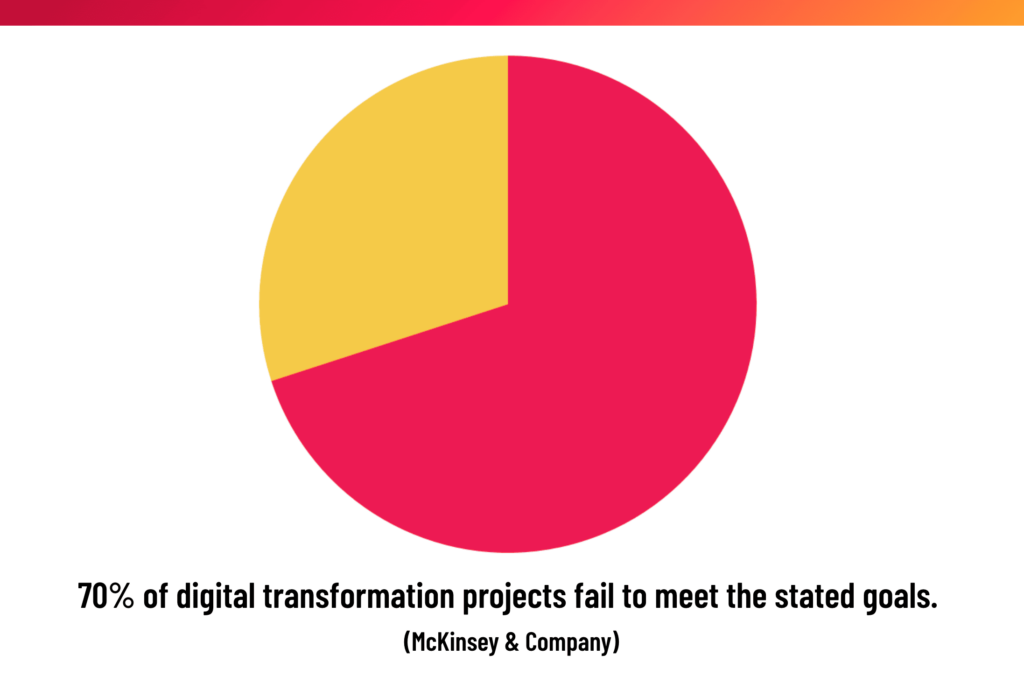
Despite years of effort, significant investment, and the guidance of various consultancies, progress at one leading automotive organization often felt frustratingly slow, teetering on the brink of failure—as 70% of transformations do.
Yet, what if this perceived stagnation is not a dead end but a pivotal moment just shy of breakthrough success? As the latest consulting firm brought in to assist, we arrived at some eye-opening realizations early on, and have had more than one difficult conversation along the way.
This exploration delves into the heart of this ongoing journey, uncovering the critical junctures and untapped potential that could propel one stalling transformation into a realm of exponential growth and innovation. Join us as we unravel the complexities of Agile transformation, offering insights and strategies for turning perceived setbacks into springboards for success.
The Agile Transformation Crossroads: Understanding the Journey
The shift towards agile methodologies often represents a critical turning point for organizations striving to navigate a downturn in profitability amidst the challenges of the Digital Age. This transition places leaders, many of whom are navigating the waters of agility and enterprise thinking for the first time, in a precarious position.
They find themselves tasked with orchestrating a comprehensive change without the necessary tools at their disposal. The lack of real-time data, compounded by a reliance on manual reporting, leaves them without the crucial insights needed to guide resource allocation, budgeting, and strategic direction effectively.
Picking a Destination: Unpacking the Core Objectives
In the quest for organizational improvement, three key priorities typically emerge:
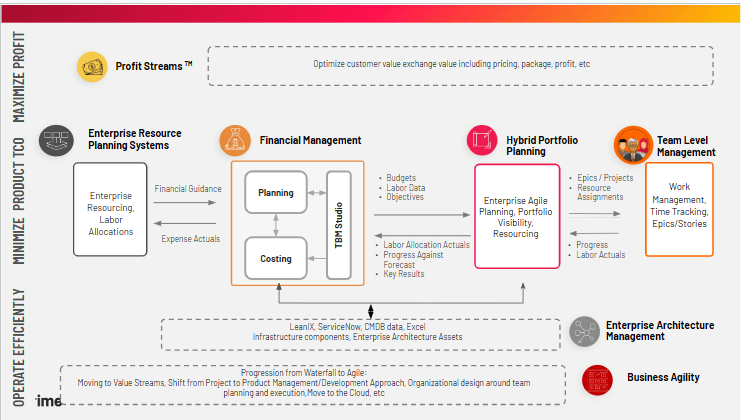
Maximize Profit: Efforts focus on reducing delays, optimizing pricing, enhancing quality, and ensuring timely delivery.
Minimize Product Total Cost of Ownership (TCO): Strategies include implementing Enterprise Resource Planning Systems, Financial Management, Hybrid Portfolio Planning, and Team Level Management.
Operate Effectively: The transition from Waterfall to Hybrid methodologies aims to connect OKRs, shift towards value streams, and evolve from project-based to product-centric approaches (Agile at Scale Framework).
Why They Hit the Breakdown Lane
Despite the outlined objectives, our client and their previous advisors fell into a very common trap: they narrowed the actual focus down to the third priority: enhancing operational effectiveness with the hope that agile adoption will automatically address profitability concerns.
The challenge of minimizing TCO was deemed too complex, sidelining it as a secondary concern.
Consequently, the transformation effort failed to leverage its full potential, focusing predominantly on people and processes without integrating broader enterprise considerations or aligning new tools with the new ways of working they were trying to implement.
Popping the Hood: What Needs to Be Fixed
I don’t want to discount the client’s notable successes and moments of brilliance. But this section delves into the systemic challenges we identified—highlighting obstacles that, though significant, present opportunities for impactful solutions.
Top 10 Repairs and Replacements Our Mechanics Identified
Unpredictable Outcomes: Inadequate resource and capacity planning has led to a predictability rate of less than 30% at both Vehicle Domain and Squad levels. Commitments were made to workloads that were unachievable, presenting significant challenges in budget forecasting, vehicle run rates, and resource management.
Resistance to Agile Culture: The entrenched waterfall methodologies are at odds with agile practices, resulting in change fatigue. Transitioning from decades of traditional hardware engineering methods to Agile for Hardware has proven challenging.
Ineffective Communication: The shift towards working from home, coupled with a culture of keeping cameras off, has fostered an over-reliance on communication through Jira notifications and Teams messages, reducing effective face-to-face interactions.
Inadequate Management of Risks and Obstacles: Risks and obstacles are not being effectively prioritized, escalated, or managed in a timely manner. Unanticipated risks at the Portfolio level are obstructing progress due to reliance on inaccurate, manually created metrics that obscure the real issues.
Lack of Effective Portfolio Planning: The absence of a dedicated Portfolio management tool to align and track strategic initiatives with business objectives has resulted in reliance on spreadsheets for these tasks.
Normalization of Failure: A cultural issue where failure has become accepted, impeding progressive transformation. The regular delay of vehicles diminishes the impact of non-delivery, leading to a lack of urgency and accountability in planning.
Inaccurate Project Tracking: Reliance on manual data entry into systems like PowerPoint results in outdated and inaccurate reporting.
Suboptimal Role Assignment: Key agile and leadership roles are often occupied by individuals lacking a genuine interest or background in agile methodologies, affecting capacity planning, resource utilization, and accurate forecasting.
Disjointed Priorities: Without appropriate tools, strategic priorities remain misaligned and disconnected from delivery, leading to a strategy that is not effectively translated into action.
Dependence on Rigid Legacy Tools: The current tools do not meet the dynamic requirements of Agile at scale, with an over-reliance on outdated planning tools and unchallenged, unrealistic milestones, causing avoidable delays.
Some of It is the Car, Some of It is the Driver
When I told the senior leader they’d been going about the transformation backwards, here’s what I meant:
Like so many other large enterprises that want to reach those core objectives outlined above, our client had started this massive undertaking at the “bottom” of the organization—at the Squad level with their developers, designers, and a few select engineers. And, they saw some initial successes despite the expected pushback—”this is the way we’ve always done it, why fix what’s not broken?”—and a somewhat long learning curve.
But, before long, those teams ran into roadblocks they couldn’t surmount:
Planning and financing models that are all based on waterfall methods, wholly incompatible with functional agility
Legacy tools and processes that were not designed to support Agile software or hardware efforts
Lack of buy-in and support from the executive levels of the organization, where strategy is decided and budgets are doled out
Even though they achieved some hard-won successes scaling this new way of working to the program and portfolio levels, in the end they were only partial wins.
And the car was swiftly running out of gas.
The challenge during an Agile transformation isn’t just in adopting new workflows and Agile processes but in aligning entire enterprise ecosystems—finance, resourcing, and architecture—to a cohesive hybrid model. Changes need to be made at every level of the organization, meaning a successful transformation really needs to start from the top. And, to achieve that kind of alignment, tooling has to come into the picture.
If we could convince our client to flip the script, they could resolve significant issues that stemmed from the highest levels:
Strategic Misalignment: The absence of a cohesive tool results in strategic objectives being isolated within silos, causing fragmented efforts across departments, domains, suppliers, and dependencies.
Resource Mismanagement: Poor resource allocation and planning adversely affect both the predictability and the success of project deliveries.
Inflexible Architectural Frameworks: Failing to adapt LeanIX-type architecture to accommodate agile or hybrid methodologies, coupled with a lack of appropriate tools, leads to cumbersome and inefficient processes.
Financial Disconnect: Traditional budgeting methods are ill-suited to agile ways of working, creating a divide between financial planning and agile execution. Achieving success necessitates transparent and well-controlled budgeting practices.
The Tools Every Automaker Should Have in the Trunk
While this transformation needs some admittedly serious repairs, they’re actually far closer to turning that corner to successful enterprise agility than the senior leader surmised, and I told him as much. And while the expert consultants, developers, and Agile personnel from Cprime—the mechanics in this metaphor—had a lot of work to do, we would be using the same tools every automaker should have at their disposal.
IT Financial Management and Enterprise Architecture Solutions
Achieving a balance between architectural strategy and financial management is critical in the enterprise technology landscape, and tools and frameworks that support Enterprise Architecture Management (EAM) and IT Financial Management (ITFM) are crucial. ApptioOne, as an example, optimizes IT spending, aligning it with strategic business goals. Integrating an ITFM tool with an EAM framework like LeanIX provides a holistic view of IT finances that is crucial for strategic decision-making. Integrated directly with their Enterprise Resource Planning (ERP) tools of choice, the entire funding and strategic portfolio picture becomes crystal clear.
However, maximizing the benefits of these tools requires expertise. Cprime fills this gap with its deep knowledge in integrating enterprise technology and financial management. By offering strategic consulting and optimization services, Cprime helps organizations to effectively merge EAM and ITFM practices, ensuring IT investments are both efficient and aligned with business objectives.
Hybrid Portfolio Planning Solutions
Hybrid portfolio planning solutions offer a comprehensive approach to fostering an agile enterprise. These tools are instrumental in synchronizing finance, resources, and architecture, providing a unified platform for agile transformation.
Streamlined Resource Management: These solutions automate and refine resource management, significantly reducing risks and enhancing utilization. This is crucial for boosting predictability and achieving desired outcomes.
Strategic Planning and Enhanced Visibility: By bridging the gap between strategy and delivery, these tools offer a clear view of connected Objectives and Key Results (OKRs), roadmaps, scenario planning, and RAG (Red, Amber, Green) status indicators, ensuring that every team is aligned and moving towards common goals.
Seamless Financial Integration: With the capability to integrate into existing financial systems, tools like ApptioOne and TargetProcess ensure that agile operations are fully aligned with financial management. This integration guarantees adherence to budgets and provides a transparent view of financial performance with real-time, accurate cost data.
With these solutions tied together, enterprise strategy can be mapped all the way down to the day-to-day activities the development teams manage in their team-level work management solutions. Jira is a popular option, and the one this client uses.
What These Tools Can Do
Organizations that have embraced this holistic suite of tools, augmented by guidance and elbow grease from Cprime experts, have reported significant improvements:
Accelerated Time-to-Market: Experiencing over a 60% improvement, which is vital for maintaining a competitive edge in the rapidly evolving automotive sector. (Gartner)
Reduced Risk and Compliance Issues: Achieving a 20-30% reduction, thanks to enhanced risk management and compliance practices.
Boosted Profit Margins: Witnessing more than a 5% annual increase, indicative of more efficient operations and strategic financial planning.
In other words, they’re back on the road, moving toward their destination at 110 kph, and watching their competition in their rearview mirror.
Will this client I’ve been talking about do the same? I’m not sure yet. We just had that difficult conversation not long ago. But, to that senior leader: if you’re reading this, I hope you will.
Addition of ServiceNow® Elite Partner bolsters Cprime capabilities in HR workflow optimization and Customer Service Management (CSM)
CARY, NC, May 6, 2024 – Cprime, a trusted global consulting partner, backed by Private Equity at Goldman Sachs Alternatives and Everstone Capital, that empowers organizations to embrace change as a catalyst for strategic growth, today announced it has entered into a definitive agreement for the acquisition of INRY, a ServiceNow Elite Partner renowned for its innovative solutions in HR workflow optimization and customer service management (CSM).
The global digital transformation market is expected to reach $3.4 trillion by 2026, and Cprime is well-positioned to capitalize on this growth. The acquisition of INRY aligns with Cprime’s strategic vision to provide comprehensive, cutting-edge intelligent orchestration solutions to its extensive client base. By integrating INRY’s deep experience in the ServiceNow platform, Cprime will be better positioned to help organizations navigate the complexities of the digital age and accelerate time to value by optimizing processes, enhancing employee and customer experiences, and accelerating innovation across the enterprise.
“The addition of INRY to our organization marks a significant milestone in our journey to empower enterprises with transformative technology solutions,” said Srinivasan Veeraraghavachary, President of Cprime. “With this acquisition, Cprime gains INRY’s wealth of experience and proven methodology for delivering transformative solutions on the ServiceNow platform. INRY’s laser focus on maximizing ROI and tangible business outcomes has enabled organizations to streamline their HR and CSM processes, resulting in increased operational efficiency, enhanced employee and customer satisfaction, and accelerated value realization.”
“We are thrilled to join Cprime, a platform distinguished by its extensive transformation knowledge and prestigious customer base, supported by investors with ample capital, and directed by a strong leadership team for our forthcoming growth stage,” said Bipin Paracha, CEO and CTO of INRY. “Our combined team is well positioned to enhance the value derived from our clients’ ServiceNow investments.“
ServiceNow, a leading digital workflow company, continues to recognize INRY as an Elite Partner, acknowledging their deep knowledge and consistent success in delivering exceptional value to customers.
“INRY has consistently proven their ability to drive measurable business outcomes and accelerate digital transformation, delivering significant business value to our joint customers,” said Erica Volini, senior vice president of global partnerships and channels at ServiceNow. “We are thrilled to see this strategic acquisition by Cprime and look forward to our continued collaboration, driving innovation and delivering tremendous business value.”
About Cprime
As full-service consultants leading at the dynamic intersection of product and platform innovation, Cprime empowers organizations not only to accelerate change but to embrace it as a catalyst for strategic growth. With a proven track record as a trusted global consulting partner backed by Private Equity at Goldman Sachs Alternatives and Everstone Capital, we go beyond traditional consulting and guidance to help clients anticipate market shifts, seize opportunities, and proactively shape their industries. Together, we drive innovation, foster flexibility, and adaptability and ensure sustainable growth amid continuous change to exceed customer and market expectations.
About INRY
INRY is an Elite Partner offering complete lifecycle transformations built on the ServiceNow platform, from implementations to support, training, and everything in between. We help customers use ServiceNow to design the future state of their business and make it real by creating new and exponential technologies. Over the past decade, we have helped organizations across many industries leverage ServiceNow’s potential to elevate experiences across their entire business.
In the realm of software development, the integration of artificial intelligence (AI) with Agile methodologies marks a pivotal evolution. This fusion promises to redefine efficiency, innovation, and adaptability in project management and execution.
As businesses seek to harness these technologies, understanding their potential to transform software development becomes crucial. This exploration delves into how AI can amplify the Agile framework, offering insights into a future where development processes are not just accelerated but also enriched with precision and creativity.
The Agile Evolution: Accelerated by AI
Agile methodologies revolutionized software development by introducing flexibility and responsiveness to rapidly changing requirements. The advent of AI technologies propels this agility to new heights, offering tools that automate tasks, predict trends, and facilitate decision-making.
This synergy between Agile practices and AI doesn’t just speed up development; it enriches it with data-driven insights, making the process more adaptive and intelligent. By integrating AI into agile processes, teams can automate mundane tasks, allowing them to concentrate on innovation and problem-solving. This partnership also elevates the quality of the output.
As we harness AI’s capabilities within Agile frameworks, we unlock unprecedented potential for innovation and efficiency in software projects.
Holistic AI Integration: Beyond Coding
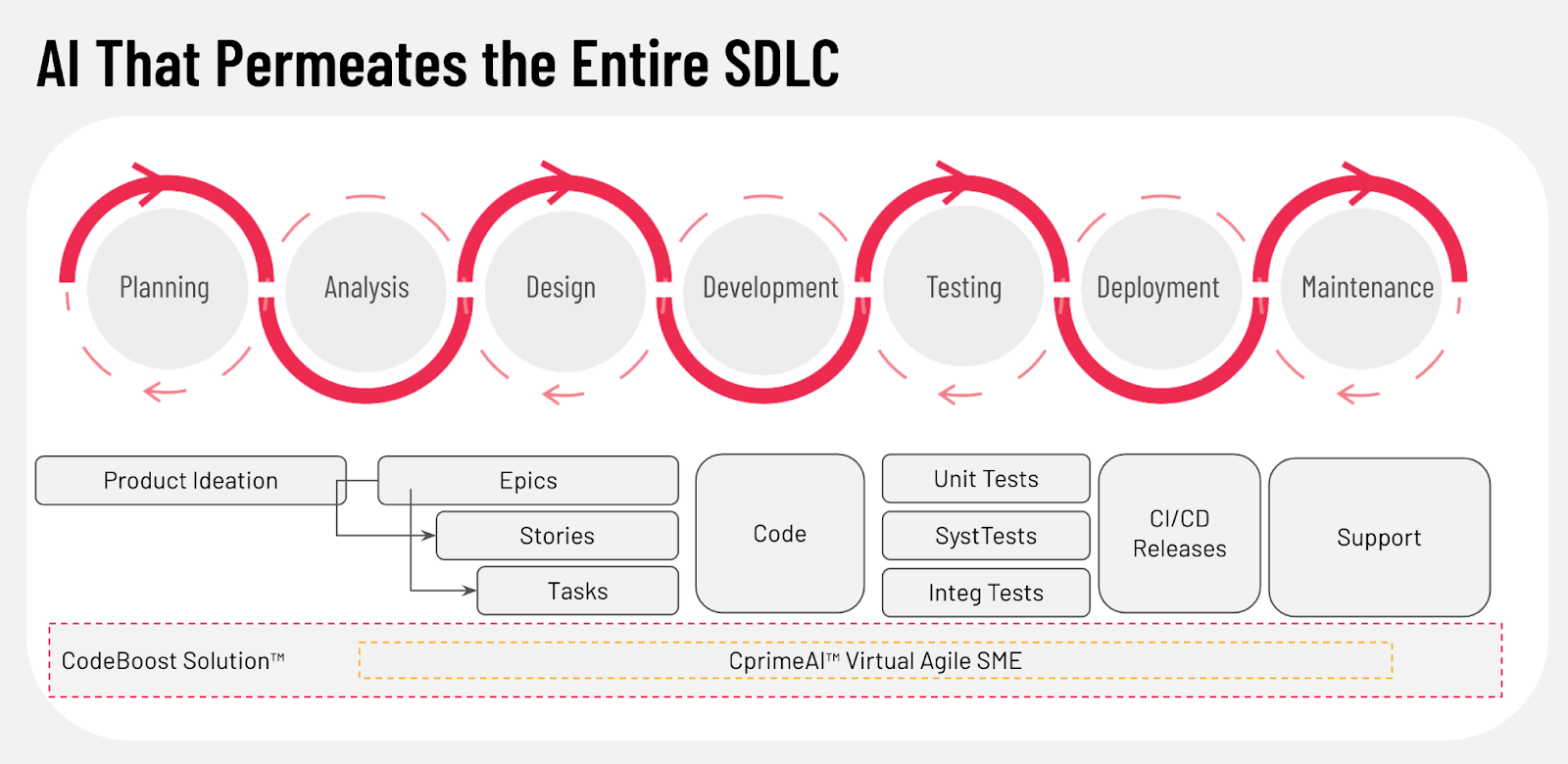
Integrating AI across the software development life cycle (SDLC) transcends mere automation of coding tasks. It’s about embedding AI from project inception through to support, aligning it with every role and task for comprehensive efficiency gains. This approach ensures AI’s capabilities are fully leveraged, from enhancing planning with predictive analytics to refining testing through automated error detection.
Measuring Success: The Role of Metrics in AI Integration
The integration of AI into software development emphasizes the importance of metrics for tracking progress and evaluating effectiveness. Utilizing data from various systems teams can establish performance baselines and measure the impact of AI tools.
These metrics offer insights into productivity enhancements and areas needing improvement, guiding teams towards optimized AI utilization. By quantifying AI’s contributions, organizations can make informed decisions, ensuring their investment in AI technologies drives tangible improvements in their development processes.
Tailoring AI for Software Development: The CprimeAI™ Advantage
Its role-based access control ensures sensitive project information remains protected, while its integration capabilities streamline workflows. This specialized approach to AI integration highlights the importance of solutions designed with the unique needs of software development teams in mind, paving the way for more efficient and secure development processes.
CodeBoost™: Revolutionizing the SDLC with AI
CodeBoost, powered by CprimeAI, introduces a comprehensive framework for leveraging AI across the entire software development life cycle, from ideation to support. By aligning AI technologies with each phase of development, CodeBoost ensures that AI’s full potential is harnessed to enhance efficiency, quality, and innovation.
This framework represents a paradigm shift in software development, where AI is not just an auxiliary tool but a core component of the development process. CodeBoost demonstrates the future of software development, where AI and agile methodologies converge to create a more dynamic, efficient, and effective development ecosystem.
Customer Intelligence FAQs addressed in this article:
What is customer intelligence? – Customer intelligence is the process of gathering and analyzing data about customers’ behaviors, preferences, and needs to inform business decisions and strategies.
How does customer intelligence benefit DevOps teams? – Customer intelligence benefits DevOps teams by enabling them to make data-driven decisions, prioritize features based on customer feedback, enhance user experiences, and tailor services to meet customer demands.
What are the best practices for leveraging customer intelligence in DevOps? – Best practices include integrating customer feedback early and often, utilizing analytics tools for deeper insights, ensuring data quality and relevance, balancing quantitative with qualitative data, and fostering cross-functional collaboration.
How can DevOps teams use customer intelligence to prioritize feature development? – DevOps teams can use customer feedback and intelligence to prioritize their development queue, focusing on projects that will have the most substantial impact on customer satisfaction and business outcomes.
How does customer intelligence enhance UX and UI design? – By analyzing customer behavior and feedback, DevOps teams can identify and address friction points in the UX and UI, making the user journey as smooth and enjoyable as possible.
What role does personalization play in product development according to customer intelligence? – Personalization, driven by customer intelligence, allows DevOps teams to tailor experiences to individual user preferences, improving user satisfaction, engagement, and retention.
How can predictive analytics forecast future customer needs and trends? – Predictive analytics analyzes trends and patterns in customer data, enabling DevOps teams to anticipate future needs and preferences, and innovate proactively to meet emerging customer demands.
Why is customer-centric development a competitive advantage for DevOps teams? – Customer-centric development, informed by customer intelligence, ensures products are deeply aligned with customer needs and preferences, fostering loyalty and driving long-term success by exceeding customer expectations.
Understanding your customers’ needs, behaviors, and preferences is more crucial than ever. This is where customer intelligence steps in, acting as a compass guiding businesses towards more informed decisions and tailored strategies. It’s not just about collecting data; it’s about transforming that data into actionable insights that can significantly enhance product development, marketing efforts, and overall customer satisfaction.
For DevOps teams, leveraging customer intelligence is a game-changer. It empowers them to create products and services that exceed customer expectations, ensuring a competitive edge in the market. Let’s dive into how integrating customer intelligence into the DevOps process can revolutionize the way products are developed, delivered, and refined, creating a seamless bridge between customer needs and technological advancements.
The Strategic Edge of Customer Intelligence in DevOps
Integrating customer intelligence into the DevOps framework offers a strategic advantage that goes beyond traditional development methodologies. It’s about making data-driven decisions that align closely with customer expectations and market demands. By harnessing the power of customer insights, DevOps teams can prioritize features, enhance user experiences, and tailor services in ways that resonate deeply with their audience.
Prioritizing Features with Precision
One of the most significant benefits of customer intelligence is its ability to shine a light on what customers truly want. This insight is invaluable for DevOps teams as they decide which features to develop first. Instead of relying on guesswork or the loudest voice in the room, teams can use real customer feedback to prioritize their development queue. This ensures that resources are allocated to projects that will have the most substantial impact on customer satisfaction and business outcomes.
Refining UX and UI for Maximum Engagement
The user experience (UX) and user interface (UI) are critical components of any digital product. Customer intelligence provides a window into how users interact with your product, highlighting areas for improvement. By analyzing customer behavior and feedback, DevOps teams can identify and address friction points, making the user journey as smooth and enjoyable as possible. This not only enhances the immediate user experience but also fosters long-term loyalty by showing customers that their feedback directly influences product evolution.
Customization and Personalization at Its Core
Today’s customers expect products and services tailored to their specific needs and preferences. Customer intelligence allows DevOps teams to move beyond one-size-fits-all solutions, offering personalized experiences that delight users. Whether it’s through customized product recommendations or personalized content, leveraging customer data to tailor experiences can significantly boost engagement and conversion rates.
Leveraging Predictive Analytics for Future-Proofing
Predictive analytics is another area where customer intelligence can add immense value. By analyzing trends and patterns in customer data, DevOps teams can anticipate future needs and preferences, staying one step ahead of the market. This forward-thinking approach enables businesses to innovate proactively, developing new features and services that meet emerging customer demands before they become mainstream expectations.
Transitioning seamlessly from understanding the strategic importance of customer intelligence, let’s delve into the best practices that can help DevOps teams effectively leverage this goldmine of insights to drive innovation and customer satisfaction.
Best Practices for Harnessing Customer Intelligence in DevOps
To truly capitalize on the wealth of insights customer intelligence offers, DevOps teams must adopt a set of best practices that ensure data is not just collected, but effectively integrated into the development lifecycle. Here’s how teams can make the most out of customer intelligence, turning insights into action.
Integrating Customer Feedback Early and Often
The key to successful product development is not just to listen to your customers but to make their feedback a cornerstone of your development process. This means integrating customer insights from the very beginning and at every stage of development. Regularly soliciting and incorporating feedback ensures that the product evolves in a direction that is aligned with customer needs and expectations.
Embracing Analytics Tools for Deeper Insights
In today’s data-driven world, leveraging the right analytics tools can provide a competitive edge. These tools can sift through vast amounts of data to uncover actionable insights, helping teams make informed decisions. From understanding user behavior to identifying trends, analytics tools are indispensable for teams looking to leverage customer intelligence effectively.
Ensuring Data Quality and Relevance
Not all data is created equal. For customer intelligence to be truly valuable, it must be accurate, relevant, and up-to-date. DevOps teams need to establish processes for regularly cleaning and validating data to ensure that their decisions are based on reliable information. This also involves discarding outdated or irrelevant data that could lead to misguided conclusions.
Balancing Quantitative with Qualitative Data
While quantitative data can provide a broad overview of customer behavior and trends, qualitative data brings depth to these insights, offering a glimpse into the ‘why’ behind the numbers. Balancing both types of data allows DevOps teams to gain a comprehensive understanding of their customers, from statistical trends to personal customer experiences.
Fostering Cross-Functional Collaboration
Customer intelligence should not be siloed within a single team or department. Encouraging cross-functional collaboration ensures that insights are shared and leveraged across the organization. This collaborative approach not only enriches the development process with diverse perspectives but also fosters a culture of innovation and customer-centricity.
With these best practices in place, DevOps teams can effectively leverage customer intelligence to drive product development and innovation.
The Competitive Advantage of Customer-Centric Development
Integrating customer intelligence into the DevOps process offers a significant competitive advantage. It enables teams to develop products that are not only technically sound but also deeply aligned with customer needs and preferences.
By prioritizing features based on customer insights, enhancing the user experience through data-driven design, personalizing the customer journey, and anticipating future trends, DevOps teams can create products that truly resonate with their audience. In doing so, they not only meet but exceed customer expectations, fostering loyalty and driving long-term success.
Agile methodologies have reshaped software development with promises of flexibility, speed, and collaboration. Yet, there’s a gap between these promises and the reality many teams face.
The integration of AI into Agile practices presents a compelling opportunity to bridge this gap. By enhancing Agile’s core principles with AI’s capabilities, we can unlock a new level of efficiency and innovation—a new chapter in Agile’s evolution that’s long overdue, in my opinion.
The Promise of Agile, and Why It Hasn’t Delivered
Agile methodologies were meant to allow software development teams to escape the rigidity of traditional models. At its core, Agile promised enhanced transparency, quicker delivery cycles, adaptability to change, and improved collaboration. These principles aimed to make software development more responsive to customer needs and market dynamics.
Despite widespread adoption and numerous success stories, the full realization of these promises remains elusive for some. Challenges in maintaining the pace of delivery, ensuring complete transparency, and achieving the desired level of adaptability and collaboration have led teams to seek further optimizations.
This gap between Agile’s promises and its practical outcomes sets the stage for the integration of AI, offering a pathway to not just meet but exceed the original expectations set by Agile methodologies.
AI as the Catalyst for Agile Evolution
The integration of AI into Agile methodologies is not about reinventing the wheel but about oiling it for smoother, faster, and more efficient rotation. AI allows us to automate routine tasks, analyze vast amounts of data for actionable insights, and predict outcomes with a high degree of accuracy. These capabilities can significantly enhance the responsiveness and efficiency of Agile practices.
By embedding AI into the Agile framework, teams can achieve a higher level of transparency, faster delivery cycles, and a more profound adaptability to change, thus fulfilling Agile’s original promises more comprehensively.
Enhancing Agile Practices with AI
AI’s potential to refine Agile practices extends beyond automation and predictive analytics. It can transform the way teams approach key components like user story generation and backlog prioritization.
Traditionally, creating detailed and consistent user stories has been a manual and time-consuming process, often leading to variability in quality and scope. AI, however, can standardize this process, ensuring each user story is comprehensive and aligned with project goals, thereby enhancing the overall planning and execution phases of Agile projects.
Moreover, AI-driven tools can analyze past project data to identify patterns and suggest optimizations for backlog items, ensuring that teams focus on the most impactful tasks. This not only improves project efficiency but also ensures that the final product is closely aligned with customer needs and expectations.
By leveraging AI in these critical areas, Agile teams can overcome common challenges, making their workflows more efficient and their outcomes more predictable and successful.
Overcoming Challenges in AI Integration
Integrating AI into Agile frameworks presents its own set of challenges, from the complexity of AI technologies to the need for new skill sets among team members. However, these challenges are not insurmountable barriers but rather opportunities for growth and innovation.
The key to successful integration lies in a strategic, step-by-step approach that includes training, experimentation, and adaptation. And, as with any iterative process, measurement and recalibration is a necessity. Set a baseline, track key metrics that matter, and fine tune the rollout as the data comes in.
Organizations can start small, focusing on automating one or two routine tasks with AI, and gradually expand its use as they gain confidence and expertise. It’s also crucial to foster a culture of continuous learning, encouraging team members to develop the skills necessary to work alongside AI tools effectively.
By viewing the integration of AI into Agile practices as a journey rather than a destination, teams can navigate the complexities of this process, turning potential challenges into a competitive advantage that drives efficiency, innovation, and success.
Looking Forward: The Agile of Tomorrow
Powering Agile using AI marks a pivotal shift towards a more dynamic, efficient, and innovative approach to software development. As we look to the future, it’s clear that this synergy will redefine what it means to be truly Agile. The Agile of tomorrow is not just about adapting to change—it’s about anticipating it, driving it, and thriving in it.
Organizations that embrace AI as an integral part of their Agile practices will find themselves at the forefront of software development, setting new standards for efficiency and innovation. The question is no longer if AI will become a part of Agile methodologies but how quickly and effectively organizations can integrate it to lead the way in software development innovation.
I’d love to hear your thoughts on the intersection of AI and Agile in the modern development organization. Join the conversation below!
Generative AI in Energy and Materials FAQs addressed in this article:
What is generative AI’s role in the energy and materials sector? – Generative AI (Gen AI) is transforming the energy and materials sector by enhancing efficiency, driving innovation, and supporting sustainability efforts through advanced data analysis and predictive modeling.
How does Gen AI improve predictive maintenance in the energy sector? – Gen AI improves predictive maintenance by analyzing historical and real-time data to predict equipment failures before they happen, minimizing downtime and maintenance costs.
Can Gen AI enhance resource exploration in the energy sector? – Yes, Gen AI can revolutionize resource exploration by processing seismic data more accurately and rapidly, reducing the need for exploratory drilling and minimizing environmental impact.
What are the benefits of Gen AI in material science and product development? – Gen AI accelerates the discovery of new materials and compounds by predicting their properties and potential applications, significantly shortening the research and development cycle.
How does Gen AI contribute to environmental sustainability in the energy sector? – Gen AI contributes to environmental sustainability by modeling complex environmental systems to identify ways to reduce emissions, conserve resources, and minimize the environmental impact of industrial activities.
What are the challenges of integrating Gen AI in the energy and materials sector? – Challenges include ensuring the accuracy and reliability of Gen AI outputs, safeguarding data privacy and security, addressing ethical and bias concerns, managing workforce implications, and staying ahead of regulatory developments.
How can companies in the energy and materials sector navigate the Gen AI landscape? – Companies can navigate the Gen AI landscape by developing a comprehensive digital strategy, building digital capabilities, fostering a culture of innovation, managing risks and ethical considerations, and measuring success to adapt strategies as needed.
What role does Cprime’s generative AI solutions play in the energy and materials sector? – Cprime’s generative AI solutions offer valuable resources for organizations in the energy and materials sector to accelerate their AI transformation efforts, optimizing processes, exploring innovation opportunities, and driving sustainability initiatives.
Generative AI (Gen AI) is reshaping the future of industries that are foundational to our global economy, notably the energy and materials sector. With its advanced capabilities to synthesize and generate new insights from extensive data pools, Gen AI is not merely a subject of fascination among tech circles but a pivotal innovation for data-intensive industries. The energy and materials sector, with its complex operations and reliance on vast datasets, finds itself at a unique advantage. This sector’s readiness to adopt Gen AI technologies promises to unlock efficiencies, enhance decision-making, and catalyze growth in ways previously unimagined.
The Unmatched Potential of Gen AI in Heavy Industries
The sectors of oil, gas, agriculture, electric power, and chemicals represent the backbone of global industry, driving forward through constant innovation and an unyielding pursuit of efficiency. These industries are characterized by their heavy reliance on data, from sensor outputs in sprawling power plants to seismic data in oil exploration. The advent of Gen AI offers these sectors an unprecedented opportunity to leverage their existing data in new and transformative ways.
At the heart of Gen AI’s appeal is its ability to process and analyze both structured and unstructured data at a scale and speed beyond human capabilities. This means that years of accumulated data, whether from sensor historians, maintenance logs, or electromagnetic measurements, can now be mined for insights that were previously inaccessible. For industries where every fraction of efficiency gain translates to significant economic and environmental impacts, the implications are profound.
Gen AI’s potential extends beyond mere data analysis. It enables predictive modeling that can forecast equipment failures before they occur, optimize energy consumption in real-time, and even simulate complex environmental impacts of various industrial activities. These capabilities not only promise to enhance operational efficiency but also to drive sustainability efforts, making it possible to achieve more with less.
Moreover, the integration of Gen AI into these sectors is not a distant future scenario but a rapidly approaching reality. Companies that recognize and act on this potential stand to gain a competitive edge, transforming their operations and setting new standards for efficiency and innovation in their respective fields.
The Strategic Advantage of Early Adoption
In the rapidly advancing field of generative AI, early adopters set the pace for innovation and secure a vantage point that can redefine industry standards. For the energy and materials sector, early adoption of Gen AI isn’t merely a competitive edge—it’s a strategic imperative. As large language models (LLMs) evolve at a breakneck speed, their capabilities expand, opening new horizons for applications that were once considered futuristic.
The trajectory of LLMs and Gen AI technologies suggests a future where the complexity and power of these models grow exponentially. This isn’t just speculation; it’s a trend backed by recent advancements that have seen Gen AI models leapfrog over their predecessors in both sophistication and utility. For industries that thrive on innovation and efficiency, such as energy and materials, the implications are clear: the sooner they integrate Gen AI into their operations, the better positioned they’ll be to harness its full potential.
Adopting Gen AI early on does more than just keep companies ahead of the technological curve. It allows them to shape the development of Gen AI applications tailored to their specific needs and challenges. This proactive approach ensures that as Gen AI technologies mature, they do so in a way that’s directly relevant and beneficial to the sector. Moreover, early adoption facilitates a learning curve that can significantly influence how effectively these technologies are integrated into existing systems and processes.
However, embracing Gen AI is not without its challenges. It requires a forward-thinking mindset, a willingness to invest in new technologies, and a strategic approach to digital transformation. But for those in the energy and materials sector willing to take the leap, the rewards promise to be substantial. From optimizing asset utilization to enhancing predictive maintenance and accelerating innovation, the benefits of early Gen AI adoption are both broad and deep.
In essence, the strategic advantage of early adoption lies not just in leveraging Gen AI as a tool for incremental improvements but in recognizing and seizing the opportunity to redefine what’s possible. As the energy and materials sector stands at the cusp of this technological revolution, the message is clear: the time to act is now.
Transformative Use Cases of Gen AI
The energy and materials sector, with its complex operations and reliance on vast datasets, is ripe for the transformative power of generative AI. This technology’s potential to revolutionize both back-office functions and core operations is unparalleled, offering a spectrum of applications that can significantly enhance efficiency, reduce costs, and drive innovation.
Optimizing Back-Office Functions
Gen AI can automate and streamline administrative tasks with unprecedented efficiency. Virtual assistants, powered by Gen AI, can handle routine inquiries, manage schedules, and even assist in data analysis, freeing up valuable human resources for more strategic tasks. Similarly, customer-facing chatbots can provide instant support, improving customer service while reducing the workload on staff.
Enhancing Core Operations
Perhaps the most exciting applications of Gen AI lie in its ability to transform core business operations. Predictive maintenance models, informed by Gen AI, can analyze historical data and real-time inputs to predict equipment failures before they occur, minimizing downtime and maintenance costs. In resource exploration, Gen AI can process and interpret seismic data more accurately and rapidly than traditional methods, leading to more efficient exploration strategies and reduced environmental impact.
Driving Innovation
Beyond improving existing processes, Gen AI opens up new avenues for innovation. In agriculture, for example, Gen AI can analyze data on weather patterns, soil conditions, and crop health to provide personalized recommendations, optimizing yields and resource use. In the chemical industry, Gen AI can accelerate the discovery of new materials and compounds by predicting their properties and potential applications, significantly reducing the time and cost of research and development.
Cross-Functional Applications
The versatility of Gen AI extends to cross-functional applications that can benefit multiple areas of the business. For instance, Gen AI can enhance decision-making by providing executives with deep insights derived from complex data analyses, enabling more informed strategic planning. It can also play a crucial role in sustainability efforts, analyzing vast amounts of environmental data to identify ways to reduce emissions and improve energy efficiency.
As the sector continues to embrace Gen AI, these use cases will evolve and expand, further solidifying the technology’s role as a key driver of transformation.
Navigating the Gen AI Landscape: Strategy and Implementation
The journey to harnessing generative AI within the energy and materials sector is as much about strategic foresight as it is about technological adoption. Successfully integrating Gen AI into existing operations requires a clear vision, a robust digital strategy, and a commitment to innovation. As companies navigate the Gen AI landscape, several key considerations emerge as critical to unlocking its full potential.
Developing a Comprehensive Digital Strategy
The first step in leveraging Gen AI effectively is to develop a digital strategy that aligns with the organization’s broader business goals. This strategy should identify high-impact use cases for Gen AI, taking into account the unique challenges and opportunities within the sector. It’s not just about adopting new technology; it’s about integrating Gen AI in a way that enhances existing capabilities and drives strategic objectives.
Building Digital Capabilities
To realize the benefits of Gen AI, companies must invest in building the necessary digital capabilities. This includes not only the technical infrastructure to support Gen AI applications but also the talent and skills required to develop, deploy, and manage these technologies. Upskilling existing staff and attracting new talent with expertise in Gen AI and data analytics will be crucial.
Fostering a Culture of Innovation
Successfully implementing Gen AI also requires a cultural shift within the organization. Companies must foster a culture of innovation that encourages experimentation, embraces risk-taking, and supports continuous learning. This cultural transformation can help break down silos, facilitate cross-functional collaboration, and ensure that Gen AI initiatives are aligned with the organization’s strategic vision.
Managing Risks and Ethical Considerations
As with any emerging technology, adopting Gen AI comes with its share of risks and ethical considerations. Companies must be proactive in identifying potential risks, such as data privacy concerns, bias in AI models, and the impact on employment. Developing clear policies and guidelines for the ethical use of Gen AI can help mitigate these risks and ensure that the technology is used responsibly.
Measuring Success and Adapting to Change
Finally, companies must establish metrics to measure the success of their Gen AI initiatives and be prepared to adapt their strategies as the technology evolves. This iterative approach allows organizations to learn from their experiences, refine their use cases, and continuously improve their Gen AI capabilities.
Overcoming Challenges and Mitigating Risks
The integration of generative AI into the energy and materials sector, while promising, is not without its challenges and risks. These hurdles range from technical limitations to ethical concerns, each requiring careful consideration and strategic planning to overcome. Addressing these challenges head-on is essential for companies looking to harness the full potential of Gen AI.
Ensuring Accuracy and Reliability
One of the primary concerns with Gen AI is the accuracy of its outputs. Given that Gen AI models can generate content or predictions based on the data they’ve been trained on, there’s a risk of producing inaccurate or misleading results, especially if the training data is flawed. Companies must implement rigorous validation processes to ensure the reliability of Gen AI outputs, incorporating human oversight where necessary to verify accuracy.
Safeguarding Data Privacy and Security
As Gen AI applications often rely on vast amounts of data, including potentially sensitive information, data privacy and security become paramount. Organizations must adhere to strict data governance policies, ensuring that data used for Gen AI applications is anonymized where possible and that access is tightly controlled to prevent breaches.
Addressing Ethical and Bias Concerns
The potential for bias in AI models is a well-documented concern. Gen AI systems are only as unbiased as the data they’re trained on, meaning that any existing biases in the data can be perpetuated and amplified. Companies must take proactive steps to identify and mitigate biases in their Gen AI applications, ensuring that these technologies are used ethically and fairly.
Managing Change and Workforce Implications
The adoption of Gen AI can also lead to significant changes in workforce dynamics. While Gen AI can automate routine tasks and free up employees for higher-value work, it may also lead to concerns about job displacement. Organizations should manage these changes thoughtfully, providing training and reskilling opportunities to help employees transition to new roles that Gen AI enables.
Staying Ahead of Regulatory Developments
The regulatory landscape for AI is still evolving, with governments and international bodies beginning to develop frameworks to govern its use. Companies must stay informed about these developments and be prepared to adapt their Gen AI strategies to comply with new regulations and standards.
By proactively addressing these challenges and risks, companies in the energy and materials sector can not only mitigate potential downsides but also build trust in their Gen AI initiatives. This trust, both internally among employees and externally with customers and regulators, is crucial for realizing the transformative potential of Gen AI.
What’s Your GenAI Strategy?
The journey through the potential and practical applications of generative AI in the energy and materials sector underscores a pivotal moment in industrial innovation. For organizations in the energy and materials sector looking to navigate the complexities of AI transformation, the path forward involves embracing Gen AI as a strategic asset. This entails not just the adoption of new technologies but a holistic approach that includes developing a comprehensive digital strategy, fostering a culture of innovation, and proactively addressing the ethical and operational challenges associated with Gen AI.
In this context, Cprime’s generative AI solutions emerge as a valuable resource for organizations aiming to accelerate their AI transformation efforts. With a focus on delivering cutting-edge AI technologies and expertise, Cprime is well-positioned to support companies in the energy and materials sector as they seek to harness the power of Gen AI. Whether it’s optimizing existing processes, exploring new opportunities for innovation, or driving sustainability initiatives, Cprime’s suite of generative AI solutions offers a pathway to achieving these goals.
As the energy and materials sector continues to evolve, the role of Gen AI will undoubtedly expand, offering new opportunities for growth and innovation. By leveraging the right technologies, strategies, and partnerships, organizations can not only adapt to this changing landscape but thrive within it, setting new standards for what’s possible in the industry.
Generative AI in Telco FAQs addressed in this article:
What is generative AI’s role in the telecommunications industry? – Generative AI is transforming the telecommunications industry by enhancing operational efficiency, improving customer engagement, and enabling new levels of growth and innovation.
How can generative AI improve customer service in telecommunications? – Generative AI improves customer service in telecommunications by automating interactions, providing personalized service recommendations, and resolving issues more efficiently.
What impact does generative AI have on marketing and sales in telco? – Generative AI revolutionizes marketing and sales in telecommunications by enabling hyper-personalization, leading to higher conversion rates and increased customer loyalty.
How does generative AI optimize network operations in telecommunications? – Generative AI optimizes network operations by predicting failures, optimizing routing and bandwidth allocation, and ensuring telecommunications networks are more reliable and efficient.
What are the strategic considerations for telco leaders implementing generative AI? – Telco leaders must focus on investment in AI capabilities, talent acquisition, adopting an agile operating model, technology infrastructure, data management, and ethical considerations.
How does generative AI contribute to the profitability of telecommunications companies? – Generative AI contributes to the profitability of telecommunications companies by unlocking new revenue streams, reducing operational costs, and enhancing decision-making processes.
What challenges do telecommunications companies face in adopting generative AI? – Telecommunications companies face challenges such as integrating cutting-edge technology, cultural shifts towards innovation, and the need for substantial investment in technology and talent.
What are the key use cases of generative AI in the telecommunications industry? – Key use cases include enhancing customer experience, revolutionizing marketing and sales, optimizing network operations, accelerating IT and software development, and streamlining support functions.
How can telecommunications companies successfully integrate generative AI? – Successful integration requires a clear strategic vision, building or enhancing talent, adopting an agile operating model, ensuring robust technology infrastructure, and focusing on ethical AI use and data management.
In an era where the telecommunications industry grapples with fierce competition and relentless cost pressures, the quest for innovation and differentiation has never been more critical. Amidst this backdrop, the emergence of artificial intelligence (AI), particularly generative AI, stands as a beacon of hope, promising to usher in a new era of growth and efficiency.
This transformative technology, with its unparalleled ability to generate new content, automate processes, and enhance decision-making, is poised to redefine the landscape of telecommunications.
As industry leaders explore the vast potential of AI in telco, early adopters are already witnessing remarkable improvements in operational efficiency and customer engagement. Let’s delve into how generative AI could be the catalyst the telecommunications sector needs to revitalize its profitability and secure a competitive edge in a rapidly evolving digital world.
The Promise of Generative AI for Telcos
The telecommunications sector, long accustomed to the challenges of fierce market competition and the relentless pursuit of cost efficiency, is now at the cusp of a technological revolution. Leading companies within the industry are not just experimenting with generative AI; they are pioneering its application, setting the stage for what could be a transformative era. From AT&T to SK Telecom and Vodafone, the early adoption stories are not just inspiring but indicative of the potential generative AI holds.
These trailblazers in the telecommunications space have embarked on journeys ranging from pilot projects to full-scale deployments of generative AI technologies. The results? Nothing short of remarkable:
For instance, a European telco saw its marketing campaign conversion rates soar by 40%, a testament to the power of AI-driven personalization and efficiency.
Similarly, a Latin American telecommunications company leveraged generative AI to enhance its call center operations, achieving a 25% boost in productivity.
These are not isolated successes but rather glimpses into the future of the telecommunications industry, where generative AI plays a pivotal role in reshaping strategies and operations.
The promise of generative AI extends beyond these early victories. It offers a new paradigm for the telecommunications industry, one where innovation is not just encouraged but becomes a cornerstone of business strategy.
As telcos continue to navigate the complexities of the digital age, the adoption of generative AI could well be the key to unlocking new levels of growth, efficiency, and customer satisfaction. Transitioning into the potential impact of this technology, it’s clear that the implications for profitability and competitive advantage are profound and far-reaching.
The Potential Impact on Profitability
The introduction of generative AI into the telecommunications sector heralds a significant shift, not just in operational efficiencies and customer engagement strategies, but also in the very fabric of the industry’s profitability model.
The potential financial implications of embracing generative AI are substantial, offering hope for an industry in search of revitalization. With projections suggesting that the adoption of generative AI could lead to an increase in EBITDA margins by 3 to 4 percentage points within two years, and potentially 8 to 10 percentage points over five years, the stakes are undeniably high.
Despite these promising forecasts, a sense of cautious optimism pervades among telco executives. Many acknowledge the transformative potential of generative AI, yet over 85% remain conservative in their estimates, attributing no more than 20% of future revenue growth or cost savings directly to these technologies. This cautious stance underscores the nascent nature of generative AI in the telecommunications landscape and the inherent uncertainties surrounding its full-scale implementation and impact.
However, the potential for generative AI to redefine the profitability paradigm in telecommunications cannot be overstated. By automating routine tasks, enhancing decision-making processes, and creating more personalized customer experiences, telcos can unlock new revenue streams and significantly reduce operational costs.
The journey towards realizing these benefits is fraught with challenges, including the need for substantial investment in technology and talent, as well as the development of robust data management and governance frameworks. Yet, for those willing to navigate these complexities, the rewards promise to be transformative, setting the stage for a new era of growth and competitive advantage in the telecommunications industry.
As we explore the challenges and opportunities that lie ahead, it becomes clear that the path to harnessing the full potential of generative AI in telco requires not just technological innovation, but also a fundamental shift in organizational culture and strategy.
Overcoming Challenges with Innovation
The journey to fully harnessing generative AI in the telecommunications sector is not without its hurdles. The industry, traditionally characterized by its heavy infrastructure and regulatory constraints, now faces the challenge of integrating cutting-edge technology into its core operations. This integration demands not only significant financial investment but also a cultural shift towards embracing innovation, exploration, and agility at levels previously unseen in the sector.
The transformative potential of generative AI in telecommunications is vast, yet realizing this potential requires telcos to navigate a complex landscape of technological, organizational, and strategic challenges. One of the most significant barriers is the need for a mindset shift. The industry must move from a focus on maintaining existing infrastructure and services to actively exploring new business models and strategies enabled by AI. This shift involves embracing risk, fostering a culture of continuous learning and experimentation, and being agile enough to adapt to rapid technological advancements.
Moreover, the democratization of AI technology means that the competitive landscape is evolving. Generative AI levels the playing field, allowing smaller players and new entrants to compete with established giants by offering innovative services and enhanced customer experiences. This scenario compels all telcos, regardless of their size, to rethink their approach to innovation and customer engagement.
To overcome these challenges, telcos must invest in building the necessary infrastructure, acquiring and developing talent skilled in AI and machine learning, and fostering partnerships with technology providers and startups. Additionally, they must prioritize the responsible use of AI, ensuring that ethical considerations and data privacy are at the forefront of their AI strategies.
As the telecommunications industry embarks on this transformative journey, the opportunities for innovation and growth are immense. By overcoming the challenges associated with adopting generative AI, telcos can unlock new avenues for enhancing operational efficiency, improving customer satisfaction, and ultimately, driving profitability.
Key Use Cases for Generative AI in Telecommunications
The transformative power of generative AI in the telecommunications industry is not just theoretical; it’s being realized today through a variety of innovative applications. These use cases not only demonstrate the versatility of generative AI but also highlight its potential to revolutionize different facets of the telecommunications sector. Here are some of the key areas where generative AI is making a significant impact:
Revolutionizing Marketing and Sales: Generative AI enables hyper-personalization in marketing campaigns and sales strategies. By analyzing vast amounts of data, AI can generate insights that help telcos tailor their offerings to individual customer preferences, leading to higher conversion rates and increased customer loyalty.
Optimizing Network Operations: Network efficiency is critical for telcos, and generative AI offers significant improvements in this area. From predicting network failures before they happen to optimizing routing and bandwidth allocation, AI can help ensure that telecommunications networks are more reliable and efficient.
Accelerating IT and Software Development: In the fast-paced world of telecommunications, the ability to quickly develop and deploy new services is a competitive advantage. Generative AI can speed up software development processes, automate testing, and even assist in migrating legacy systems to modern platforms.
Streamlining Support Functions: Back-office operations, such as billing, HR, and inventory management, can also benefit from the application of generative AI. By automating routine tasks, telcos can reduce operational costs and free up resources to focus on strategic initiatives.
These use cases are just the tip of the iceberg when it comes to the potential applications of generative AI in telecommunications. As the technology continues to evolve, we can expect to see even more innovative and impactful uses emerge.
The key for telcos is to identify the areas where AI can deliver the most value and to invest in the capabilities needed to implement these solutions effectively. With the right strategy and approach, the possibilities are virtually limitless.
Strategic Considerations for Telco Leaders
As the telecommunications industry stands on the brink of a generative AI revolution, strategic foresight and planning become paramount for leaders aiming to navigate this transformative landscape successfully. The integration of generative AI into telco operations is not merely a technological upgrade but a strategic endeavor that demands careful consideration and a holistic approach.
Here are key strategic considerations for telco leaders venturing into the generative AI space:
Investment in AI Capabilities: Leaders must decide on the level of investment in generative AI technologies. This includes not only financial resources but also the allocation of human capital. The decision to build in-house solutions, buy from external providers, or fine-tune existing technologies will significantly impact the speed and effectiveness of AI implementation.
Talent Acquisition and Development: The success of generative AI initiatives heavily relies on having the right talent. Telcos need to attract and retain individuals with expertise in AI, machine learning, and data science. Additionally, upskilling current employees to work alongside AI technologies is crucial for fostering an AI-centric culture.
Adopting an Agile Operating Model: The dynamic nature of generative AI requires telcos to adopt an agile operating model that can support rapid experimentation and iteration. This involves breaking down silos, fostering cross-functional collaboration, and enabling faster decision-making processes.
Technology Infrastructure and Data Management: A robust technology infrastructure that can support the demands of generative AI is essential. This includes cloud computing resources, data storage, and processing capabilities. Equally important is the establishment of a comprehensive data management strategy that ensures the quality, security, and ethical use of data.
Change Management and Organizational Buy-in: The adoption of generative AI represents a significant change for telcos. Effective change management strategies are needed to secure organizational buy-in, address potential resistance, and ensure that the benefits of AI are clearly communicated and understood across the organization.
Ethical Considerations and Regulatory Compliance: As telcos venture into the realm of generative AI, ethical considerations and regulatory compliance must be at the forefront of their strategy. This includes ensuring the responsible use of AI, protecting customer privacy, and adhering to industry regulations.
By addressing these strategic considerations, telcos can position themselves to fully harness the potential of generative AI, driving innovation, enhancing customer experiences, and ultimately achieving a competitive edge in the digital era.
Is Your Telco Organization Ready for AI?
For telecommunications companies ready to embark on this transformative journey, the question is not if they should integrate generative AI into their operations, but how. With the right approach and resources, the possibilities are limitless. Whether you’re looking to optimize network operations, revolutionize customer service, or drive personalized marketing campaigns, generative AI holds the key to unlocking new levels of performance and customer satisfaction.
At Cprime, we understand the challenges and opportunities that generative AI presents for the telecommunications industry. Our comprehensive suite of generative AI services is designed to guide you from discovery to mastery in AI integration, ensuring that your organization can leverage the full power of this transformative technology. Whether you’re just beginning to explore the potential of generative AI or looking to scale your existing initiatives, our team of experts is here to support you every step of the way.
Embrace the future of telecommunications with Cprime. Let’s embark on this journey together, unlocking the full potential of generative AI to propel your organization to new heights.
Operational excellence FAQs addressed in this article:
What is operational excellence in the modern business landscape? – Operational excellence in the modern business landscape is a holistic strategy that aligns technological innovation with a company’s core purpose, culture, and human capital.
What are the five pillars of modern operational excellence? – The five pillars of modern operational excellence are strategic clarity and purpose, cultural alignment and defined behaviors, effective management systems, optimized technical systems, and human-centric technology use.
How does technology enhance operational excellence? – Technology enhances operational excellence by automating mundane tasks, providing insightful data for decision-making, and enabling employees to focus on higher-value activities, thus acting as a force multiplier.
Why is the human factor key to unlocking productivity in operational excellence? – The human factor is key to unlocking productivity because aligning technology with human needs and capabilities ensures that technological investments enhance the skills, creativity, and productivity of the workforce.
What is the Operational Excellence Index (OEI)? – The Operational Excellence Index (OEI) is a comprehensive metric that evaluates an organization’s operational performance across various dimensions, including efficiency, quality, agility, and innovation.
How can organizations use the OEI to drive improvement? – Organizations can use the OEI to set targeted improvement goals, prioritize initiatives, track progress over time, and benchmark against industry peers to drive continuous improvement in operational performance.
What role does culture play in achieving operational excellence? – Culture plays a crucial role in achieving operational excellence by fostering an environment that values continuous improvement, innovation, and collaboration, which are essential for sustaining excellence.
How can technology be viewed in the context of operational excellence? – In the context of operational excellence, technology should be viewed as an augmenter that enhances human capabilities and supports strategic objectives, rather than as a standalone solution to operational challenges.
Why is continuous improvement important in operational excellence? – Continuous improvement is important in operational excellence because it ensures that efforts are aligned with strategic objectives and that investments in technology and process improvements yield tangible results, driving sustained growth and competitiveness.
In an era where technological advancements are heralded as the keystones of business transformation, the concept of operational excellence has quietly evolved into a critical determinant of lasting success. Yet, despite the rapid pace of digital innovation, from generative AI to industrial robotics, a perplexing gap persists between the hefty investments in technology and the tangible gains in productivity. This discrepancy raises a pivotal question: Are we leveraging technology to its fullest potential, or are we missing a piece of the puzzle?
The journey toward operational excellence is not a new one. Historically, breakthrough innovations such as the moving assembly line and just-in-time Lean production have redefined the landscapes of industries, setting new benchmarks for efficiency and productivity. However, the expected quantum leaps in productivity from Industry 4.0 technologies seem more like tentative steps in Europe and the US. This observation suggests that operational excellence in the 21st century demands a reimagined approach, one that transcends the traditional boundaries of technological integration.
This article will explore modern operational excellence, a concept that has expanded to encompass not just the seamless adoption of technology, but a holistic strategy that aligns with a company’s core purpose, culture, and human capital. By redefining operational excellence for the digital era, businesses can unlock the full potential of their technology investments, ensuring that these tools serve as catalysts for growth, innovation, and competitive advantage.
The Evolution of Operational Excellence
The concept of operational excellence is not static; it has undergone significant transformation over the decades, mirroring the evolution of industry and technology.
In the early 20th century, the introduction of the moving assembly line by Henry Ford revolutionized manufacturing, drastically reducing the time it took to produce a single automobile. This innovation marked the beginning of mass production, setting a new standard for operational efficiency.
Similarly, the advent of the shipping container in the mid-20th century streamlined global trade, reducing costs and improving logistics efficiency. These historical milestones underscore the profound impact of innovation on operational practices.
Fast forward to the present, the digital age promised a similar revolution with the advent of Industry 4.0 technologies such as artificial intelligence, robotics, and the Internet of Things (IoT). Expectations were high, with predictions of significant leaps in productivity and efficiency. However, the reality has been more nuanced. In Europe and the United States, the productivity gains from these technological investments have been modest, raising questions about the effectiveness of technology alone in driving operational excellence.
This discrepancy between expectation and reality highlights a critical insight: operational excellence in the digital era requires more than just technological adoption. It demands a reimagined approach that considers not only the tools and systems in place but also the strategic, cultural, and human factors that influence an organization’s ability to innovate and improve. Unlike the past, where a single innovation could redefine an industry, today’s operational excellence is multifaceted, requiring a holistic view that integrates technology with broader organizational goals and values.
Redefining Operational Excellence for the Modern Era
Operational excellence transcends the traditional focus on efficiency and cost reduction. The redefined approach to operational excellence is built upon five foundational pillars, each playing a crucial role in transforming operations from good to great in the digital age.
Strategic Clarity and Purpose
The journey towards operational excellence begins with a clear understanding of the company’s mission and strategic objectives. This clarity ensures that all operational improvements and technological innovations are aligned with the broader goals of the organization, driving meaningful progress and value creation.
Cultural Alignment and Defined Behaviors
Operational excellence cannot be achieved in a vacuum. It requires the cultivation of a supportive culture that encourages continuous improvement, collaboration, and innovation. Defined behaviors and principles that reflect the organization’s values and goals are essential for fostering an environment where operational excellence can thrive.
Effective Management Systems
A robust management system acts as the backbone of operational excellence, providing the structure and processes necessary for efficient operation and continuous improvement. This includes mechanisms for setting targets, monitoring performance, and facilitating communication across all levels of the organization.
Optimized Technical Systems
While technology alone is not the solution, optimized technical systems are critical for enabling operational excellence. This involves not only the adoption of the latest technologies but also the continuous refinement of technical processes to improve efficiency, quality, and agility.
Human-Centric Technology Use
At the heart of operational excellence is the recognition that technology should augment, not replace, human capabilities. By focusing on human-centric technology use, organizations can ensure that their technological investments enhance the skills, creativity, and productivity of their workforce, leading to sustainable improvements in performance.
By embracing these pillars, businesses can redefine their approach to operational excellence, creating a dynamic and resilient operation that is capable of navigating the complexities of the digital era.
The Human Factor: Key to Unlocking Productivity
Let’s dive a little deeper into that last pillar, because it’s especially important with the recent explosion in Generative AI tools and the renewed focus it’s placed on how technology is impacting the workforce for the better or the worse.
We’ll explore the critical role of aligning technology with human needs and capabilities, emphasizing that technology should serve as an enhancer of human-driven processes rather than a standalone solution.
Aligning Technology with Human Needs
The integration of technology into operations should be guided by a deep understanding of human needs and the ways in which technology can enhance human capabilities. This involves designing and implementing technological solutions that are intuitive, user-friendly, and supportive of the tasks and goals of the workforce. By prioritizing human needs, organizations can ensure that technology adoption leads to genuine improvements in productivity and job satisfaction.
Enhancing Human Capabilities
The ultimate goal of technology in the context of operational excellence is to augment human capabilities, not to replace them. This means leveraging technology to eliminate mundane tasks, reduce errors, and provide employees with the tools and information they need to excel in their roles. AI-powered coding assistants are a prime example of what’s possible in this area. When technology is used to enhance human capabilities, it can lead to significant gains in efficiency, creativity, and innovation.
Fostering a Culture of Continuous Improvement
A key aspect of aligning technology with the human factor is fostering a culture that values continuous improvement and lifelong learning. In such a culture, employees are encouraged to explore new technologies, experiment with different approaches, and continuously seek ways to improve their work processes. This not only maximizes the benefits of technology investments but also empowers employees to take an active role in driving operational excellence.
Overcoming Resistance to Change
Adopting new technologies often requires significant changes in work processes and can encounter resistance from employees accustomed to traditional ways of working. Overcoming this resistance involves clear communication about the benefits of the new technology, providing adequate training and support, and involving employees in the implementation process. By addressing human concerns and making employees active participants in the change, organizations can smooth the transition and ensure a positive outcome.
Operational excellence, therefore, is not just a matter of technological innovation but of creating a harmonious synergy between technology and the human spirit.
Measuring Excellence: The Operational Excellence Index (OEI)
In the journey towards operational excellence, having a clear and objective measure of progress is essential. The Operational Excellence Index (OEI)—developed by McKinsey—is a useful example of a formal tool for assessing the current state of operations and guiding continuous improvement efforts. Let’s explore the OEI and how it can be leveraged to enhance operational performance.
Understanding the OEI
The OEI is a comprehensive metric that evaluates an organization’s operational performance across various dimensions, including efficiency, quality, agility, and innovation. By providing a holistic view of operational health, the OEI enables leaders to identify areas of strength and opportunities for improvement.
The Correlation Between OEI Scores and Technology Investment Returns
Research and analysis have shown a strong correlation between high OEI scores and the successful realization of benefits from technology investments. Organizations that score above a certain threshold on the OEI are more likely to see their technology initiatives translate into significant productivity gains, customer satisfaction improvements, and competitive advantages.
Using the OEI to Drive Improvement
The OEI is not just a diagnostic tool; it’s a roadmap for operational excellence. By regularly assessing their OEI scores, organizations can set targeted improvement goals, prioritize initiatives, and track progress over time. This continuous feedback loop ensures that efforts are aligned with strategic objectives and that investments in technology and process improvements yield tangible results.
Benchmarking and Best Practices
In addition to internal assessment, the OEI can be used for benchmarking against industry peers and identifying best practices. Understanding how an organization’s operational performance compares to others in the same sector can provide valuable insights into competitive positioning and areas where adopting industry-leading practices could drive further improvement.
As businesses navigate the complexities of the digital era, the OEI offers a roadmap for transforming operations and achieving lasting success.
Building a Foundation for Sustained Excellence
Achieving operational excellence is not a one-time endeavor but a continuous journey that requires a solid foundation and a commitment to ongoing improvement. There are five critical elements necessary for building a foundation that supports sustained excellence in operations, integrating strategy, culture, management systems, technical systems, and human-centric technology use.
Establishing a Clear Corporate Purpose and Strategy
The foundation of sustained operational excellence begins with a clear and compelling corporate purpose and strategy. This clarity guides decision-making, aligns efforts across the organization, and ensures that operational improvements contribute to long-term goals. A well-defined corporate purpose also serves as a beacon, motivating employees and fostering a sense of shared mission.
Cultivating Principles and Behaviors that Support Excellence
Operational excellence is deeply rooted in the culture of an organization. Cultivating principles and behaviors that support continuous improvement, innovation, and collaboration is essential. This involves not only defining these principles but also embedding them into daily practices, recognizing and rewarding behaviors that contribute to excellence, and addressing behaviors that hinder progress.
Implementing Supportive Management Systems
Effective management systems are the backbone of operational excellence, providing the structure and processes necessary for efficient operation, performance monitoring, and continuous improvement. These systems should facilitate goal setting, progress tracking, and feedback loops, enabling the organization to adapt and evolve in response to internal and external changes.
Refining Technical Systems for Optimal Performance
Technical systems must be continuously refined and optimized to support operational excellence. This involves staying abreast of technological advancements, ensuring systems are scalable and flexible, and leveraging technology to streamline processes, improve quality, and enhance agility.
Emphasizing Human-Centric Technology Use
As highlighted earlier, a human-centric approach to technology use is crucial for sustaining operational excellence. Technology should augment human capabilities, improve job satisfaction, and empower employees to contribute to continuous improvement efforts. This requires a focus on user-friendly design, adequate training, and ongoing support to maximize the benefits of technology investments.
By focusing on these foundational elements, organizations can create an environment where operational excellence is not just an aspiration but a reality, driving continuous improvement, innovation, and competitive advantage in the digital era.
Technology as an Augmenter, Not a Panacea
In the pursuit of operational excellence, technology plays a pivotal role. However, it’s crucial to recognize that technology alone is not a cure-all for operational challenges. Instead, its greatest value lies in its ability to augment human capabilities and enhance the overall effectiveness of operational strategies.
Enhancing Human Capabilities Through Technology
The primary goal of integrating technology into operations should be to enhance human capabilities. This means deploying technology in ways that automate mundane tasks, provide insightful data for decision-making, and enable employees to focus on higher-value activities. By doing so, technology acts as a force multiplier, increasing productivity and allowing the workforce to contribute more meaningfully to organizational goals.
Aligning Technology with Strategic Objectives
For technology to effectively augment operations, it must be closely aligned with the organization’s strategic objectives. This alignment ensures that technological investments are not just about adopting the latest tools but about selecting and implementing technologies that drive progress towards achieving long-term goals. Strategic alignment also helps prioritize technology initiatives, ensuring resources are focused on areas with the greatest potential impact.
Fostering a Culture of Innovation and Adaptability
Leveraging technology as an augmenter requires a culture that values innovation and adaptability. Organizations must encourage experimentation, support risk-taking, and provide opportunities for employees to learn and engage with new technologies. This culture of innovation empowers the workforce to explore how technology can be used creatively to solve problems and improve operations.
Overcoming Challenges and Embracing Change
Adopting new technologies often comes with challenges, including resistance to change, learning curves, and integration issues. Overcoming these challenges requires clear communication, comprehensive training, and ongoing support. By addressing these challenges head-on and embracing change as an opportunity for improvement, organizations can maximize the benefits of technology and ensure it serves as an effective augmenter of operational excellence.
How Will You Pursue Operational Excellence?
The pace of change is faster than ever. Operational excellence has become critical for businesses aiming to thrive. This journey towards excellence is not just about integrating the latest technologies but about redefining how businesses operate at their core. It’s about creating an optimal environment where strategy, culture, technology, and human capabilities harmonize to drive innovation, efficiency, and growth.
At Cprime, we understand the complexities and challenges that come with this transformation. Our holistic approach to operational excellence is designed to help businesses navigate these challenges successfully. Whether it’s through establishing new ways of working, supporting robust change management, guiding tooling implementation and optimization efforts, or augmenting an organization’s DevOps and Agile capabilities, we offer a comprehensive suite of services to support your journey.
Agile Transformation: Embrace agility at every level of your organization to respond to change faster, do more with less, and surpass your competition. Our agile transformation services are designed to help you adopt a holistic approach to change and continuous improvement.
Product Agility: Shift from project to product with our product agility services. By focusing on product-led growth, we help you prioritize what matters, translate priorities into outcomes, and accelerate delivery based on customer and market feedback.
DevOps Solutions: Supercharge your DevOps practice with our integrated set of training, coaching, implementation, tooling, and staffing services. We create a coherent plan that reflects the unique needs of your organization to streamline the CI/CD pipeline, redefine collaboration between development and operations, and implement or modernize tooling.
Enterprise Integration: Support the unique pattern of your value streams through digital ecosystem automation. Our enterprise integration solutions help you automate workflows, foster efficient collaboration, and maintain end-to-end visibility, enabling faster time-to-value and powerful decision-making.
Enterprise Portfolio Management – Drive sustainable growth and efficiency through data-driven optimization and strategic alignment. By adopting an enterprise portfolio management approach, you can focus on building high priority products and features, establishing robust processes, fostering collaboration, and leveraging supportive technology tools, while considering your unique business environment and industry.
We invite you to speak to an operational excellence expert at Cprime about how our holistic tooling, training, and consulting services can help make your operational excellence objectives a reality. Together, we can uplevel your operation, ensuring that your business not only adapts to the speed the market demands but also thrives in the face of change.