Author: Elizabeth Walsh

The Smart Way to Measure and Scale AI ROI

AI investments are accelerating, yet ensuring a strong return on investment (ROI) remains a persistent challenge. While traditional ROI measurements—such as cost savings and efficiency gains—are useful, they fail to capture AI’s full strategic impact. To truly optimize AI spend, organizations must evaluate both quantitative and qualitative metrics while focusing on long-term organizational capabilities.

Enterprise AI adoption is surging. Forrester Research predicts AI spending will grow at an annual rate of 36% up to 2030, capturing 55% of the AI software market. However, this rapid expansion also increases pressure on companies to justify AI’s business value. Organizations with mature AI strategies are already reaping benefits; McKinsey’s 2024 State of AI report finds that such companies experience cost reductions and revenue gains, making strategic AI investment an imperative.

Measuring AI ROI Beyond Traditional Metrics

Many organizations still assess AI projects based solely on immediate cost savings or revenue generation, failing to recognize AI’s full potential. Like digital transformation, AI should be viewed as a strategic investment with both short-term benefits and long-term business impact.

AI delivers measurable value across multiple dimensions. Operational efficiency is one such area, where AI-driven automation reduces manual workflows and optimizes processes, leading to a 3-5% increase in sales productivity, according to McKinsey. Beyond efficiency, AI significantly enhances decision-making by providing real-time insights and predictive analytics, enabling businesses to make more informed, strategic choices.

Another critical area of impact is customer experience. AI-driven personalization and automation are transforming how businesses engage with their customers, ensuring more tailored and seamless interactions at scale. Additionally, AI plays a pivotal role in scalability and agility, helping organizations turn complexity into a competitive advantage. By automating and optimizing processes, businesses become more adaptable, resilient, and better equipped to navigate rapidly evolving markets.

Qualitative and Quantitative Metrics for AI Success

To justify AI investments, businesses must look beyond cost reduction and incorporate long-term value indicators.

Quantitative Metrics:

  • Reduction in Operational Costs – Both forecasts and current case studies support AI’s ability to cut manual work and streamline workflows, delivering efficiency gains.
  • Increase in Productivity – AI augments human capabilities, enabling teams to focus on high-value work, reducing ideation and content creation time.
  • Revenue Impact – AI-driven personalization boosts customer conversion rates and marketing effectiveness.
  • Time Savings – AI-powered automation speeds up processing times and eliminates bottlenecks in operations.

Qualitative Metrics:

  • Improved Employee Engagement – AI enhances employee satisfaction by reducing repetitive tasks, enabling more meaningful work.
  • Enhanced Customer Satisfaction – AI-powered chatbots and automation improve responsiveness and personalization.
  • Competitive Differentiation – Businesses leveraging AI effectively and with purpose stand out in the market.
  • AI-Driven Cultural Transformation – Organizations that transform internally to fully embrace AI benefit from more data-driven decision-making and greater agility.

Focusing on Long-Term Organizational Capabilities

AI investment should not be short-sighted. Its true power lies in enabling Intelligent Orchestration—where people, processes, and technology harmoniously integrate to drive continuous adaptability and resilience.

A key aspect of AI’s long-term value is its ability to optimize core business systems. 

Systems of Work benefit from AI-driven automation that reduces inefficiencies and embeds decision intelligence, streamlining operations and increasing overall productivity. 

Meanwhile, Systems of Insight leverage AI to transform raw data into strategic intelligence, empowering businesses with enhanced foresight and more accurate predictive analytics. 

Additionally, Systems of Engagement improve both customer and employee experiences through AI-driven predictive interactions, fostering more personalized and effective communication.

By aligning AI investments with long-term organizational transformation, businesses ensure agility, scalability, and lasting operational excellence. AI’s role in orchestrating these systems enables companies to stay competitive and resilient as change accelerates.

Maximizing AI Value Through Intelligent Orchestration

To drive maximum ROI, AI investments must be holistic, not siloed. Businesses should integrate AI across functions, leveraging it as a core element of an intelligently orchestrated ecosystem.

Best Practices for AI Optimization:

  • Align AI with Business Goals – AI should directly support enterprise objectives, ensuring clear strategic alignment.
  • Start with High-Impact Use Cases – Begin with initiatives that yield immediate ROI, such as AI-powered automation in customer service.
  • Leverage AI for Real-Time Insights – AI-driven analytics enable businesses to act swiftly on market shifts and customer behaviors.
  • Continuously Optimize AI Performance – AI requires ongoing monitoring, refinement, and integration to deliver sustained value.
  • Prioritize AI Governance and Security – AI’s success hinges on ethical deployment, stakeholder alignment, and clear governance frameworks.

The Impact of a Mature AI Strategy

Businesses that adopt a long-term AI strategy see significant gains. McKinsey highlights high-performing enterprises that attribute 10%+ of EBIT growth to AI implementation. Imagine what your business could accomplish with:

  • 25% improvement in operational efficiency via AI-driven automation.
  • 40% faster decision-making powered by AI-enabled insights.
  • 15% increase in customer satisfaction due to AI-driven personalization.

To maximize AI spend, businesses must look beyond cost efficiency and focus on AI’s strategic, long-term value. Expanding ROI measurement frameworks to include both tangible and intangible benefits is critical.

By leveraging AI, intelligently orchestrated with all business systems, organizations build lasting resilience, optimize workflows, enhance insights, and transform customer engagement. Companies that align AI investments with business strategy, scale intelligently, and continuously refine implementation will secure the greatest competitive advantage in the years to come.

Celebrating Exceptional Relationships: Cprime’s 2024 NPS Results

At Cprime, everything we do is centered around delivering value, solving challenges, and building strong partnerships with our clients. That’s why we’re thrilled to share the results of our 2024 Net Promoter Score (NPS) survey, a testament to the incredible relationships we’ve built together. This year, Cprime achieved an NPS of 54—an improvement from 50 in 2023 and well above the industry average of 30–40.

We are truly grateful to our clients for sharing their experiences, trust, and valuable feedback. Your input fuels our passion for growth and excellence, and it’s your success that inspires us every day.

Strong NPS Performance Reflects Client Confidence

A NPS of 54 puts Cprime in the “Great” category, reflecting the high level of satisfaction and loyalty among our clients. This achievement reinforces our mission to consistently deliver solutions that make a meaningful impact and  highlights the strength of our approach and the value of our partnerships.

What Clients Love About Cprime

Our clients’ feedback is the foundation of our success. This year’s survey gave us a wealth of insights into what makes Cprime a trusted partner. Here are some of the highlights:

1. Strong Relationships and Collaboration

Clients consistently praised our commitment to building strong, collaborative partnerships. One client shared, “Cprime has been amazing partners throughout our process. Very knowledgeable and easy to work with.” Another remarked, “Over the past 10 years, whenever we have engaged with Cprime, they have gone above and beyond in delivering the services we have requested.”

2. Customer-Centric Approach

We pride ourselves on understanding our clients’ needs and delivering solutions tailored to their unique challenges; we always take a proprietary view of client success. As one client put it, “Cprime acts as part of the team.” This responsiveness and dedication to client satisfaction are key to building trust and long-lasting relationships.

3. Expertise and High-Quality Teams

Our skilled consultants are a cornerstone of our success. Clients frequently commented on their effectiveness, noting, “Good highly skilled consultants that know their stuff.” Another added, “Highly skilled, experienced, and effective consultants. The team has always been quick to respond, with open communication and ease of engagement.”

4. Delivering Measurable Value

Clients also highlighted the tangible impact Cprime has on their organizations. One shared, “Cprime has added a considerable amount of value to our organization as we have navigated our Product Transition—they have become a trusted partner.” These results are a reflection of our unwavering focus on creating meaningful outcomes.

Gratitude for Feedback and Commitment to Continual Improvement

We are incredibly appreciative of the feedback shared through this year’s survey, including the insights that highlight opportunities for us to grow. While we celebrate the many successes reflected in our NPS score, we remain committed to continually improving our processes and finding new ways to deliver even greater value to our clients. This feedback ensures that we keep evolving to meet and exceed expectations.

Looking Ahead: Building on Success Together

As we celebrate this achievement, we recognize that our work is far from over. The feedback we received fuels our determination to strengthen our relationships, refine our offerings, and innovate for the future. We are excited to continue collaborating with our clients and delivering impactful solutions that drive success.

To our clients: Thank you for trusting us as your partner. Your success is our success, and we look forward to achieving even greater things together in the year ahead.

Biological Metaphors for Organizational Design: Learning from Natural Intelligence Frameworks

Organizations, much like living organisms, exist in constantly changing environments. To survive and thrive, they must adapt, responding to new pressures, challenges, and opportunities. While traditional management models often emphasize rigid hierarchies and control mechanisms, nature provides a different blueprint—one built on adaptability, emergence, and distributed intelligence.

By studying biological systems, we can gain valuable insights into organizational design. The principles of evolution, self-organization, emergence, and distributed intelligence reveal pathways for creating adaptive, resilient enterprises. Just as ecosystems do not resist complexity but harness it for survival, organizations can rethink structure and strategy to embrace change as a competitive advantage.

The Parallel Between Biological Evolution and Organizational Adaptation

Evolution is not about the survival of the strongest but the survival of the most adaptable. In ecosystems, species find evolutionary niches—unique roles that ensure their survival. Likewise, organizations must continually refine their value propositions to carve out sustainable competitive advantages.

  • Biological Example: Darwin’s finches evolved distinct beak shapes based on available food sources, demonstrating that adaptability, rather than brute force, determines success.
  • Organizational Analogy: In the business world, companies that iterate, experiment, and pivot in response to market shifts are the ones that endure. Just as ecosystems foster diversity to sustain balance, organizations must cultivate innovation and learning to remain relevant.

This aligns with the idea of turning complexity into a competitive advantage rather than seeking to simplify it. Complexity can be an asset when managed correctly, enabling organizations to respond dynamically rather than reactively.

2. Principles of Emergence in Nature and Organizations

In nature, emergence occurs when simple interactions among individual components lead to complex, adaptive behavior. Ant colonies and schools of fish display remarkable coordination without central command.

  • Biological Example: In ant colonies, no single ant dictates the actions of the group. Instead, ants follow simple rules and respond to environmental cues, creating a sophisticated system that efficiently finds food, builds structures, and defends territory.
  • Organizational Application: When companies encourage decentralized decision-making, they enable emergent solutions that would be impossible under rigid, top-down control. Agile and Lean methodologies leverage this principle, allowing teams to self-organize and innovate in response to challenges.

Organizations that design for emergence rather than enforcing control can unlock new levels of agility and responsiveness.

3. Self-Organization: A Blueprint for Scalability and Resilience

Self-organization is a core feature of natural systems, where order arises through local interactions rather than central direction. This principle applies to everything from cellular structures to bird flocks in flight.

  • Biological Example: Flocks of birds exhibit coordinated movement patterns without a leader dictating direction. Each bird adjusts based on its neighbors, ensuring cohesion while maintaining flexibility.
  • Implication for Organizations: Enterprises can encourage autonomy while maintaining shared goals, much like how biological systems self-organize. Adaptive workflows, empowered teams, and flexible governance structures allow organizations to scale efficiently without losing coherence.

Rather than enforcing rigid operational models, organizations should create conditions where structure emerges naturally, balancing autonomy with alignment.

4. Distributed Intelligence: A Model for Collective Learning

Nature provides countless examples of distributed intelligence, where no single entity possesses all knowledge, yet the system as a whole functions adaptively.

  • Biological Example: Neural networks process vast amounts of information through distributed connections rather than a single command center. Similarly, fungal mycelial networks transfer nutrients and signals across vast forest ecosystems, enabling collective survival.
  • Organizational Application: Companies can foster distributed intelligence by democratizing data and empowering decision-making at all levels. Systems of Insight—where knowledge flows across teams rather than bottlenecking at the top—enable organizations to respond faster and more effectively to change.

By leveraging AI-driven analytics as an enterprise nervous system,” and intelligently orchestrating the technology and processes required to support the strategy, organizations can process and react to internal and external stimuli dynamically.

5. Conceptual Models for Organizational Learning and Transformation

Just as genetic material encodes an organism’s traits, organizations carry an inherent DNA—a set of values, principles, and structures that shape their behavior.

  • Organizational DNA: Organizations that intentionally shape their culture, knowledge-sharing practices, and decision-making frameworks create a foundation for long-term adaptability.
  • Ecosystem Thinking: Organizations should be viewed as interconnected ecosystems where various functions interact symbiotically, not as isolated entities. Encouraging mutual support across departments strengthens resilience and innovation.
  • Guided Evolution: Change does not have to be disruptive. Evolution in nature occurs through gradual, iterative refinements. Organizations that experiment in small, controlled ways can drive meaningful transformation over time without destabilizing operations.

Many experts in organizational theory believe the “organization as organism” metaphor falls apart under conditions of continuous change. We believe this concept of guided evolution makes the difference. With expert guidance leading steady, iterative improvements, organizations can rise to the challenge of continuous change and even turn it into an advantage.

6. Actionable Insights for Leaders

Leaders seeking to build adaptive organizations can take key lessons from biology:

  • Adopt Adaptive Structures: Move from rigid hierarchies to flexible, intelligently orchestrated models that enable resilience.
  • Embed Systems Thinking: Recognize how different functions interact, ensuring alignment across people, processes, and technology.
  • Experiment and Iterate: Treat initiatives like evolutionary experiments by constantly learning, refining, and adapting based on results.

By embracing these principles, organizations can move beyond static models of operation and design structures that evolve naturally in response to the world around them.

Conclusion

Success in today’s world is about navigating change effectively. Stability is stagnation. Just as ecosystems thrive through adaptability, organizations that embrace biological principles—emergence, self-organization, and distributed intelligence—will be best positioned for long-term resilience and growth.

Strategic Portfolio Management (SPM): A Framework for Business Growth

Strategic Portfolio Management (SPM) connects business strategy with execution by managing portfolios of initiatives, resources, and investments. With the right processes in place, organizations can navigate complexity, improve efficiency, and drive continuous innovation. Here’s how SPM supports enterprise transformation across five critical stages, with AI playing a targeted but essential role along the way.

Explore SPM

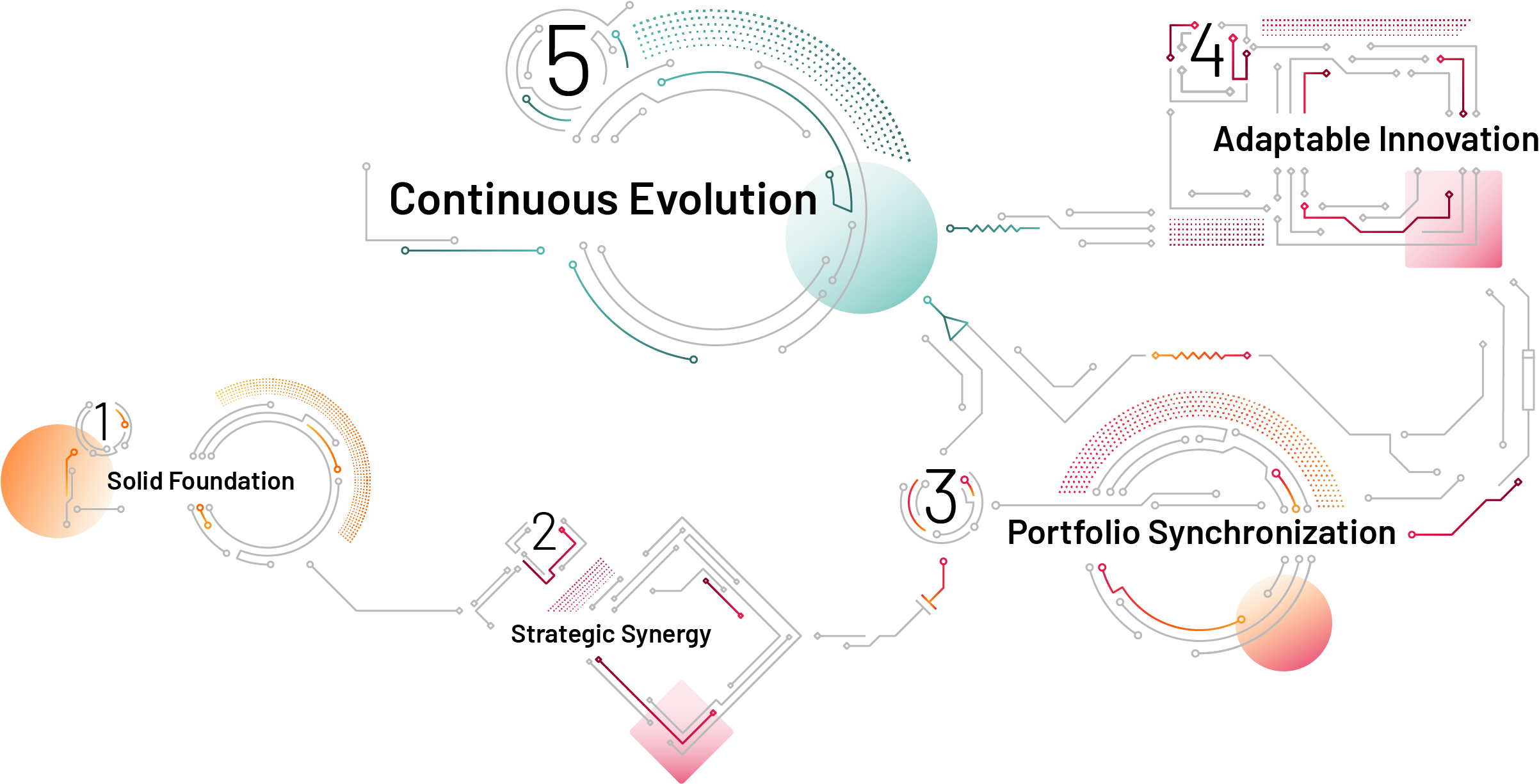
The Five Stages of SPM-Driven Evolution

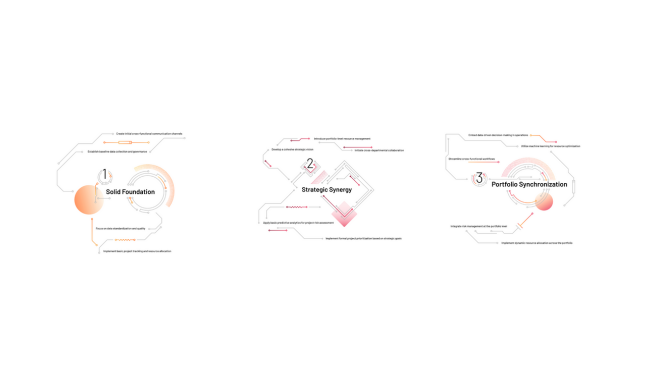
1. Solid Foundation

Building a strong foundation begins with establishing clear governance, consistent project tracking, and streamlined resource management. AI plays a supportive role by automating basic tasks like data collection and project status reporting, ensuring that teams work with accurate and up-to-date information.

2. Strategic Synergy

Organizations shift from project-level management to a portfolio-driven approach. Cross-departmental collaboration is enhanced through clear project prioritization. Here, AI-driven analytics can help evaluate potential risks and forecast project outcomes, ensuring that business priorities are both well-defined and well-supported.

3. Portfolio Synchronization

At this stage, business functions operate as a synchronized unit rather than independent teams. Centralized data and automated processes allow for dynamic resource allocation. AI assists by identifying operational inefficiencies and optimizing resource distribution through predictive modeling.

Watch our webinar explaining the first three stages in detail 

4. Adaptable Innovation

Businesses begin to proactively adapt to changes by fostering a culture of innovation supported by real-time feedback. AI enhances this by providing predictive insights into emerging market trends, helping leaders explore new opportunities while minimizing risks.

Dive deeper into Stage 4 with this in-depth webinar

5. Continuous Evolution

The organization reaches a state of continuous transformation, where business strategy and operations are seamlessly connected. AI becomes a strategic advisor, offering real-time data analysis to inform decision-making and uncover new areas for growth and investment.

Round out the series with this webinar covering Stage 5


For an in-depth treatment of the 5 Stages of Enterprise Evolution, download our white paper, Strategic Portfolio Management: A Catalyst for Business Evolution in the Age of Disruption.

Download Now


Key Enablers of SPM Success

To fully unlock SPM’s potential, organizations must invest in essential enablers:

  • Governance: Transparent decision-making is supported by continuous project evaluation and strategic oversight.
  • Enterprise Architecture: Technology investments align closely with business objectives, ensuring long-term scalability.
  • Asset & Resource Management: Resources are efficiently managed, with predictive maintenance reducing downtime.
  • Change & Risk Management: Structured processes mitigate risks and guide organizations through change.
  • Data-Driven Insights: Analytical models provide valuable performance insights, guiding strategy refinement.

Measuring Success and Looking Ahead

Key performance indicators for SPM-driven success include:

  • Strategic Alignment: Tracking how closely project portfolios align with business goals.
  • Resource Utilization: Measuring how well time, talent, and finances are allocated.
  • Innovation Speed: Monitoring how quickly new ideas are developed and brought to market.
  • Portfolio ROI: Evaluating returns from strategic initiatives compared to investment.
  • Risk Preparedness: Measuring how effectively potential risks are identified and mitigated.

The Future of SPM: Driving Purposeful Transformation

SPM empowers organizations to adapt, innovate, and thrive. While AI plays a supportive but essential role in enabling smarter decision-making and operational efficiency, it is the combination of people, processes, and technology that ensures long-term success. By embracing SPM’s full potential, businesses can shape their futures rather than simply react to change.

Are you ready to explore Strategic Portfolio Management for your own organization? Don’t hesitate.

From Adaptable Innovation to Continuous Evolution: Achieving Stage 5 With SPM

The journey to enterprise maturity through Strategic Portfolio Management (SPM) has been the focus of this insightful blog series. (You can read Part 1 and Part 2 if you haven’t had a chance.) In this final installment, the spotlight is on achieving Stage 5, “Continuous Evolution.” This stage represents the pinnacle of enterprise maturity, where organizations thrive on change, continuously innovating and refining their strategies to lead their industries.

As you explore this blog, reflect on your organization’s current position in the maturity model and how far you aim to advance. This is your roadmap to achieving sustained excellence and shaping the future.

Revisiting the Journey So Far

Before diving into the defining aspects of Continuous Evolution, let’s recap the foundational stages that build up to it:

Stage 1: Solid Foundation

Organizations focused on establishing governance structures, data standardization, and basic project tracking. This phase set the groundwork for efficient operations and strategic visibility.

Stage 2: Strategic Synergy

The emphasis shifted toward aligning strategic objectives with departmental goals. Collaboration improved, and governance became more formalized, fostering transparency and better decision-making.

Stage 3: Portfolio Synchronization

Here, organizations embedded data-driven decision-making into their operations. Optimized workflows, dynamic resource allocation, and early AI adoption created an interconnected operational environment.

Stage 4: Adaptable Innovation

Enterprises moved from reactive to proactive strategies. Predictive analytics, agile portfolio management, and integrated systems enabled them to navigate change with precision and foster a culture of continuous improvement.

Each of these stages serves as a stepping stone, preparing organizations to embrace the transformative potential of Stage 5.


For an in-depth treatment of the 5 Stages of Enterprise Evolution, download our white paper, Strategic Portfolio Management: A Catalyst for Business Evolution in the Age of Disruption.

Download Now


What Defines Continuous Evolution?

At Stage 5, organizations achieve a state of perpetual readiness for change. This stage isn’t just about adapting to market conditions—it’s about proactively shaping them. Here’s what sets Stage 5 apart:

  • Autonomous Portfolio Management: Advanced AI systems handle routine decision-making, optimizing portfolios in real time without human intervention.
  • Strategic Foresight: Predictive analytics identify emerging trends and opportunities before they become evident, giving organizations a significant competitive edge.
  • Industry Leadership: Enterprises at this level don’t just adapt to change—they lead it, setting new benchmarks for innovation and operational excellence.

Consider Netflix as an example. The company evolved from a DVD rental service to a leader in global streaming and content production. By leveraging AI to predict viewer preferences and optimize resource allocation, Netflix has continuously refined its business model to stay ahead.

The Five Pillars of Stage 5 Excellence

Achieving Continuous Evolution requires a strong foundation of five interconnected pillars:

  • Transformative Leadership

Leadership plays a critical role in driving iterative change. Visionary leaders not only embrace innovation but also foster a culture of adaptability and resilience. They align the organization’s goals with its strategies, ensuring seamless transitions through continuous evolution.

  • AI-Powered Strategic Foresight

AI moves beyond supporting functions to become a strategic partner. It enables real-time data analysis, autonomous decision-making, and predictive modeling, helping organizations anticipate market shifts and adapt strategies proactively.

  • Dynamic Business Model Innovation

At Stage 5, innovation extends beyond products and services to include business models. Organizations continuously refine their approaches to value creation, delivery, and capture, ensuring they remain relevant and competitive.

  • Ecosystem Orchestration

Stage 5 organizations excel at collaborating with partners, suppliers, and even competitors to enhance value creation. They leverage interconnected ecosystems to maximize efficiency and expand their reach.

  • Talent as a Strategic Differentiator

People remain at the heart of transformation. Proactively developing skills, fostering continuous learning, and aligning talent with organizational goals ensure that the workforce evolves alongside the business.

Benefits and Challenges of Stage 5

Achieving Continuous Evolution offers transformative benefits that redefine organizational capabilities:

  • Sustained Competitive Advantage: Organizations at Stage 5 are equipped to stay ahead of industry trends, leveraging AI and strategic foresight to lead markets rather than follow them.
  • Enhanced Agility and Innovation Velocity: The integration of autonomous AI systems enables faster decision-making and a higher rate of innovation, keeping organizations responsive to dynamic market demands.
  • Operational Efficiency and Market Leadership: Seamlessly aligned operations ensure that resources, strategies, and execution are optimized, allowing organizations to shape their industries and set new standards for excellence.
  • Proactive Market Influence: With predictive insights, organizations move beyond adapting to market changes to actively shaping market conditions, creating new opportunities and driving customer value.

But, the path to Stage 5 is not without obstacles. Key challenges include:

  • Cultural Resistance to Continuous Change: Transitioning to a perpetually evolving organization requires buy-in from all levels of the business. Resistance can arise from employees and leaders who are accustomed to static, predictable workflows.
  • Cross-Functional Alignment: Seamless collaboration between departments, partners, and external stakeholders is essential, yet difficult to achieve without intentional efforts to integrate systems and workflows.
  • Sustained Investment in AI and Advanced Analytics: Maintaining competitive edge at Stage 5 requires ongoing investment in cutting-edge technology and expertise, which can be a significant financial and operational commitment.
  • Balancing Innovation with Stability: While continuous evolution drives growth, organizations must also ensure that their foundational operations remain stable and resilient amid ongoing change.

By addressing these challenges through strong leadership, cultural adaptability, and strategic investment, organizations can unlock the full potential of Continuous Evolution.

Steps to Advance Toward Continuous Evolution

Reaching Stage 5 requires deliberate effort and a commitment to long-term progress. Here are actionable steps to accelerate your journey:

  • Assess Your Current Maturity Level: Conduct a thorough evaluation of your organization’s current SPM practices and identify gaps.
  • Strengthen Leadership Alignment: Secure executive sponsorship and align leadership around a shared vision for transformation.
  • Invest in AI and Analytics: Implement AI-driven technologies to enhance decision-making and optimize portfolio management.
  • Develop a Roadmap for Talent Development: Proactively address skills gaps and align workforce capabilities with future needs.

Remember, the path to Stage 5 is iterative. Organizations must continually refine their strategies, processes, and systems to adapt to new challenges and opportunities.

Embrace the Power of Continuous Evolution

Achieving Stage 5 maturity is as much a mindset as a milestone. Organizations that reach this stage don’t rest on their laurels. They continually innovate, adapt, and redefine industry standards, staying ahead of the curve in an ever-changing landscape.

Ready to dive deeper? Watch the full webinar recording to explore real-world examples, expert insights, and practical steps for advancing your SPM journey. Begin your transformation today and position your organization as a leader in the age of continuous evolution.

From Synchronization to Innovation: Advancing Enterprise Maturity with Strategic Portfolio Management

The journey to enterprise maturity is not a single leap but a progressive evolution. This post, the second in a three-part series, dives into the advanced stages of enterprise evolution based on Strategic Portfolio Management (SPM): Adaptable Innovation and Continuous Evolution. Building on foundational concepts explored in the first blog, this installment examines how organizations can transition from portfolio synchronization to a future-ready state where innovation thrives, and operations align seamlessly with strategy.

Let’s explore how to advance your organization’s SPM journey and lay the groundwork for sustainable growth and industry leadership.

Recap: Building a Strong Foundation for Growth

Before diving into the advanced stages, it’s essential to reflect on the groundwork laid in the initial phases of the enterprise’s journey to continuous evolution:

Stage 1: Solid Foundation

Organizations focused on establishing governance, standardizing data, and adopting basic project tracking. This stage is about creating visibility and enabling a shared understanding across teams.

Stage 2: Strategic Synergy

Efforts shifted toward aligning strategic objectives with departmental goals. Collaboration deepened, and governance became more formalized, ensuring transparency and better decision-making.

Stage 3: Portfolio Synchronization

The emphasis moved to embedding data-driven decision-making across the organization. Workflow optimization, dynamic resource allocation, and early AI integration helped create an interconnected operational environment.

These stages built a sustainable SPM framework, preparing organizations to embrace innovation and agility as they progress to Stage 4.


For an in-depth treatment of the 5 Stages of Enterprise Evolution, download our white paper, Strategic Portfolio Management: A Catalyst for Business Evolution in the Age of Disruption.

Download Now


Stage 4: Adaptable Innovation – Shaping the Future

Adaptable Innovation represents a significant shift in how organizations operate. In this phase, enterprises move beyond reactive approaches to actively shaping their future through predictive capabilities, streamlined processes, and interconnected systems.

Data Transformation

In Stage 4, data evolves from being a static reporting tool to a predictive powerhouse. Organizations leverage AI-driven analytics to foresee risks, identify opportunities, and allocate resources with precision. This transformation empowers leaders to act proactively, making informed decisions that drive innovation and efficiency.

Process Evolution

Governance transforms from rigid, annual cycles to dynamic, continuous processes. Organizations adopt adaptive frameworks that allow for real-time adjustments based on changing internal and external factors. This evolution fosters agility and positions enterprises to pivot quickly in response to market demands.

System Integration

Disjointed systems and siloed teams give way to unified platforms that enable seamless collaboration. By creating a single source of truth, organizations eliminate inefficiencies and enhance coordination across departments, ensuring that all efforts align with strategic objectives.

During the webinar, our experts emphasized the importance of starting small—focusing on a single high-impact use case—and scaling successes over time. This approach minimizes risk while maximizing the chances of long-term success.

Challenges on the Path to Adaptable Innovation

While the promise of adaptable innovation is compelling, the journey is not without its hurdles. Organizations often face several challenges when advancing to Stage 4:

  • Siloed Operations: Disconnected teams and fragmented systems can hinder collaboration and slow decision-making.
  • Resistance to Change: Cultural inertia and reluctance to adopt new processes can create roadblocks.
  • Technological Limitations: Outdated tools and insufficient expertise can limit an organization’s ability to leverage predictive analytics and automation effectively.

Solutions for Overcoming Obstacles

The webinar provided actionable strategies to address these challenges:

  • Invest in AI Capabilities: Predictive analytics and AI-powered decision-making tools can break down silos, enabling real-time insights and cross-functional collaboration.
  • Foster a Culture of Adaptability: Encourage innovation by celebrating experimentation and empowering employees to take calculated risks.
  • Establish Dynamic Governance: Replace bureaucratic approval processes with adaptive guardrails that facilitate innovation without compromising accountability.

By tackling these challenges head-on, organizations can accelerate their journey toward innovation-driven operations.

Looking Ahead: Stage 5 – Continuous Evolution

While Stage 4 focuses on enabling adaptability and fostering innovation, Stage 5, Continuous Evolution, represents the pinnacle of enterprise maturity. At this stage, organizations achieve seamless alignment between day-to-day operations and long-term strategic goals, maintaining a state of perpetual readiness for change.

What Defines Continuous Evolution?

  • Autonomous Portfolio Management: Advanced AI systems take over routine decision-making, optimizing portfolios in real time without human intervention.
  • Strategic Foresight: Organizations leverage predictive analytics to identify emerging trends and market opportunities before they become evident.
  • Industry Leadership: Enterprises at this stage don’t just adapt to change—they drive it, setting new benchmarks for innovation and operational excellence.

Stage 5 transforms organizations into catalysts for change, empowering them to lead market disruptions rather than merely responding to them.

Embrace the Journey to Innovation

Advancing from synchronization to innovation is a pivotal step in the SPM maturity journey. Stage 4 empowers organizations to become more agile, responsive, and innovation-driven, setting the stage for Continuous Evolution in Stage 5. By addressing challenges and adopting a forward-thinking approach, enterprises can unlock new levels of efficiency, creativity, and impact.

To learn more about implementing adaptable innovation and preparing for continuous evolution, we invite you to view the full webinar recording. Gain deeper insights, hear real-world examples, and discover practical steps to accelerate your organization’s SPM journey.

Unlocking Success with Strategic Portfolio Management: Key Takeaways from Our Webinar

Remaining competitive demands a framework to navigate disruption, foster innovation, and strategically align resources. Strategic Portfolio Management (SPM) provides that framework, enabling organizations to focus on the initiatives that matter most while adapting to new challenges and opportunities.

Our recent webinar explored the critical role of SPM in achieving operational excellence. Here, we’ll cover key highlights from the session, focusing on the stages of SPM maturity, the challenges organizations face, and how AI can accelerate success. For a deeper dive, we encourage you to watch the full recording: Where Does Your Organization Stand on Enterprise Evolution through SPM?

What Is Strategic Portfolio Management?

Strategic Portfolio Management is a structured approach to aligning projects, resources, and strategies across an organization. Think of it as the backbone for effective decision-making, resource allocation, and innovation. By fostering collaboration and visibility, SPM helps organizations eliminate inefficiencies, reduce redundancy, and deliver more value to customers.

For companies grappling with fragmented project management or limited visibility into resource use, SPM provides a clear path forward. It equips leadership with tools and insights to ensure that every project aligns with broader strategic goals.

Overcoming Common Challenges

Many organizations face significant hurdles on their path to effective portfolio management:

  • Fragmented Project Management: Misaligned goals and duplicated efforts.
  • Siloed Decision-Making: Resource conflicts stemming from limited collaboration.
  • Lack of Visibility: Difficulty adjusting strategies without holistic, real-time data.

SPM addresses these challenges by creating shared understanding across teams, reducing inefficiencies, and improving accountability.

The Five Stages of Enterprise Evolution Using SPM

The webinar introduced a five-stage maturity model to guide organizations through their SPM journey in pursuit of continuous enterprise evolution. The focus was on the first three stages, which lay the groundwork for sustainable SPM practices:

  1. Stage 1: Solid Foundation
    • Establish governance, data standardization, and AI readiness.
    • Set up communication channels and implement basic project tracking.
  2. Stage 2: Strategic Synergy
    • Align organizational vision with departmental objectives.
    • Formalize governance to enable collaboration and transparency.
  3. Stage 3: Portfolio Synchronization
    • Streamline workflows, embed data-driven decision-making, and dynamically allocate resources.

For an in-depth treatment of the 5 Stages of Enterprise Evolution, download our white paper, Strategic Portfolio Management: A Catalyst for Business Evolution in the Age of Disruption.

Download Now


Future stages, Insight-Driven Innovation and Continuous Evolution, build on these foundations, introducing predictive capabilities and fostering continuous improvement. These were discussed in Parts 2 and 3 of the webinar series.

“Building a solid foundation in the initial stages is crucial. It sets the stage for advanced capabilities and ensures that as we progress, our strategies are grounded and effective.”

The Role of AI in Accelerating SPM

AI is a game-changer for organizations seeking to mature their SPM capabilities. As discussed in the webinar, AI-driven tools can:

  • Perform predictive analytics to identify risks and allocate resources more effectively.
  • Automate reporting and provide alerts on performance trends.
  • Model various scenarios to guide strategic decision-making.

These capabilities not only enhance efficiency but also empower leaders to act proactively rather than reactively.

Getting Started on Your SPM Journey

Where does your organization stand in the SPM journey? Self-assessment is a critical first step. Identify your current practices, pain points, and opportunities for growth. Build a cross-functional leadership team to drive your transformation, and ensure you have the right tools and processes to support your efforts.

Cprime can help organizations define roadmaps and adopt tailored solutions to move through each stage of maturity. Whether it’s leveraging AI, improving governance, or aligning business units to support enterprise change, the journey to better portfolio management starts with clear, actionable steps.

Watch the Webinar to Learn More

To explore these ideas in greater detail and hear directly from Cprime’s experts, watch the full webinar recording. It’s packed with actionable insights, real-world examples, and next steps to advance your SPM journey.

Cprime Secures Triple Win at Apptio’s 2024 TBM Partner Awards

Modern Operating Models and Strategic Portfolio Management Recognized for Excellence

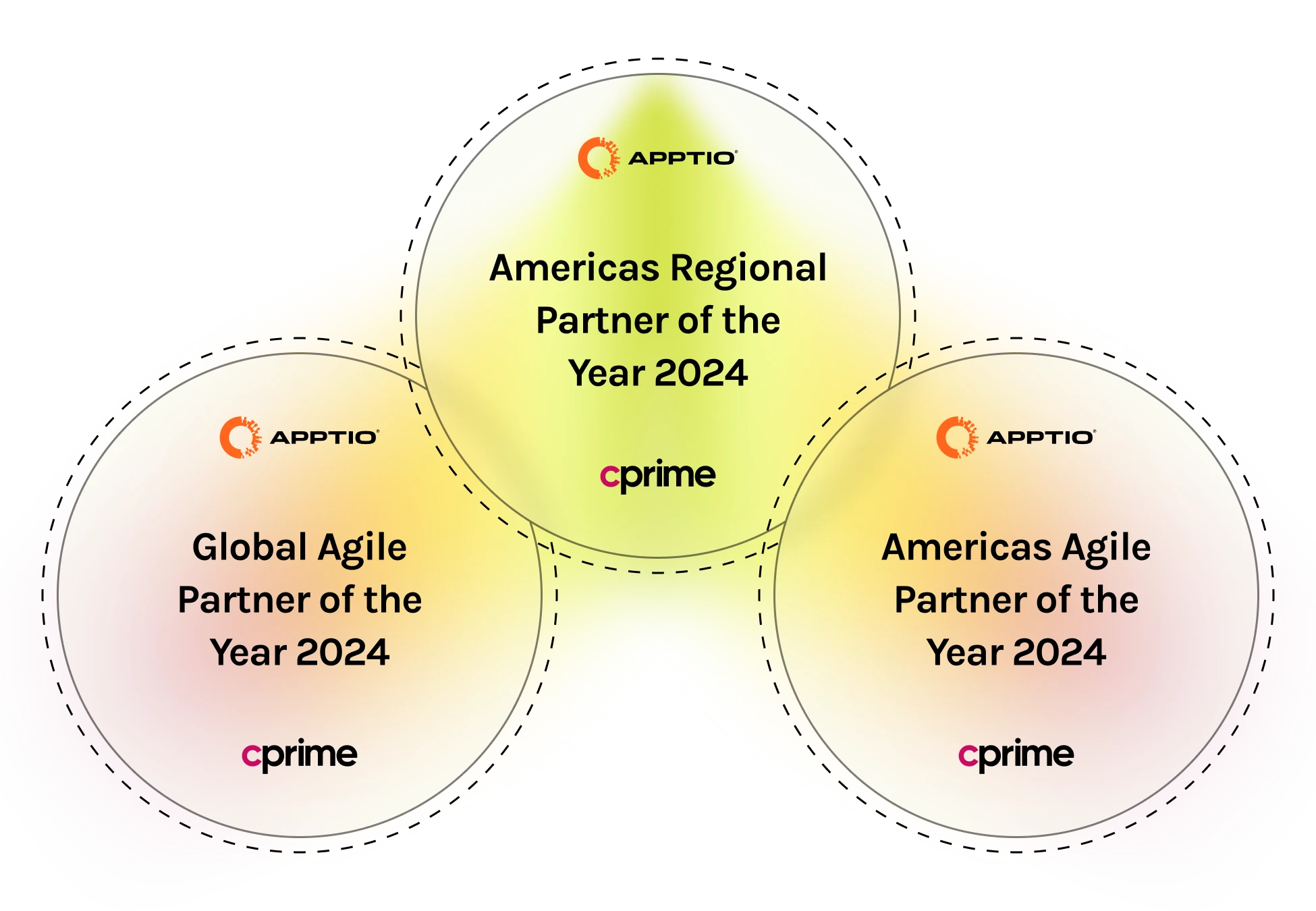
SAN MATEO, CA — November 15, 2024 — Cprime, a leading global consulting firm specializing in enterprise business management and strategic Apptio consulting partner, announced today that it received three prestigious awards from Apptio at the 2024 Technology Business Management (TBM) Partner Awards, hosted at the annual TBM Conference:

  • Global Agile Partner of the Year 2024
  • Americas Agile Partner of the Year 2024
  • Americas Regional Partner of the Year 2024

This triple award recognition highlights Cprime’s ongoing commitment to helping enterprises maximize technology investments, embrace modern ways of working, and connect enterprise strategy to execution by reshaping operating models and optimizing workflows. No other partner has ever simultaneously won global and regional Partner of the Year awards, highlighting the worldwide scope of that commitment.

“We are incredibly honored to receive these recognitions, which underscore the trust that our clients and Apptio place in us,” said Konstantin Popov, Vice President, Enterprise Technology, Strategic Portfolio, and Financial Management. “Our collaborative work with Apptio exemplifies our dedication to guiding organizations through comprehensive technology and overall enterprise business management transformations and delivering high-value customer experiences.”

Celebrating Client Success

At the conference, Cprime’s clients were also recognized for their achievements:

  • Citizens Bank was awarded the Agile Portfolio Management Award for its exceptional integration of TBM capabilities with Agile processes, showcasing industry-leading collaboration and performance.
  • BNY Mellon received the Value Realization Award for aligning TBM value with strategic objectives and setting a new standard for the role of technology in driving business outcomes.

These awards reflect the strength of Cprime’s collaborative and strategic approach in aligning TBM principles with modern portfolio and financial management best practices to empower clients. We’re proud to have been a part of their success.

About Cprime

Partnering with over 300 of today’s Fortune 500, Cprime is a global consulting firm helping enterprises leverage technology and optimal workflows to boost ROI, minimize risk, and future-proof their business with tailored, experience-driven solutions. 

4 Insightful ServiceNow GenAI Use Cases to Reduce Manual Work for Agents with Case Summarization

Case Summarization for IT workflows is the latest inclusion in the ServiceNow Vancouver release powered by GenAI. This feature helps employees quickly locate and understand essential document details. It consolidates relevant information and touchpoints from IT, HR, and customer service cases into summary notes within seconds.

It is an exciting time for the tech industry. With all the buzz around AI, INRY, a ServiceNow elite partner, is in a great position to combine AI technologies like Generative AI (GenAI) on the Now platform. We are powered by proprietary ServiceNow large language models (LLMs) tailored to understand the Now Platform, workflows, and automation use cases. 

Case Summarization for IT workflows

The Large Language Model (LLM) for case summarization is based on a specialized version of the 15-billion-parameter StarCoder model. It was developed as part of ServiceNow’s co-led open BigCode initiative and tuned with Nvidia accelerated computing and DGX Cloud.

Case Summarization leverages generative AI to seamlessly filter information, including the data from IT environments, HR records, and customer service cases. The aim is to streamline and enhance the efficiency of IT operations. The feature enables faster handoffs between team members and achieves more efficient resolution processes.

Case Summarization: Focus on Value by Reducing Manual Efforts

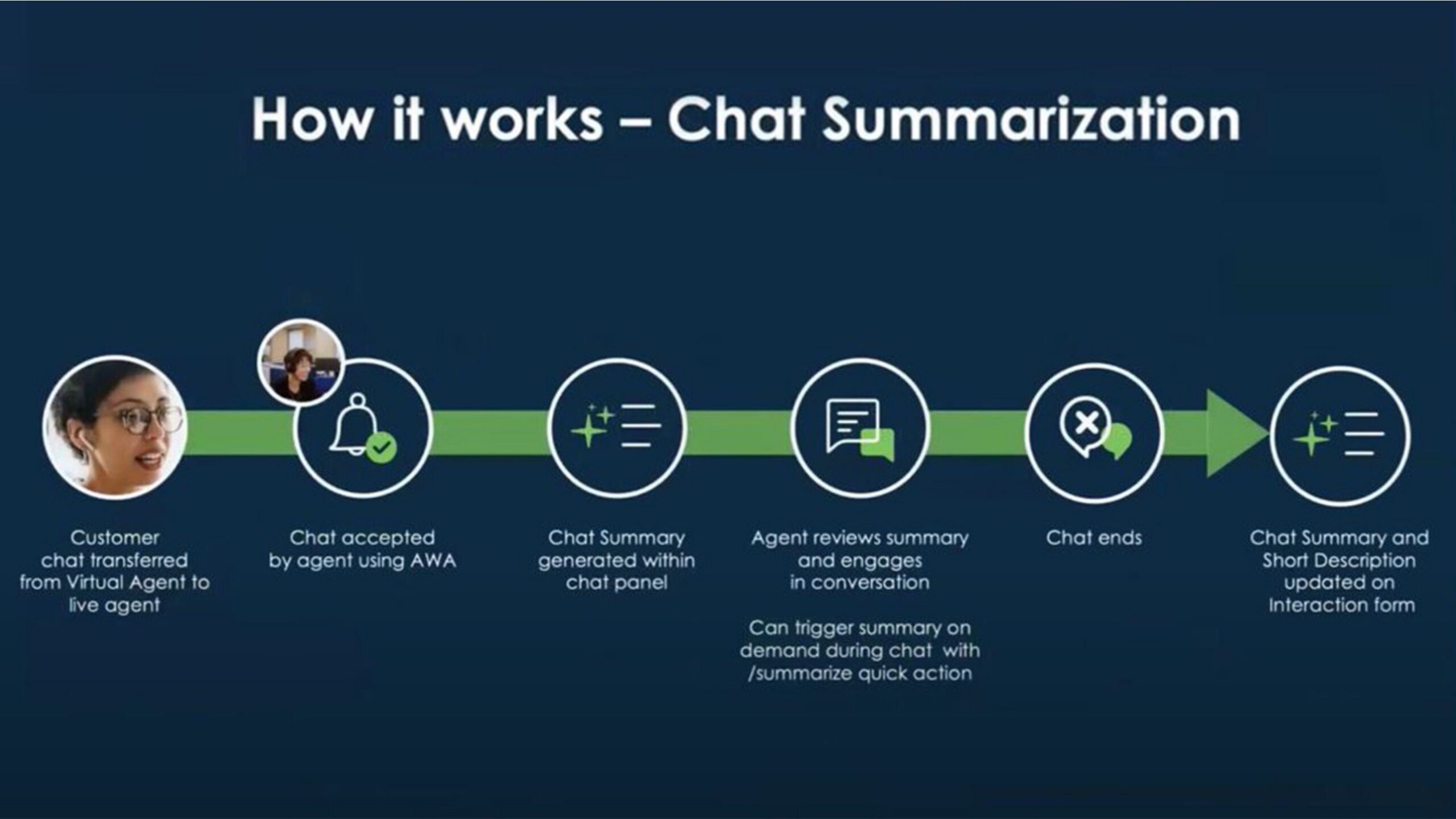
The Case Summarization feature is designed to help employees focus on more valuable work, improve employee satisfaction, and reduce burnout. It reads and summarizes relevant information, including case or incident details, previous touchpoints, and actions by all involved parties, to create detailed case summary notes within seconds.

Objectives of Case Summarization

  • Reduce manual work for agents with overviews and insights to help them start work fast.
  • Easily summarize case or incident records with the click of a button
  • Quickly review pertinent information with an “at-a-glance” view
  • Keep data secure using ServiceNow’s native LLM

The technology reads and distils information from IT tickets, case files, service requests, and conversations for customer or employee issues to create summary notes in seconds. It helps automate manual tasks, reduces hand-off times between teams, speeds resolutions, and increases productivity for employees and customers.

Case Summarization models are trained on real-world data sets specific to the Now Platform, workflows, and automation use cases. The features enable faster and more reliable results and are now available to select customers through the ServiceNow Assist product.

4 Key Use Cases of Generative AI Case Summarization

One of the critical use cases for generative AI is summarization — refining all the actions and touchpoints in a case into a single summary. This could make handoffs smoother between agents and allow teams to resolve problems more quickly, improve processes, and increase alignment. 

Additionally, generative AI significantly simplifies navigating institutional knowledge and policies within the service platform’s knowledge base. This enhancement aids users in quickly finding relevant information and understanding organizational guidelines, thereby improving overall efficiency and user experience.

  • The capability helps streamline handoffs between representatives and accelerate reporting
  • Sharing case resolutions with other teams will become easy
  • The results can make IT workflows more data-driven
  •  Increase alignment and boost productivity across the organization

A recent study by Valoir revealed that when applied effectively, AI can substantially reduce a worker’s workload, possibly by up to 40%. This significant reduction in workload can lead to enhanced productivity and work-life balance for employees.

Benefits of Case Summarization

Case Summarization helps organizations realize immediate productivity gains. It simplifies processes and enables employees to focus on solving problems quickly and efficiently.

For instance, Case Summarization utilizes generative AI to meticulously read and filter key information from various domains, including IT, HR, and customer service cases. This process includes analyzing customer or incident details, previous touchpoints, actions taken, and the eventual resolution. Consequently, it efficiently automates the generation of summary notes, which are invaluable for future reference and streamlined operations.

The Take!

The new generative AI capabilities use specialized LLM optimized for the ServiceNow platform. The GenAI models are designed to learn ServiceNow workflows, automation use cases, and processes. They are currently available to a limited number of customers within the Vancouver release.

Stop Accepting Defeat: Rejuvenate Your Digital Transformations Today With Financial and IT Portfolio Management

After so many years working with clients all over the world to establish new ways of working through impactful transformations, we’ve found that many good intentions and strong starts seem to end up with lackluster results or downright failures. 

What amazes us is that companies seem to accept this as standard—the cost of doing business. The best they can hope for. After all, change is hard. And they’re right: “70% of digital transformations fail”, says the oft-quoted statistic. 

But does that mean you have to take it on the chin and give up? 

We’d love to see more companies say NO.

Success is definitely possible. In fact, it’s pretty simple. (Of course, don’t confuse simple with easy—nothing worth achieving is going to be easy.)

It’s time to stop accepting defeat and start winning.

As we’ve expanded our solution set here at Cprime, it’s become clear that one key to running a successful business in the modern era lies in IT Financial Management (ITFM) and Strategic Portfolio Management (SPM). Combined, they’re augmenting and stabilizing agile and digital transformations that never reached their full potential. 

Not that those concepts no longer apply. They’ve just been hard for most companies to fully understand and implement, even with expert guidance and state-of-the-art tooling. But ITFM and SPM—and their related tools and methods—are making a real difference, upping the success rate for our clients.

The stakes are high, and the cost of failure is even higher. But here’s the good news: failure is not a foregone conclusion. With the right approach, tools, and mindset, you can turn things around and set your organization on a path to sustainable success. Let’s dive into how you can stop accepting defeat and start winning in your own digital transformations.

The Harsh Reality — “The Cost of Failure”

Not to belabor the point, but the statistics really are sobering. 

  • A Harvey Nash/KPMG CIO Survey points out that only 41% of companies have an enterprise-wide digital strategy, and a mere 18% rate their use of digital technology as very effective. Have those figures changed in the last 7 years? Not from what we’re seeing.
  • Harvard Business Review recorded that 70% of change initiatives taken up by businesses fail—a figure echoed by McKinsey. Forbes puts the number at 84%. 
  • Furthermore, PWC reports that 45% of leaders believe their company does not have the right technology for digital transformation adoption.

But does it really matter—to the bottom line, specifically?

Yes, it does. 

This isn’t just about bragging rights—who can get it right first. These aren’t nice-to-have functions and capabilities we’re talking about here. These failures have a profound impact on stakeholders. 

Famously, when Hershey’s digital transformation failed, the financial repercussions were enormous, with a 19% decline in quarterly revenues and an 8% drop in stock price

And that happened almost 30 years ago. Imagine the cost today, with far more crowded markets, vast globalization, and a host of practical complexities Hershey didn’t even have to consider at the time.

This isn’t an isolated case. Hershey’s experience goes to show the high cost of failure in digital transformation. Unrealistic goals, poor planning, and inadequate execution can lead to catastrophic outcomes, eroding shareholder trust and diminishing customer value. It’s time to face these harsh realities and take decisive action to avoid similar pitfalls.

Common Pitfalls and Missteps — “Why Enterprises Fail”

There are many potential pitfalls. Here are a few of the most common:

  • Misalignment with Business Goals: When IT investments don’t match business objectives, it’s a recipe for disaster. Projects miss the mark, resources get wasted, and stakeholders get frustrated. Align tech with core goals to
    avoid this mess.
  • Lack of Real-Time Data: Making decisions without real-time data is like sailing without a compass. Outdated info leaves you lost. Real-time data is essential for quick, informed decisions. Without it, you’re flying blind.
  • Inefficient Resource Allocation: Poor resource management is a major roadblock. Misallocated resources lead to delays, budget overruns, and failed projects. Allocate smartly to hit critical initiatives and boost success.
  • Inadequate Risk Management: Skipping robust governance and accountability is a disaster waiting to happen. Identify risks, plan for them, and keep projects on track. Without it, you’re vulnerable to stalled progress.

These common pitfalls highlight the importance of a strategic, data-driven, and well-governed approach to financial and portfolio management. By addressing these issues head-on, enterprises can significantly improve their chances of success and avoid the costly mistakes that have plagued so many others.

And the price of complacency? 

  • Wasted Time and Money: This waste not only affects the bottom line but also demoralizes teams and erodes confidence in future projects.
  • Lost Competitive Edge: Failing to successfully transform financial and portfolio management processes leads to loss of market share, and it’s harder than ever to catch up.
  • Stakeholder Dissatisfaction: Shareholders expect returns on their investments, and customers demand seamless, efficient services. When you don’t meet these expectations the whole organization suffers.

Put simply, companies that consistently fail this way can’t maintain leadership in the market. And some may not even survive.

But enough bad news. 

The Path to Rejuvenation — “Reignite Your Transformation Efforts”

Here’s what a focus on ITFM and SPM in the modern organization has provided for Cprime clients, and it can do the same for you.

  • Strategic Alignment: Align IT investments with business goals. Every initiative should hit the mark, maximizing value and cutting waste. Connect tech with strategy, drive progress, and hit those targets.
  • Real-Time Data Utilization: Use tools like Apptio for real-time data. Make swift, accurate decisions. Anticipate challenges, seize opportunities, and keep moving forward.
  • Efficient Resource Management: Allocate and prioritize resources intelligently. Avoid delays, budget overruns,
    and poor outcomes. Keep monitoring and adjusting to stay efficient.
  • Robust Risk Management: Implement lean governance to mitigate risks and ensure accountability. Identify risks, develop strategies, and establish clear accountability. Be prepared for any challenge and pursue your goals with
    confidence.

To see these results in action, check out what we did for Citizens Bank and Ahold Delhaize.

By focusing on strategic alignment, real-time data utilization, efficient resource management, and robust risk management, you can reignite your transformation efforts and set your org on a path to sustainable success. 

It’s time to take bold, decisive action and achieve the financial and portfolio management transformations your organization deserves.

Cprime’s Proven Solutions — “Why Cprime is Your Best Bet”

Maybe you’re thinking, “I get it—transformations are tough. So what do I DO about it?”

Well, the best options we’ve found are baked into the ITFM and SPM solutions Cprime experts have honed through practical experience with clients across borders, industries, and circumstances.

Consider the automotive industry, where Cprime has helped companies rev up their Agile transformations. By leveraging our expertise and advanced tools, these companies have overcome significant challenges, achieving remarkable improvements in efficiency, resource management, and stakeholder satisfaction.

Here’s an example.

We invite you to watch a discussion between Zubin Irani, a Cprime boardmember and former CEO, and Konstantine Popov, our Head of Enterprise Technology and Financial Management. In this video, Konstantine discusses how critical it is to align enterprise operating models with new delivery frameworks and the impact of variable infrastructure costs on financial planning. This is valuable context and practical advice.

Expert Consulting: 

Our strategic consulting is tailored to your needs, aligning your efforts with business
goals. We help you craft a clear strategy and objectives, giving you the visibility and alignment you need to
succeed.

  • Visibility and Alignment: Struggling to see the big picture? Our Portfolio Management Solution bridges the gap between different levels of your organization, ensuring everyone is on the same page and working towards shared goals.
  • Prioritization and Decision-Making: Making the right calls is crucial. We provide techniques to make informed decisions, helping you prioritize initiatives that align with your strategic goals. No more guesswork—just clear, data-driven choices.
  • Resource Management: Efficient resource allocation is key. Our approach includes portfolio planning and progress tracking, ensuring your resources are directed towards the most critical initiatives. Maximize impact, minimize waste.
  • Change Management: Change is hard, but we make it easier. Our methods for managing changes to initiatives help you navigate the complexities of transformation with confidence. Adapt and thrive.
  • Communication and Trust: Collaboration is essential. We emphasize trust and communication between portfolio managers and program/product managers, fostering a culture of collaboration and mutual respect. Work together, win together.

Talk to an expert.

Advanced Tools:

We bring together LeanIX and Apptio to give you a unified view of your IT operations and
financial health.

  • Unified IT and Financial View: LeanIX helps you map, visualize, and optimize your IT ecosystem, while Apptio provides the financial insights you need for budgeting and cost optimization.
  • Standardized Reporting: These tools offer standardized reporting across varied IT projects, tackling the reporting challenges many companies face.
  • Robust Governance: Our solution includes robust governance techniques for managing portfolios of business initiatives, ensuring a strong governance framework.
  • Data-Driven Decision Making: With accurate, up-to-date data, you can make informed, data-driven decisions.
  • Agility and Responsiveness: Respond dynamically to changing conditions while maintaining strategic alignment. 

Learn more.

Implementation and Support:

We’re with you every step of the way to ensure your transformation efforts are successful and sustainable.

  • Comprehensive Support: From the initial setup to ongoing optimization, we tailor our approach to fit your needs.
  • Apptio Targetprocess: Leverage Apptio Targetprocess to provide visibility and empower data-driven decisions.
  • Custom Implementation: Whether it’s a quick launch or a custom implementation, we ensure minimal disruption and maximum impact. 

Discover our approach.

Don’t let your enterprise continue to waste time, money, and effort. Rejuvenate your digital transformations today by leveraging the latest in IT Financial Management and Strategic Portfolio Management tools and best practices. Your shareholders and customers deserve nothing less. 

It’s time to stop accepting defeat and start achieving the success your organization is capable of. Let’s make it happen together.